Pam Webb

a writer's journey as a reader

Archive for the month “July, 2019”

Why We Say: E batch


This month’s Why We Say is a batch fresh from the “E” section.

Eavesdropper

Going back to the Saxon days of England, a person could not build right to the property line since it was mandated that there needed to be space for the drip that rolled off the eaves. This became the “eavesdrip” and someone who leaned near the eavesdrip could hear what was being said in the next house, making them an “eavesdropper.” Maybe this is where the expression of being a “drip” originates from.

Electricity

What does amber have to do with electricity? Dr. William Gilbert, who was Queen Elizabeth I’s physician in 1601, decided to call the effect he produced when rubbing amber with a cloth “electric,” which comes from elecktron, Greek for amber. What this has to do with QEI, I’m not sure–it might be too shocking to conjecture.

Etiquette

Should you find yourself time traveling back to the royal court of France, you might be handed a card of instructions informing you how to behave. This card or ticket or estiquet eventually became “etiquette” or the rules of social behavior. So does one receive a ticket from the polite police if one does not follow the rules posted on the estiquet?

Bonus!

At no extra charge are a few specials from the F” chapter:

Farce

The Latin farcire means “to stuff” and the early religious plays often were stuffed with jokes and comedic scenes which led to humor that was obvious which came to be known as a “farce.”

Going Through Fire and Water

In early times people often had to prove themselves, usually their innocence, by going through some sort of trial. An example of going through fire was having to walk barefoot across hot coals or carrying a red-hot bar. A water test might involve sticking a hand in boiling water. Today, going through extremes, might feel like an endurance test of fire and water.

Fit as a Fiddle

Actually, this should be “fit as a fiddler.” Yeah, playing for a dance all night would take a bit of stamina.

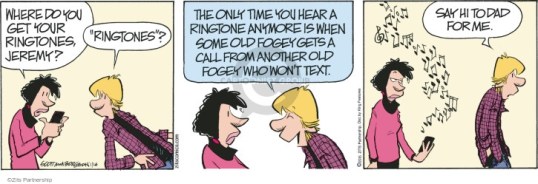
(Old) Fogey

At one time the English word “foggy” meant “fat” or “moss-grown.” The Scotch transferred “foggy” into “fogey” to mean disrespect towards an old man who did not keep up with the times. I suppose moss can grow on a person who doesn’t keep up with change fast enough.

Need more fantabulous “F” sayings? Come back next month. I’ll even throw in some “G” selections.

Debatables: LoL


Well, the odds were not in my favor this round.

But then, I knew that funny little kid in the round glasses would no doubt trounce the strong, courageous Katniss, at least in favorable voting. Get him in the Cornucopia? No competition.

I knew Mike had the win when he called Harry Potter. No matter.

I suited up and walked out on the field because I believe in Katniss. Oh sure, she got annoying sometimes with her “which guy?” conundrums, yet, she has pluck and she has been an influence in areas of significance beyond book parties and reading interest.

So-Mike, a win hands down. See you next month at your place.

Here’s a little fun to cap off our debate between Harry Potter and Hunger Games.

Debatables: July—YA best (series-ly)


This month’s Debatable gets serious about YA. Mike and I are taking on the great debate of which YA series is the most influential YA in terms of overall impact.

Yep, we are throwing down the quodlibet gauntlet and arguing whether the Harry Potter series bests the Hunger Games series. We are going for overall influence, not just books, but movies, social impact, topic genre–everything, everything. We are going big on this one.

As a reminder, here are the ground rules:

Each debater is allowed one brief argument (fewer than 300 words) on a previously agreed upon topic. These brief arguments will then be followed by a briefer rebuttal (fewer than 150 words).

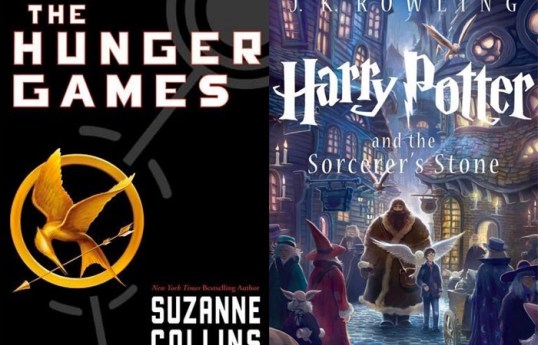
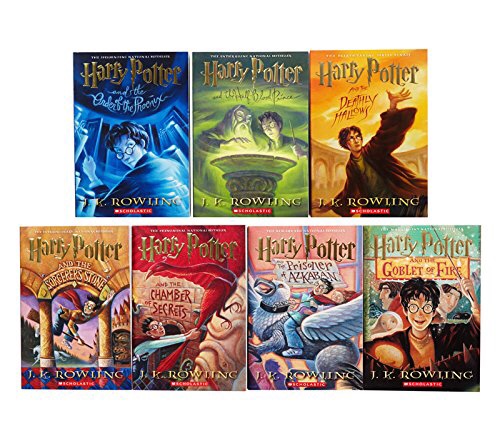
Mike, that increasingly prolific writer of children’s books and always popular blogmeister, is my Debatable partner. He has chosen the Harry Potter series:
I am nominating the Hunger Games trilogy:
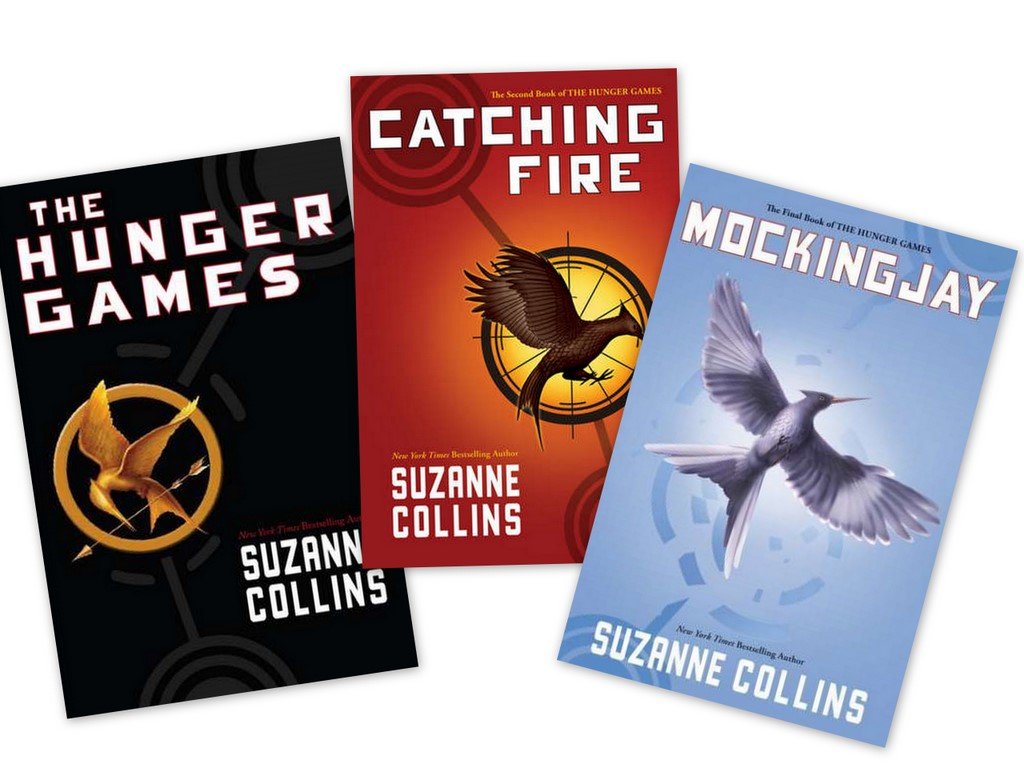
Image result for hunger games trilogy

As the month’s host, I defer to Mike to lead out the argument:

Mike’s opener:
Whether you love Harry Potter or are indifferent to Harry Potter, you gotta admit that Harry Potter changed everything we once thought we knew about kid lit. Before that little wizard showed up, young adult and middle grade fiction novels were relegated to the bookstore ghetto, to live and die as a dog-eared paperbacks. 

There have been many pre-Harry YA books of great distinction, of course, The Giver, The Outsiders, and about a jillion others that are far superior to anything J.K. Rowling could’ve ever conjured in her Hogwarty mind. But those novels lack a certain magical something that Harry had in spades: Crossover Appeal. 

Harry Potter did to literature what Star Wars did to movies, it found an audience with pretty much everyone. And, man, was that audience rabid. Remember the midnight release parties with lines stretching for blocks? Remember how revealing a spoiler was considered a Crime Against Humanity? Publishers sure do, and they have been attempting to recapture that ol’ HP magic, literally and figuratively, ever since. 

Once upon a time, the kid lit center of gravity was in picture books. Harry Potter (and its decade-long listing on the New York Times bestseller list) changed that business model. The big money is now is YA and that’s where publisher resources have gone—and will continue to go—for the foreseeable future. 

No, I’m not saying that Twilight or Hunger Games or Miss Peregrine wouldn’t have been published if HP didn’t exist. I’m saying that Twilight and Hunger Games are Miss Peregrine enjoy the popularity they have because HP exists. Without that incredibly influential wizard, they would be unfairly slumming with the latter-day Nancy Drews, ignored and overlooked by the masses.


Cricket’s remarks:
Granted, Harry and his school chums initiated a noticeable interest among middle/YA readers; however, Suzanne Collins made a lasting impact with her Hunger Games trilogy that is still evident today, going well beyond readership.

First off, Katniss is a relatable hero. Flawed, no superpowers, yet passionate in her beliefs, placing others before her needs, transfers into the real world.  Several articles on how Katniss is inspirational in her purposeful focus are found on the internet. Hunger Games can be found at the core of curriculums revolving around dystopia and totalitarian governments, sharing time with Antigone and I Am Malala. Wizardry may be entertaining, but standing up for one’s beliefs is riveting, inspiring, and powerful in its ability to influence.

Other aspects of influence include the three-fingered salute from Hunger Games, a gesture that’s become a global symbol of resistance. There is also a  resurgence in archery evidenced by Nerf’s crossbow. Hunger Games ushered in other dystopian-themed books/films such as Divergent and Maze Runner. Tricks are for kids; bad government is reality, and Hunger Games has influenced others to take on the reality of tyranny. Saving friends from foes with magical spells doesn’t work in the real world. Courageously standing up for convictions makes a difference.  

Katniss has firmly established that a female hero doesn’t have to be seductive or come from another planet to get things done. Hunger Games also has gender and age appeal–AARP members raved about the series. Even Time noted Katniss Everdeen as an influential character

Admittedly, Harry Potter filled some kind of needed hole in middle/YA  reading needs, yet a boy wizard can’t compare to the lasting influence of a young woman who started out wanting to save her sister and ended up freeing society from injustice.

Mike’s Rebuttal
First things first: Katniss didn’t use a crossbow. Second, the Nerf crossbow was first released in 1995, a full 12 years before the first Hunger Games book came out.

Now to the meat of your argument: Yes, Katniss is a strong, flawed, relatable, femal hero fighting valiantly against a totalitarian government—but she certainly isn’t the defining voice of today’s “Resistance,” as you suggest. (That would be Offred from The Handmaid’s Tale). And influential dystopian-age books for YA existed long before Katniss ever showed up (again, I reference 1993’s The Giver). 

Don’t get me wrong, The Hunger Games is a great, exciting read. In fact, I enjoyed THG trilogy more that Harry Potter. 

But this Debatables topic is about which book is more influential. In that particular Harry versus Hunger competition, Katniss wouldn’t even make it to the cornucopia.

Cricket’s Rebuttal

Thanks, Mike for acknowledging how Hunger Games is a better read-points for my argument of HG’s influence.  I am not interested in reading Harry Potter.

Why?

Magic is so unrealistic in solving problems compared to tenacity and fortitude in righting wrongs (you did notice the photo?). And while there have been a few unique female heroes such as Ripley and Sarah O’Connor, they were adults and Katniss is a teen. A brave young woman willing to sacrifice for family, friends, and the greater good is more admirable than a bespectacled kid wizard with a scar.

So–maybe HP influenced kids to read more than they used to–can Harry make the claim he has influenced politics or human rights concerns? Katniss and the Hunger Games series is an influence that  continues to resonate long after HP’s last spell has dithered away.

Alrighty, readers–time to weight in with votes and comments. Which series is more influential in your opinion: Harry Potter or Hunger Games?

Reader Round Up: June


June was a strange month. At one point I found myself trying to survive 112 degree temps in Arizona. It wasn’t a planned visit. DO NOT plan a visit in Arizona in June. Or July. Or even August. Some consideration can be given to September on up to May.

Then there was a conference I had to attend barely having time to refresh my suitcase contents and reviving from heat prostration.

I will never take the greenery, nor the rain, of my region for granted–ever, ever again.

I returned from one conference long enough to appreciate my bed for a few nights, read a bit in the hammock, and repack the suitcase. Back-to-back conferences sounded like a good idea back in April when I scheduled them. You know, get business out of the way to leave the rest of summer to enjoy…

Unscheduled life events can throw neatly planned calendars right out the window.

I haven’t really started Summer Break (yes, it’s capped–because it is important) but I have snuck in a few choice books during my heat endurance trial. The site library had air conditioning. Fortunately.

Cormorant’s Isle by Allan McKinnon

⭐️ ⭐️ ⭐️ ⭐️ ⭐️

A freebie from the library rack and I’m glad I grabbed it. Publish date is 1952 and has that old feel of a Mary Stewart mystery with a bit of Ian Fleming. I’m determined to find more of McKinnon’s books.

The Library Book by Susan Orlean

⭐️ ⭐️ ⭐️ ⭐️

The librarian within thrilled to the idea of reading about the great Los Angeles Library fire–not because I harbor pyro tendencies, because such a huge event had gone unnoticed–a library fire that consumed hundreds of thousands of books and I hadn’t heard about it?

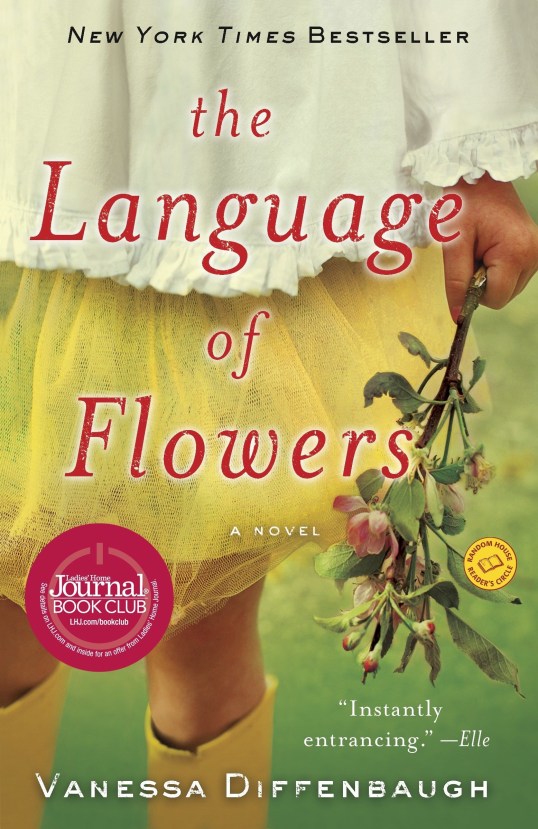
The Language of Flowers by Vanessa Diffenbaugh

⭐️ ⭐️ ⭐️ ⭐️ ⭐️

Victoria Jones is 18 and is graduating out of the foster care system into an independence she is not prepared to handle. Almost feral in how she survives her emancipation, Victoria nevertheless has an innate, refined talent for flowers and finds herself immersed in the world of San Francisco’s flower world.

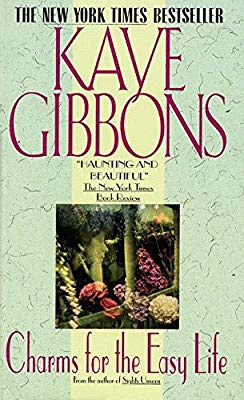
Charms for the Easy Life by Kaye Gibbons

⭐️ ⭐️ ⭐️ ⭐️

Reminiscent of Twain, Culler, and even Lee in its portrayal of a family full of memorable characters, Kaye Gibbons provides a story that reads like an autobiographical tribute to matriarchal families of yesteryear.

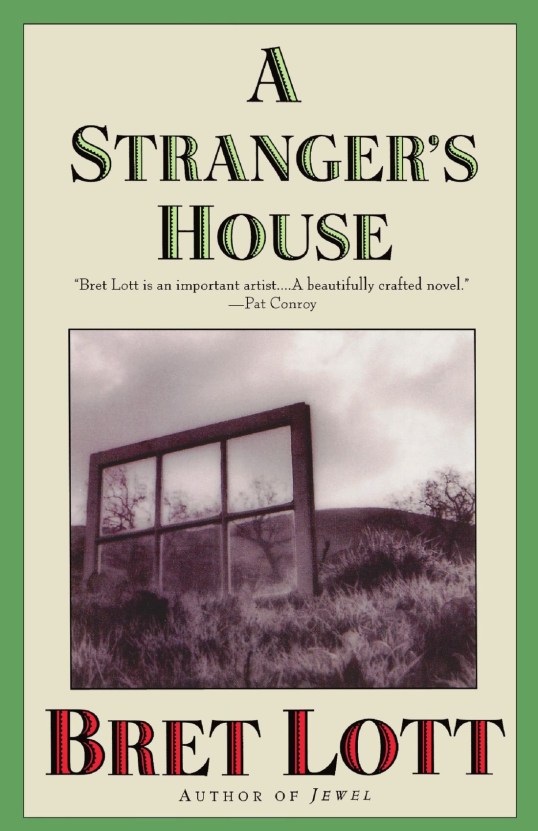
A Stranger’s House by Brett Lott

⭐️ ⭐️ ⭐️ ⭐️

Having read Jewel, I was prepared for the transparent rawness of Brett Lott’s writing style, that intensity in which he peels back the veneer of coping with life and shows the hurt, anguish, and truths of what it means to live with our humanity. The story still caught me sideways in the way Lott reveals pain and sorrow.

The Pool of Fire by John Christopher

⭐️ ⭐️ ⭐️ ⭐️

The third installment of The Tripod series provides both action and a thoughtful commentary on world peace.

The Seven-Percent Solution by Nicholas Meyer

⭐️ ⭐️ ⭐️ ⭐️ ⭐️

Is it possible to reach Sherlock saturation? Apparently not. There are many, maybe too many, adaptations, reinventions, and suppositions of Sherlock, both in print and film out and about. Some better than others. Yet, in 1974, Nicholas Meyer provided a clever pastiche called the Seven-Percent Solution and readers, even Sherlockians, can appreciate the effort.

Summer at Tiffany by Marjorie Hart

⭐️ ⭐️ ⭐️

Tiffany. This is the place where dreams abound in its grand showcases and is multi-story wonderment of glitter and gold. What would it be like to work there? Marjorie Hart describes her summer working at Tiffany with her best friend Marty. The two girls, fresh from Iowa, find plenty of first time adventures as they explore New York as young adults, barely out of high school.

Told in first person in a light pleasing style, Hart provides a lively memoir of her “best summer ever.”

Had the potential for a higher review rating, yet vague details and a rushed ending dampened the otherwise enjoyable recollection.

June was an odd month filled with more than a few stress-filled moments; however, books, those paged balms, helped me cope.

How was your June?

Any memorable reads to share?

Facebook? Nope.


It’s a conundrum. Most, if not all of society is Facebook driven. Yet, Facebook is driving society crazy. It’s obsequious and obnoxious-a real love it, hate it, use it, ignore it commodity.

“Like us on Facebook”–it’s the common phrase. I just saw it painted on the back of a local police car. I kid you not.

I perplex people when I tell them I don’t have a Facebook account. I get this look:

Shock. Amazement. Surprise. Perplexed.

Definitely perplexed is the reaction I received when I joined a workout group and I mentioned I wasn’t able to access updates, tips, reminders, etc because I don’t use Facebook. That look came up. I apparently missed out on a lot of great sharing opportunities like before and after photos we were supposed to post.

No comment.

I apparently miss out on all sorts of great contest opportunities because I don’t have a Facebook account and can’t “like” the sponsor, which means I am unable to access the site, which means I can’t enter to win a —-.

Sounds like discrimination to me.

Have I ever been on Facebook? Of course. For about as long as it took to realize I don’t want to receive updates about what someone had for breakfast, what new cute pics of their pet, baby, car, etc looks like, where they went and what they did.

I get Christmas letters for that information-minus the breakfast updates.

Apparently as a writer I should consider how my social media presence suffers due to no one knowing about me due to not having a Facebook account.

Wait–you’re reading this. That means you are learning about me. That works.

“Well, there are lots of reasons.”

I’m glad you asked why I don’t Facebook–

BtW: it’s now word that is a noun and a verb, moving into the anthimeria category (Word Nerd plug).

Here are a few reasons for not doing Facebook:

1. Time commitment.

2. Boring, inane, irrelevant information.

3. How many friends can a person actually have, need, realistically claim?

4. I blog.

5. I embarrass easily.

6. Privacy issues. Even the Woz agrees.

7. I enjoy a certain anonymity.

8. If I wanted my high school friends to find me I can go to my high school reunions. (I haven’t gone to any of them–my mother has though–that’s a different post).

9. It’s overrated. I don’t do sushi either. Same principle.

10. Because.

Where are you in the Facebook issue?

Are you against it?

Have an account?

Have an account, but want to close it?

Love it?

Hate it?

Wonder what the fuss is all about?

Word Nerd Confessions: July


Summer is its own special time, especially July. It’s solidly summer: weather is warmish but not too uncomfortable, events are happening–outdoor concerts, craft fairs, and the like, the lake is tolerable not freezing, school is distant past and not a threat on the horizon.

July requires its own set of vocabulary:

serotinal:pertaining to or occurring in late summer (must be related to serotonin–that feel good chemical in our brain).

phub: to ignore (a person or one’s surroundings) when in a social situation by busying oneself with a phone or other mobile device (I admit to phubbing when at the park or beach–tuning out people to cocoon in my little bubble of perceived solitude–is this a bad thing though?).

tzimmes: fuss; uproar; hullabaloo (when temps get too warm crankiness arrives and tzimmes is a fitting word).

ergophobia:an abnormal fear of work; an aversion to work (self explanatory).

benighted: intellectually or morally ignorant; unenlightened (unfortunately, there is evidence of this behavior when out and about during summer, especially seen at the beach–oh my–do my students who are life guards have interesting days).

paseo: slow, leisurely walk or stroll (summer evenings when the temp drops a tad and the sun has just disappeared on the horizon, a paseo along the boardwalk after dinner is a lovely way to start/end the evening).

craic: fun and entertainment, especially good conversation and company (often precededby the–English derived, as in “wisecrack”).

solitudinarian: a person who seeks solitude; recluse (me, that’s me–give me a hammock, a book, and a soft breeze and I’ll be a-phubbing for hours).

deracinate: to remove or destroy utterly; extirpate (related to above as in socializing?)

ariose: songlike (“The ariose breeze filtering through the stand of pines added an extra appreciation of the fine quality of this July day.”)

biophilia: a love of life and the living world; the affinity of human beings for other life form (but not when they are benighted or phubbing).

sabulous: sandy or gritty (beach wear side effect)

cynosure: something that strongly attracts attention by its brilliance, interest, etc. (blue lake, hot day)

pasquinade: a satire or lampoon, especially one posted in a public place (like Taming of the Shrew as a performance in the park–good times having Shakespeare as a summer performance).

joyance: joyous feeling; gladness (that overall summer mood)

hygge: adj.--cozy and comforting; noun–the feeling of cozy and comforting (some may associate this with winter, but being snug in a backyard hammock with a cool breeze playing about is indeed cozy and comforting).

petrichor: a distinctive scent produced by rainfall in dry earth (there is a word for that amazing smell right after the rain hits the hot sidewalk–word nerdiness points!)

Heiligenschein: the ring of light around the shadow cast by a person’s head, especially on a dewy sunlit lawn; halo (you know that photo, the one where you notice that strange glow around the person’s head -“whoa, I didn’t know you were an angel! Look at your halo!)

viator: wayfarer or traveler (got my bags packed and my ticket to go)

vade meecum: something a person carries about for frequent or regular use (a book, of course–summer is prime reading time).

So that’s a batch of summertime words. There are some fabulous ones that I’m determined to slip into casual conversation.

“I see you got your vade meecum ready.

“Wow! Smell that petrichor!”

“Yup, me and the hubs got our bags packed–we’re just a couple of viators ready to hit the road.”

“Nothing like a well-done pasquinade to get a person laughing.”

“These summer concerts have a certain cynosure about them, don’t they?”

What two words are you going to work into a conversation?

Why We Say: D-zone


Continuing on with the exploration of everyday words and phrases that may baffle, irritate, or even amaze us, is a selection from the “D” chapter of Dictionary of Word Origins by Jordan Almond.

Dessert

We save the last course of a meal as “dessert” which comes from the French word desservir: to clear the table. The practice was to remove the table cloth to serve the last course. Today we remove the dinner plates to make room for that sweet end to a good meal.

Desserts spelled backward is stressed. Don’t stress out about eating desserts.

Dirt Cheap

No surprise here–dirt is cheap because it’s free. That is, unless you decide to have it delivered from one of the schmancy garden places.

Dog Days of Summer

Those really hot searing days that pop up during summer? The ones where being outside is misery? The Romans blamed those toasty times on the stars–Siriusly. That would be Sirius, the Dog Star. It was thought that Sirius got a bit hotter due to its rising with the sun. Those hot dog days were called cuniculares dies.

Double-Cross

I think of Jimmy Cagney when I hear “double-cross.” Actually I think of Bugs Bunny imitating Jimmy Cagney saying “you dirty double-crossing rat.” Then again. Monty Python gets it right as well:

https://getyarn.io/yarn-clip/f3d22bb5-e73e-472c-ba98-4e17f1b0c418

What’s it mean? In prize fighting, if a fighter intentionally lost a fight he “crosses up” both the spectators and those who bet on him. If he wins after the cross up he affects his manager and those who bet on him to lose. The two cross ups make for the “double cross.” Why Jimmy Cagney says it is a bit perplexing, although one could argue he is a bit of a fighter.

Down a Peg

The British Navy had a custom in which the ship’s colors were raised to recognize visiting dignitaries–the higher the colors, the greater the honor. Taking the colors down a peg indicated a decrease in honor.

Dressed to the Nines

Old English is responsible for this one. Someone who was “dressed to the eyne” was dressed “to the eyes” which is basically being dressed “up to the ears” something we just don’t say, even though logically we basically are.

Dressing Down

Having dressed up (to the ears) it makes sense that taking off clothes would be “dressing down.” Not so. A butcher preparing beef for market will slice the animal’s carcass. In the same manner, a person who receives a tongue lashing full of cutting remarks is getting a “dressing down.”

This…

Not this…

Dude

One of the most obsequious words going. This word stems from dudde, the Middle English word meaning “to dress.” Later down the road, an Easterner who went West in a fancy outfit discerned an attitude by the Westerners. Basically “dude” is a smash up of “dud” and “attitude.” Somehow that works for the Simpsons.

Tune in next month for more explanations, descriptions, and epiphanies.

Post Navigation