handle with kid gloves: to treat very gently. Dating back to the nineteenth century this term refers to gloves made from young goats, known as kidskin. These gloves were considered fine wear and the wearer needed to treat them with care.
image: Etsy
Kill the goose that lays the golden eggs: destroy a source of wealth through neglect. In one of Aesop’s fables a greedy farmer owns a fabulous goose that lays golden eggs. Wanting as many eggs as possible he believed that all the eggs were inside the goose. Killing the goose did not provide the eggs–he only gained a dinner entrée.
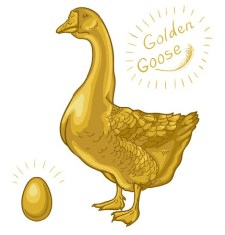
image: JD Supra
Kill two birds with one stone: to achieve two goals with a single effort. The saying goes back to Roman times when a person would be commended for killing two birds with a single rock. The saying was also traced to the 1600s when a writer by the name of Hobbes wrote, “”T.H. thinks to kill two birds with one stone, and satisfy two arguments with one answer.”
image: Forbes
Kill with kindness: to overwhelm someone with goodness. The original saying is thought to be, “to kill with kindness as fond apes do their young” is alluding to how an ape might squeeze its young in a smothering embrace of love. The saying moved forward in the sixteenth century and was used by Byron who said, “Don’t let them kill you with claret and kindness.”
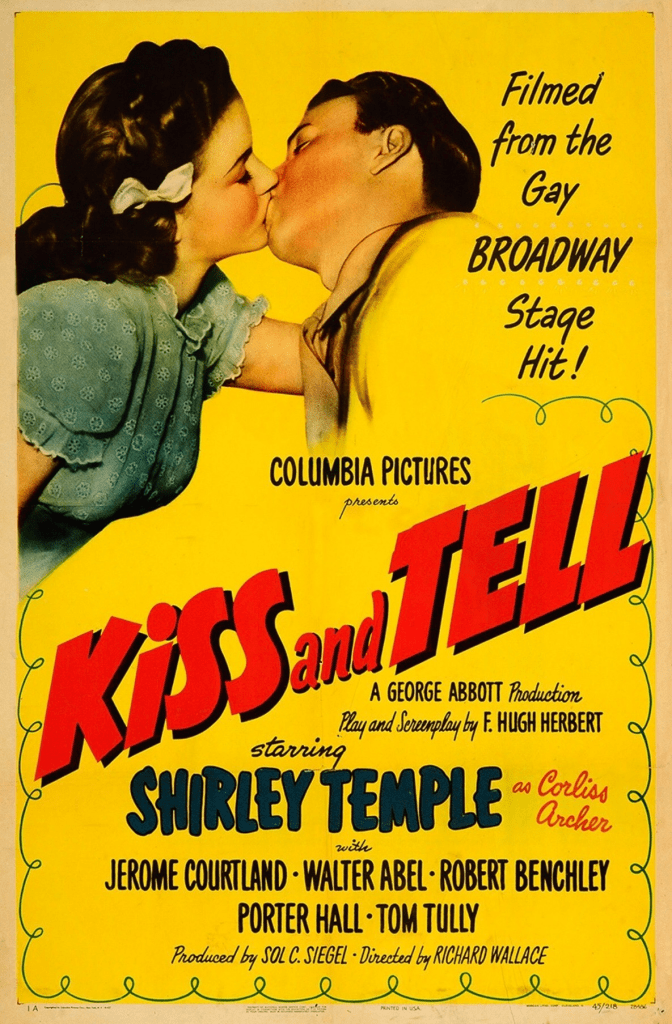
image: IMDB
Kiss and tell: to betray a secret. Restoration England’s Charles Cotton is credited with saying, “And if he needs must kiss and tell, I’ll kick him headlong into Hell.” The expression has been used often in both literature and films, and even in everyday life.
The whole kit and caboodle: all of it. The word “caboodle” is thought to be related to the Dutch word “boedel” which means “household goods and possessions.” And “kit” means personal belongings. However, the Oxford English Dictionary says caboodle is an incorrect version of “kit and boodle.” Whatever it means, if someone says “grab your kit and caboodle” just grab your stuff and get going.
image: Facebook
Knight in shining armor: someone who is a rescuer. Dashing knights. Chivalry. Rescuing damsels. That’s what the expression brings to mind, right? That is the literal sense, probably dating from the sixteenth century. The figurative sense is about finding “Mr. Right,” that standout guy that fits a girl’s dream of her hero. Is the saying still being used?
image: Medieval Bride
Knock someone down with a feather: to overcome a person with surprise. This goes back to the nineteenth century and appeared in print in Wiliam Cobbett’s Rural Rides “You might have knocked me down with a feather.”

image: Language Humanities
Knock on wood: a means of avoiding bad luck. In Great Britain touching wood is based on a superstition based on the saying “touch wood, it’s sure to come good.”
BONUS:
image: idioms 4you
To knuckle under: relenting under pressure. There are different thoughts on this one. It might stem from knocking under the table when someone has lost an argument. “Knuckles” also refers to the end of any bone at the end of a joint. “To knuckle” originally meant “to bend down” or “stoop” and was related to the phrase “to comply with” or “submit to.” So–either a person literally raps their bones in defeat or figuratively bends down in defeat.
Thanks for the reader feedback on how you are enjoying the word selections. I enjoy finding them almost as much as I enjoy sharing them with you all. This past week has consisted of a multitude of words that cause me to say “There is a word for that?”
Splooting: a behavior that some animals use to cool their body temperature. Squirrels are finding cool surfaces and lying on their stomachs, legs spread, to cool off. For awhile we had a winsome little squirrel that would visit us and eat peanuts from our hand. In the summer she would come up to the patio and hang out. I thought she was being a companionable squirrel when she was actually seeking some relief from the heat by splooting.
image: NY Parks and Recreation
parapraxis: when you say one thing and mean another, especially when the words are close sounding. Would you care to call your mother—I mean brother?
catachresis: using what is thought to be the correct word because it sounds like the word you meant to say. “She was reticent about going to lunch.” Umm, she was reluctant about going to lunch? Or perhaps in her reluctance she wasn’t talking about it.
spoonerism: credit Reverend Spooner for the slip of the tongue that causes the transposition of consonants in a sentence. “Go hush your brat” is not the same as “Go brush your hat.” One directive will definitely cause a stir.
solecism: accidental or intentional misuse of grammar. “I am what I say I am; I is what I say I is.”
malapropism: close to a catachresis, this word is attributed to a character, Mrs. Malaprop, in a 1775 play, who unknowingly inserted incorrect words in her utterances. “She was the pineapple (pinnacle) of perfection.”
mondegreen : coined by writer Sylvia Wright who misheard a line in a poem as “Lady Mondegreen” instead of “laying him on the green”, the word refers to mishearing lines or words or lyrics. My nemesis mondegreen was Clearance Clearwater Revival’s line about a “bad moon rising” which I heard as “bathroom on the right” which made sense to me because knowing where the nearest bathroom is located is handy.
eggcorn: similar to mondegreen, an eggcorn replaces the original word, yet it still makes senses since the new meaning hasn’t rendered the original intent incorrect.
free reign” for “free rein”
“in one foul swoop” for “in one fell swoop”
“jar-dropping” for “jaw-dropping”
“old-timers’ disease” for “Alzheimer’s disease”
“on the spurt of the moment” for “on the spur of the moment”
mumpsimus: an insistent use of an eggcorn, being attributed to a monk Erasmus once knew who would say “mumpsimus” instead of the correct “sumpsimus” when reciting the liturgy.
“they’ve got another thing coming” —sorry Obama, that should be another “think” coming
“it’s a doggy dog world”—yeah, it can be ruff out there, but it’s actually “it’s a dog eat dog world”—ooh, it’s ruffer than we thought
“nip it in the …bud”—not the other (thinking gardening, not corporal punishment)
“first come, first serve”—not a Sunday buffet sign because it is supposed to be “first come, first served” (grammar can be tense, I know)
Cacology: when it’s said and done it’s how you said that could do you in—those Spoonerisms, malapropisms, solecisms—all those above, including incorrect pronunciation, could lead to a faux pa, a big mistake.
Splooting has nothing to do with speaking correctly, yet the next time you spot a squirrel doing the hot day sprawl you will know what you are talking about.
snollygoster: a clever, unscrupulous person. What a fabulous word! It reminds me of a villain lurking in the pages of a Lemony Snicket book.
banderole: a small flag or streamer fastened to a lance, masthead, etc. I imagine this will be a handy term for upcoming Fourth of July parades.
ferdutzt: confused; bewildered. It sounds like have a fuzzy brain.
skrik: a sudden fright or panic. Yes, that’s exactly the word when I’m startled.
quidnunc: a person who is eager to know the latest news and gossip. I am surprised I don’t come across this word in my English village novels. It so sounds like a person found in a Miss Marple story.
reboant: resounding or reverberating loudly. Definitely describes the train horns that barrage our area on a daily basis.
pluviophile: a person who enjoys rain and rainy days, and who is fascinated by the sights, sounds, etc., of rain. I grew up in the Pacific Northwest where you learn to live the rain or go bonkers in winter, spring, and fall.
farouche: sullenly unsociable or shy. Not just shy but shy with an attitude. That is inspiration for a character, for sure. Maybe this person meets up with the local quidnunc and sparks fly. Hmmm…
ferhoodle: to confuse or mix up. A companion of ferduzt.
bloviate: to speak pompously. You know, that part of the movie where the snollygoster monologues about how clever they are right before they are undone by the clever hero.
tawpie: a foolish or thoughtless young person. I see this being home in a Gaiman tale for some reason.
ceilidh: a party, gathering, or the like, at which dancing, singing, and storytelling are the usual forms of entertainment. Shakespeare’s A Midsummer Night’s Dream!
scintilla: a minute particle; spark; trace. It’s right companionable with “smidge”and “scootch.”
pwn: to totally defeat or dominate, especially in a video or computer game. Did the vowel get vanquished when this word came into being?
pervicacious: extremely willful; obstinate; stubborn. Oh dear, what if they are farouche as well?
proceleusmatic: inciting, animating, or inspiring. The problem is by the time the word is properly pronounced the moment has passed.
oppugn: to assail by criticism, argument, or action. This when the snollygoster shows their true colors.
lambent: running or moving lightly over a surface. Oddly, this is an adjective not a verb.
rubricate: to mark or color with red. So for equality purposes other colors should have their own verb—yellow would be “yubricate” and brown would be “bubricate”?
schmatte: an old ragged garment; tattered article of clothing. This sounds more like the state of my door mat after a hard winter of snow and ice abuse.
Challenge!
What word will you work into a conversation this week?
As third winter silently adds to the already burdened snowscape, I look at my calendar and notice Spring is almost ten days away. It will take a bit of doing to get my front yard free of snow. In good faith I have bought a Costco 100 count bag of bulbs. The instructions indicate I can plant in April. The countdown begins…
Vernal: of or relating to spring. Oh, yes, bring on the vernal.
Raillery: good-humored; banter. I will definitely be in good humor once the snow melts.
Indite: to compose or write, as a poem. Wordsworth knew all about composing poems about spring.
Guerdon: a reward, recompense, or requital. Spring is undoubtedly a reward for toughing out winter.
Baksheesh: a tip, present, or gratuity. See “guerdon.”
Tisane: herb-flavored tea. Hercule Poiret sure liked his daily tisane.
Osculatory: the act of kissing. Spring does bring out the osculatory.
De novo: anew; afresh; from the beginning. Spring is a reset of the seasons.
Pensee: a reflection or thought. I have definitely been in a pensee state of mind about how long winter has been lasting this year.
Brume: mist; fog. There will be some brume as the warm weather (it’s hoped) starts to melt that dratted snow.
Sitzmark: the sunken area from when a skier falls backward in the snow. Not to be confused with making a snow angel (and farewell to sitzmarks as the snow melts).
Trachle: an exhausting effort, especially walking or working. Yeah, like my walking trail after five inches of snow have covered it up–giving my Sorels a good workout this year mucking through the snow.
Jouissance: pleasure; enjoyment. And when the grass once again appears, and the robins return, I will express jouissance that winter has passed.
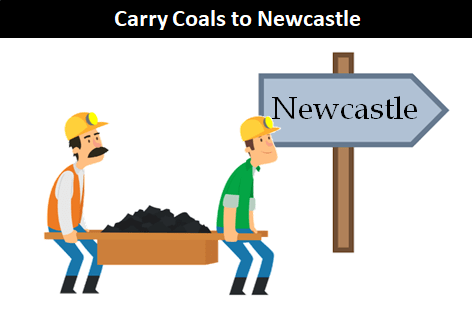
Carry Coals to Newcastle: to do something unnecessarily. The expression stems from Newcastle-upon-Tyne located in northeastern English. Henry III granted Newcastle a charter to mine coal. Becoming a major coal center, they would not be in need of coal as it would be unnecessary. Similar sayings are found in other countries, such as in French it is said to “carry water to a river.”
Image: grammarmonster.com
Cold Comfort: of little consolation. Although it is not known the origination of the expression, Shakespeare liked it enough to insert in a few of his plays such as The Tempest and The Taming of the Shrew.
Cold Hands, Warm Heart: just because someone seems unresponsive, that does not men they can’t express emotions. It’s thought Vincent Lean contributed the saying in a 1902 collection of sayings. Another interpretation is a person can be both rational and compassionate.
Image: desginbundles.net
To Pour Cold Water On: to discourage enthusiasm or pleasure. This saying dates back to Roman times from Plautus who said “They pour cold water on us.” Cold water can definitely dampen an otherwise good time.
Come Off It: be realistic, no fooling around. This American slang term comes from the 1900s and stem from the action of coming down from a higher place, such as dismounting from a horse, with the idea of being on the same level as the other person standing on the ground.
Cool As A Cucumber: composed, not rattled. It’s true: cucumbers are cool. It’s believed the inside of a cucumber is 20 degrees cooler than the outside air. Since this expression can be dated to 1732 writer John Gay, who wrote “I…cool as cucumber could see the rest of womankind,” one wonders how they figured, or even decided, to see if a cucumber was really all that cool.
Crazy As A Loon: unconventional behavior noted. There are different thoughts on this saying. Granted, the cry of a loon is quite unnerving. There is also the idea that the behavior of a loon is considered unconventional when flocks of loons seemingly fly erratically at each other over a frozen pond. This gives way to the expression of being “loony,” but in fact this loony refers to “lunar” or the phases of the moon. And we all know how a full moon can influence behavior.
Cry One’s Eyes Out: weep in extremity. Although it is not possible to actually cry until one’s eyes fall out, it may seem so in the throes of an emotionally draining situation. In a 1705 play, The Careless Husband, a line stated, “I could cry my eyes out.” The saying is sometimes referred to as “Crying one’s heart out.”
Image: Time.com
To Curry Favor: attempting to extract a means of getting ahead. In the sixteenth-century there was a satirical romance involving a horse named Fauvel who represented cunning. To groom or curry the horse indicated someone was hoping to enlist its use. Fauvel became “favel” and eventually became “favor” over time.
Cute As A Button: appealing in appearance. “Cute” is derived from the 17th century “acute” which meant, shrewd, ingenious, and even clever. Somehow, the word transferred to meaning “attractive in a dainty manner” perhaps being associated with buttons which are small and for the most part, attractive.
Image: Cardly.net
Stay tuned as the “D” section is set for next time another batch of clichés are explored.
It’s December, the last month of the year. Getting through another tough year might involve celebrating and celebrating might also involve some appropriate words.
nimiety: excess, overabundance
galimatias: confused or unintelligible talk
pharaonic: impressively or overwhelmingly large, luxurious, etc.
foozle: to bungle; play clumsily
effulgent: shining forth brilliantly; radiant
specious: apparently good or right though lacking real merit; superficially pleasing or plausible
brummagem: showy but inferior and worthless
encomium: a speech or piece of writing that praises someone or something highly
terpsichorean: pertaining to dancing
shivoo: a boisterous party or celebration
So, celebrate this last month of a challenging year, and let’s hope the new year brings new hope and healing.
Ah, September. The slow farewell to summer as school begins and the beaches close. This batch of words focuses on learning as the transition from beach bags to school bags takes place.
willyard: obstinate; willful (not all children, or adults, are joyful about attending classes)
obsteperous: noisy, clamorous, or boisterous (have you ever entered a kindergarten class on the first day?)
crankle: to bend; turn; crinkle (lots of paper, paperclips, pens and such to crankle in fall)
pother: a heated discussion, debate, or argument; fuss; to do (let’s hope these are avoided)
hebetude: the state of being dull; lethargy (this might be the case after a couple of months of vacation)
antediluvian: very old, old-fashioned or out of date; antiquated (some students might feel this way about their teachers)
tirrivee: a tantrum (students and teachers might throw one or two of these depending on how classes go)
swivet: a state of nervous excitement, hast, or anxiety; flutter (applies to both students and teachers on the first day of school)
faineant: idle; indolent (these moments do happen-to teachers as well)
amity: friendship; peaceful harmony (getting along is a key goal)
If not attending school, do any of the above work for you in your situation?
I was quite chuffed, having received quite a positive response from my Kangaroo Words post.
And there it was—another strange lexiconical usage of a word. You see “chuffed” (British slang) can mean one is pleased or displeased. It becomes its own antonym. These words are known as “contronyms.”