Having grown up in a town surrounded by the country, William Shakespeare was comfortable and familiar with the onset of spring. Since the 20th marks the beginning of spring, according to my Dollar Store calendar, here is WS’s tribute to spring in a poem appropriately titled “Spring.”
When daisies pied and violets blue
And lady-smocks all silver-white
And cuckoo-buds of yellow hue
Do paint the meadows with delight,
The cuckoo then, on every tree,
Mocks married men; for thus sings he,
Cuckoo;
Cuckoo, cuckoo:
Oh word of fear,
Unpleasing to a married ear!

When shepherds pipe on oaten straws,
And merry larks are plowmen’s clocks,
When turtles tread, and rooks, and daws,
And maidens bleach their summer smocks,
The cuckoo then, on every tree,
Mocks married men; for thus sings he,
Cuckoo;
Cuckoo, cuckoo:
Oh word of fear,
Unpleasing to a married ear!
For those interested in analyzing possible intent in his words, click “here.“
Being Shakespeare, it is par for the course that he would mix in references to country life, marriage, and the season. There are times I wonder if WS would have found a niche as a country western singer had he traveled in this era.
Winter flung its last fling in February providing enough snow to cause much joy and celebration for those seeking a skication. No longer a slope aficionado sought solace by reading a few decent books with only a couple rating a good read.
It’s difficult to find a book about Shakespeare that isn’t a good read. Having no remembrance of where I pick this up, I am glad to have found it on my Shakespeare shelf. Yes, I do have one bookshelf dedicated to Shakespeare.
Anyway–
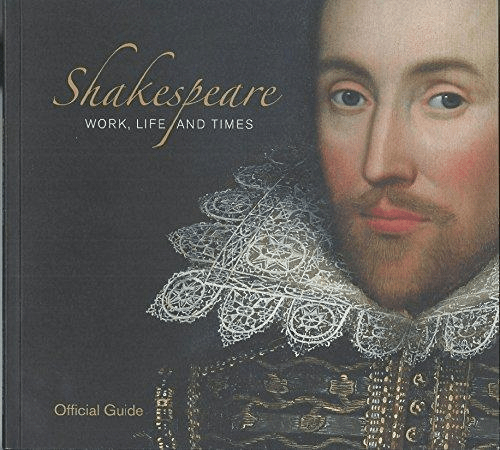
Ann Donnelly provides a slim yet expansive guide providing an informative overview of Shakespeare. The title aptly reflects what is covered and the accompanying illustrations complement the text well. It nudges me closer to flying across the pond for a Shakespeare-driven holiday.
The other good read is once again a volume of The Unselected Journals of Emma M. Lion by Beth Brower. This one was volume 8 and unfortunately it is the last volume until Ms. Brower provides further entries to Miss Emma’s life. I have to admit I became somewhat distraught upon finishing this book knowing there are no further Emma journals to peruse. They honestly are addicting.
Apparently, in some reading circles, these slim excursions have become quite popular, and at my local library there is often a waiting list for them. The plain cover belies the wit, the wink of wordplay, the hint of Austen that is present in each entry. I am truly having a difficult time finding other reads that I enjoy quite so well.
The truly odd thing was that they came to my attention via my husband, who began reading them upon the recommendation of another fellow reader. I usually recommend books to the hubs, not the other way around. His snorks of laughter as he read them initiated my curiosity and I confess I would have ignored the non-descript little books on the popular reads shelf otherwise.
Yup, I’m a Shakespeare fan. I even reference my appreciation as a Bardinator, meaning I’ll be back for more in a determined manner (sans the accent).
Some use the term Bardolator, but I can’t say I idealize Shakespeare. I’m still learning about him, hence my given term, since I keep coming back for more.
Really real or not so real—that used to be my question
But I used to think WS was a phoney baloney.
*Gasp*
I know.
I fault my public education’s failure to introduce me to Shakespeare. Nothing in elementary or middle school and just a squeak of a mention in high school. Okay, I did watch Zefferelli’s R&J in the theater and was caught up in the drama, although understanding the dialogue was challenging. That Renaissance English floated over my adolescent head.
I didn’t fully understand Shakespeare beyond I knew he wrote some famous plays and had some poetry creds.
Then I got my teaching gig and realizing Romeo and Juliet was in the curriculum I quickly got myself up to speed.
Long story short I became known as the Shakespeare Lady at school. And over the years have had a fine time getting to know more about the Bard of Avon.
I even visited the Folger Library, which brings me to the important point: even though Shakespeare is such an incredible influence why is there so little known about him?
That niggling doubt of “Was Bill for real?” pops up. Which brings me to the discovery of this article.
It makes sense doesn’t it? Why haven’t historians done the CSI thing sooner and dust for prints or his DNA before?
To think a bit of William might be found cozied in books he could have read is fairly cool. It makes me rethink how much of me is left behind in all those books I’ve read.
I’m with David Tennant on the question of whether or not of Bill. I don’t really care. I simply enjoy his works. And I’ll be back for more.
As much fun as it is to read Shakespeare, sometimes it’s easy to get sidetracked and read about Shakespeare, specifically about his life and times. Then again, since not much is known about his life, more is discovered about his times: Elizabethan England.
As the time period suggests, this is during primarily during the time of Elizabeth I, and of her life there is much written, with plenty of cinema bio treats ranging from Bette Davis to Helen Mirren. If needing a bit of a history refresher, the EETP (Elizabethan England time period) was from 1558-1603, basically her reign which is also known as the Golden Age.
However, all was not golden during that age. Even though that particular era ushered in much modernity into the world, it harbored some fairly ruthless aspects including torture, class divisions, lack of hygiene, illness, amidst other important considerations.
Ian Mortimer, a well-regarded historian, wrote a couple of books presented in a guide format as if the reader were dropped into a particular time period and needed some help navigating everyday life. Since information about William Shakespeare is roughly 20% fact and 80% supposition (my opinion) reading about the times he lived in starts to create a fuller portrait of the man.
Picking up Mortimer’s The Time Traveler’s Guide to Elizabethan England (as a time traveler interested in learning more about Shakespeare), I decide to investigate what a man might wear during EETP because we all know the expression “Clothes make the man” can be very true and applicable.
Did you know?
Both boys and girls wear skirts in infancy? Boys don’t get “breeched” (a type of hose) until they are around 6 years of age about the time boys head off to school. Girls don’t get to go to school and unless their family can afford a tutor girls are relegated to housewifery lessons. You would think having such an accomplished woman monarch would have inspired the nation to provide to equal education rights.
The thigh-length shirt a man wears to bed is tucked into his breeches and worn throughout the day. With its slit sides the shirt can be tucked inside the legs to act as drawers (boxers aren’t available yet).
I hear that question–only the well-off have the affordability to have extra shirts on hand, and bathing wasn’t an everyday occurrence (in fact, bathing was rather a not happening part of EETP), so yes, the times beget rather a distinctive ripeness amidst the population.
Men wore waistcoats, doublets, cloaks, hats, shoes/boots, and those ridiculous ruffs, those odd scalloped collars that remind a person of the cone-of-shame a dog or cat endures while healing from procedure. And let’s not forget pumpkin pants.
Both men and women wore ruffs, which encircled the neck being sewn out of cambric or linen, and were originally a small adornment but eventually grew in size to become status symbols requiring a servant to starch and maintain its shape.
A jaunty EETP gentleman sporting a double ruff (hoity-toity)
Most portraits indicate Shakespeare was balding and wore his sides long, while choosing to have a fashionably trimmed beard. Men could go to the barber or have a home visit. A comb was one of the essential items a man carried, along with a knife (for all sorts of purposes, including eating–no forks yet). The comb had wide teeth at one end (for detangling) and narrow teeth at the other end (for removing nits–now you will never look at your comb quite the same way). Beard style ranged from the pointed to full to goatee to mustache to a combination. Of course, clean-shaven was also an option. Today’s current trend of the ubiquitous five o’clock shadow would be not well-accepted: either beard up fully or shave in Shakespeare’s day. Sorry Jason Statham.
Sorry, Jason, the tuxedo does not replace the fact you need to shave, particularly for an evening’s entertainment at QEI’s court.
Shakespeare, if following the fashions of his time, would complete with his ensemble with accessories. The comb and knife being mentioned, another item is the purse. This was more of a small leather bag for coins and was attached to the belt. One had to watch out for cutpurses, who did just that. Working as an individual (children were just the right height to snatch and run) or as a gang, purses were cut quickly from belts and the culprit(s)ran off into the crowd. This should have cautioned wealthier individuals from showing off their jewelry; however, one had to show off status. Women weren’t the only ones who liked bling. Men wore gold chains with pendants, or rings, and there is that portrait of Shakespeare wearing a gold earring, although ear piercing among EETP males wasn’t prevalent. A proper gentleman would also carry a sword.
Not only were swords or the thinner rapier, handy for defense, they were also status symbols.
So– There may not be a plethora of descriptive passages of what Shakespeare wore, although Mortimer provides a fair idea of what he might have worn. Not being a country farmer, nor of royalty, and having achieved some fame and success in the theater, Shakespeare could have attempted to dress in a way that reflected his growing status. He might have looked something like this:
Yes, you can rent this from Boston Costume for a mere $105.00
When the Montana Shakespeare Troupe arrives in August to our fair town, it is a generally accepted acknowledgement that summer is on the wane. Pleasant weather still lingers, although it is a bit chill in the early morn and evening. There remains the essence of summer.
And then the calendar chimes out its equinoxal announcement that summer is past and autumn is now upon us. I’m not quite ready to bring in the patio furniture yet.
Shakespeare eloquently presents a metaphorical passing of one’s age in his often quoted Sonnet 73:
That time of year thou mayst in me behold
When yellow leaves, or none, or few, do hang
Upon those boughs which shake against the cold,
Bare ruin’d choirs, where late the sweet birds sang.
In me thou see’st the twilight of such day
As after sunset fadeth in the west,
Which by and by black night doth take away,
Death’s second self, that seals up all in rest.
In me thou see’st the glowing of such fire
That on the ashes of his youth doth lie,
As the death-bed whereon it must expire,
Consum’d with that which it was nourish’d by.
This thou perceiv’st, which makes thy love more strong,
To love that well which thou must leave ere long.
Back when in my AP teaching days, this was a poem we studied for its rich imagery and underlying message of mortality. However, bypassing an analysis (I hear that sigh of relief), I do want to focus on the last two the lines, the ending couplet. In the previous lines the speaker has expressed his concern how he is aging to his lover (maybe even a child–oops, that’s analysis) and in the ending couplet we see the volta, or turn, that indicates a change of mood. Here the speaker interposes the thought that though he might be aging in his own eyes, and in perhaps his lover’s eyes, it is this very state of aging that should initiate an even deeper love for the narrator. In other words, though summer (his youthfulness) is diminishing and hints of winter are coming (touches of grey in hair), this season of in between, autumn, should be even more cherished as it is the in between time before winter is fully realized.
Yeah, what Shakespeare said.
I welcome spring, enjoy summer, and embrace fall. Fall or autumn still has the warmth of summer, yet it ushers in harvest and nature’s graceful transition into a foliage showcase of beauty. Since retirement I am taking advantage of the gentle warmth of September afternoons. Previously (20 years worth) I wouldn’t get home until after the shadows filled my backyard and I would mourn having missed out on the sunshine having been inside a building all day (okay, mourn is a bit extreme, but I really disliked having to wait until the weekend to enjoy the fall sunshine).
I’ve experienced Shakespeare plays (one experiences his works, versus watches them—a bit pompous sounding,sorry) in a variety of forms: live on stage (several as an audience member and once as Horatio—very brief); large screen theater; small screen TV; reading, and teaching.
One favorite form is watching a performance in the park, as it is open air, much like a Globe performance. Plus there is the anticipation of lively audience response, the atmosphere being one of shared spaces and camaraderie. And the plays are usually free, at least the one that comes to our fair city is.
Every year in August the Montana company arrives and performs one of Shakespeare’s popular plays in a local park. This year they presented a As You Like It, which is one of Shakespeare’s more popular comedies.
Laughing Out LoudBard in the Park
Arriving at the park 40 minutes early I discovered the space already teeming with people, but no matter since I prefer the back for that quick exit to avoid the parking lot tangle.
As the sun drifted behind the trees the temps cooled down and the stage action heated up with runaway sons and daughters, tangled romance, and character arcs. As You Like It is a fun romp and the audience showed its appreciation with plenty of applause and laughter.
Bard in the Park signifies the transition from summer fun to back to school readiness. And Jacques mentions going to school in his famous “All the world’s a stage” soliloquy.
Anyone catch a Shakespeare in the Park performance this summer?
Time to catch up on my reading shares. I’m having an absolute jolly time in my retirement reading books whenever I want. Mornings used to find me scrambling out the door to get to class before the parking lot filled and evenings were often spent grading, leaving a smidgen of time during the weekend to leisurely read.
Not so anymore. I have started to luxuriate in bed in the mornings and read for a couple of hours before starting my day. Since I am still on teacher time I get up at 5 am and even reading for a couple of hours I am up and ready for whatever the day brings by 8 a.m. I am also deeply investing in hammock time this summer and depending on the book (a shout out to Anthony Horowitz) will spend ALL DAY reading.
When not reading I am at the library volunteering (my happy place), working on my own stories, or fiddling about with yardwork. Reading is definitely my retirement go to.
Here are the five star reads over the past couple of months:
I Could Murder Her by E.C.R. Lorac
Inspector MacDonald steps in early and in his usual smooth, methodical manages to untangle this messy family drama.
Mockingbird Summer by Lynda Rutledge
As with her other book, West with Giraffes, the main character is full of heart and refreshing insights as the book explores the complications of friendship across the tracks in 1964. The ending resonates after the last page is read.
The Essence of Malice by Ashley Weaver
A tangled case for Milo and Amory–this time in Paris.
The Wright Sister: Katharine Wright and Her Famous Brothers by Richard Maurer
Who knew Wilbur and Orville had two other brothers, let alone a dynamic sister? An informative middle grade biography of the Wright brothers’ sister who turns out contributed significantly to their success.
Marble Hall Murders by Anthony Horowitz
The third outing for Susan Ryeland provides readers with a different perspective. No Andreas, for one. And only a brief mention of Katie. Susan is absolutely on her own and once again caught up in editing a book with a sinister agenda that will threaten her life and livelihood.
Candle Island by Lauren Wolk
As with her other books Wolk provides a unique setting with a memorable set of characters. This story combines many plot threads: loss, new beginnings, creativity, animosity, respect, and adapting. Wolk’s signature lyrical prose is admirable.
Shakespeare: The World as Stage by Bill Bryson
A concise, user-friendly overview of Shakespeare in under 200 pages divided into quick chapters blending in known facts with neutral conjecture that adds nicely to anyone interested in learning something but not everything about the Bard.
The Lost Flowers of Alice Hart by Holly Ringland
A deeply profound story of healing through the emotional language of flowers that centers on Alice, who literally rises from the ashes of childhood abuse to a strong, confidant woman. This was also made into a series with Sigourney Weaver, but I have yet to watch.
The Poet’s Dog by Patricia MacLachlan
A short, poignant story of a dog and two children surviving a winter storm huddled together in a cabin once owned by a poet.
As always, you can find my other reviews on Goodreads–I hope you stop by.
National Poetry Month is still among us for a few more days and I would be remiss not to mention Shakespeare and his sonnets. There–duly mentioned.
I am sorely tempted to give a brief lesson about the sonnet, something I miss teaching from my AP English Lit days. BUT (which is an indication of the turn in the sonnet mood or message known as the volta–see what I did there? Yes, I did squeeze in a brief lesson), I shall refrain and instead spotlight that other aspect of Shakespeare.
No–not him being a playwright. Did you know he started out writing sonnets and not plays? That he considered himself more poet that playwright and that he inserted many a sonnet into many of his plays? There are four sonnets in Romeo and Juliet alone. The prologue that introduces the play is a sonnet (watch for the volta–hint, hint “which” works as well as “but”):
Two households, both alike in dignity, In fair Verona, where we lay our scene, From ancient grudgeParenthesis break to new mutiny, Where civil blood makes civil hands unclean.
From forth the fatal loins of these two foes A pair of star-crossed lovers take their life
From forth the fatal loins of these two foes A pair of star-crossed lovers take their life; Whose misadventured piteous overthrows Doth with their death bury their parents’ strife. The fearful passage of their death-marked love, And the continuance of their parents’ rage, Which, but their children’s end, nought could remove, Is now the two hours’ traffic of our stage; The which if you with patient ears attend, What here shall miss, our toil shall strive to mend.
There I am talking about sonnets again. Well, it is National Poetry Month. And being such a famous, well-known poet it is difficult not to have spent at least a bit of time about how the Bard rocked sonnets.
Sonnets. Plays. He did write them supremely well. We still read them, watch them, recite them, discuss them and you know what? Just watch a master recite the master discussing April–very appropriate, wouldn’t you say?
The cat is a nice touch.
Here I meant to talk about the other aspect of Shakespeare, and sonnets distracted me. A worthy distraction, true that. Yet, (another word that works as a volta, since I am changing the direction of this focus), beyond the perfect prose and poetry Shakespeare is so admired for there is a darker, mmm, not quite the right word–ribald, yes, Shakespeare has a definite ribald side to him: his insults!
Throughout his plays his characters lob the cheekiest insults at one another. Keeping in mind the majority of those attending Shakespeare’s plays were of the down-to-earth crowd, known as “groundlings” because they pay a penny to watch the performance and stood for the entire time, often shouting out their commentary to the stage actors. Stands to reason then why Shakespeare inserted earthy lines into his plays. He knew how to play to the crowd.
Here are some examples. They start at mild and run the course from G to PG13.
“Neighbors, you are tedious. ” —Much Ado About Nothing, Act 3, Scene 5
“[You] peevish baggage.” —Pericles, Act 4, Scene 6
“[H]e has not so much brain as earwax.” —Troilus and Cressida, Act 5, Scene 1
“You are not worth another word; else I’d call you knave.” —All’s Well That Ends Well, Act 2, Scene 3
“Out of my sight! Thou dost infect mine eyes.” —Richard III, Act 1, Scene 2
Or you can create your own insults with this link. This is a classroom activity we used to do during our Shakespeare unit in English. It would culminate in an insult-off between a student and myself with the object of hurling such a created invective that the other person would cry–actually it usually ended up with everyone laughing.
So, a tribute to Shakespeare’s prowess with prose and poetry and a solid nod to his poison pen when it came to hurling insults.
Labor of love: to do something for the joy of doing so instead of doing so for personal gain. This phrase is found in the New Testament in Hebrews 6:10 and in Thessalonians 1:3. Both scriptures refer to those who labor in the name of God, doing so in love.
Lame duck: someone finishing out their term of office who will be replaced soon. Originally in 18th century Britain a broker who could not pay his debts were crossed off the membership and they would “waddle away” in shame. Moving to the USA in the 19th century the term was applied to congressmen who were not reelected yet had to serve out their term. perhaps causing them to “waddle away” in shame of losing their job.
Larger than life: appearing to be real. The original saying is from the Latin expression ad vivum, or “to the life.” In the 18th century the phrase appears, the 1799 Lame Jervas: “I see the puppets, the wheelbarrows, everything as large as life.” Other writers, such as Lewis Carroll and George Bernard Shaw began using the expression.
Last but not least: perhaps last but not not least in importance. It’s thought John Lyly originated the expression when he said, “Of these three but one can stand me in steede, the last, but not the least” in his 1580 Euphues and His England. It was also used by Shakespeare in his plays, including Julius Caesar and King Lear.
Last ditch effort: a desperate final attempt. In the 17th century the military term for last ditch applied to the last trench of defense. The 18th century saw the term used by Thomas Jefferson who said, “A government driven to the last ditch by the universal call for liberty.”
To lay an egg: to fail in an embarrassing manner. If a player or team does not score in the British game of cricket then a duck’s egg or zero is earned. Transfer this concept to America’s vaudeville and theater days when a performance failed to please the crowd or when a business fails the idea of laying an egg is applied, or in other words, an zero is achieved.
Left hand doesn’t know what the right hand is doing: taking an action that might indicate less than full knowledge. In Mathew 6:3 the passage indicates that a person should do good quietly instead of publicizing their action, basically keeping the action secret. Over time the secret aspect has taken to mean one department’s or organization’s action indicates a contrary action to another department’s or organization’s efforts, perhaps to the point of adding confusion or inefficiency to a situation.
Left-handed compliment: a statement that seems like praise, but is actually a disguised insult. Marriages between royalty and a commoner is known as morganatic and the ceremony involved the groom (the royal) giving the bride (the commoner) his left hand instead of his right as was done in conventional marriages. *This brings up the issue of the left hand being considered the “lesser” of the hands, which harkens back to superstitions about being left-handed.
Let one’s hair down: to behave informally, without constraint. Back in the day when women wore their hair up, the idea of wearing their hair loose and down around their shoulders was considered a breach of societal protocol. A woman let her hair down only in the privacy of her bedroom. P.G. Wodehouse had fun with this in his 1933 Heavy Weather: “We can take our hair down and tell each other our right names.” *I’m wondering why this only applied to men…
Let the cat out of the bag: to reveal a secret. In old-time open air markets people would purchase their goods and carry them home in bags and baskets. There existed the shady practice of placing a cat in the bag instead of the purchased pig. When the person got home the truth was revealed when the cat was let out of the bag.
There are lots of “L” phrases left. The one that surprised me most was the cat in the bag. I will probably think of pigs whenever I hear a secret revealed from now on.
Face the Music: to meet with consequences. An American saying that derived from the theater. An actor on stage would face the orchestra pit, and the audience. If the audience was a rough lot facing the music meant the actor had a tough performance ahead.
One way of facing the music (ufficoriroma.net)
Fair and Square: just with equity. Found in the 17th century the term is redundant since “fair” and “square” are similar in meaning. A “square deal” has similar meaning.
Fair to Middling: mediocre. In mid-nineteenth century America, Artemus Ward wrote in His Travels “The men are fair to middling” meaning things are so-so. Look over “Can’t complain.”
Mmm, average? (thefreedictionary)
Far and Wide: affecting those over great distances. One of the oldest clichés about, dating back to the year of 900. The Old English states it as, “feorr and wide.” Shakespeare added it to Romeo and Juliet with the line from Act Four, Scene Two: “I stretch it out for that word “broad”; which added to the goose, proves thee far and wide a broad goose.”
Feast or Famine: an overabundance or a severe deficit. The original expression stated: “either feast or fast.” During the twentieth century the original changed to the present form of “feast or famine.” Though cliché, it is a term that seems to remain applicable.
(Have a) Field Day: enjoy an outing or occasion. An expression from the 1700s that refers to the military proceeding with maneuver practices. The term then began to appear in the 1800s to civilian matters, such as schools taking students out on excursions. It can also mean to enjoy oneself away from the usual, expected routine or even to immerse in criticizing someone, as in the press having a field day with discovering an unsavory situation about a celebrity or politician.
My kind of field day (Reddit)
(To not care or not worth) A fig: worthless. In the Mediterranean area figs are plentiful, so if something is plentiful it’s not considered as valuable. However, in other parts of the world, such as England, figs have to be imported, so they would have value. This makes it interesting when Shakespeare used the expression in his Henry plays. Why did Shakespeare use the expression. I’m not sure–it’s Greek to me.
Filled to the brim: fulfilled to the absolute possibility. Both Shakespeare and Gilbert applied this cliché in their plays to create the meaning of utmost fulfillment as found Antony and Cleopatra (3:13): “He will fill thy wishes to the brimme” and in The Mikado‘s description of the three maids as “Filled to the brim with girlish glee.”
Or is this better for “My cup overflows”? (blogspot)
There are plenty more expressions for the “F” section. Stay tuned…















 Pam Webb