Pam Webb

a writer's journey as a reader

Archive for the category “writers”

Willa You Let Me Read Your Letters?


intr.v. snoopedsnoop·ingsnoops

To pry into the private affairs of others, especially by prowling about.

Looking where we shouldn’t seems to becoming more and more acceptable or at least it’s becoming more prevalent. I don’t know about you, but I got in BiG trouble if I got caught snooping. Parents, siblings, friends, even strangers don’t appreciate having their hidden stuff exposed. And face it, we all have stuff we want to remain hidden.

This is why I am having such difficulty with my latest selected tome of erudition.

image: Oprah.com

Right there. It says it right there. Willa Cather’s letters were hidden.  She didn’t want them hanging out in the public eye.  In fact, it’s taken about seventy years after her death to get these letters out.  Why?  Cather expressly stated in her will that she did not want her correspondence bandied about. Aren’t last wishes significant? Apparently not. If the agenda and credentials are proper enough it is deemed in everyone’s best interest to snoop and reveal.* No shame attached. In fact, no contrite apologies. Furthermore, the editors, Andrew Jewell and Janis Stout, justify their snooping in the book’s introduction:

Before Willa Cather died, she did what she could to prevent this book from ever existing. She made a will that clearly forbade all publication of her letters, in full or in part. And now we flagrantly defy Cather’s will in the belief that her decision, made in the last, dark years of her life and honored for more than half a century, is outweighed by the value of making these letters available to readers all over the world. [highlights are mine]

Hmm, “forbade” means to me “don’t do that.”  What about “flagrantly defy”? Do I hear a little self-righteousness bragging, as in “I know it’s wrong, but I’m going to be proud out loud anyway”? Tsk.

As interested as I am in Willa Cather, I feel it’s wrong to snoop her letters.  Just because they are published by a reputable and respected publisher doesn’t mean it’s ethical. Literary vultures waited until the will expired in 2011 and swooped down for the feast.  Here is a paradox: if these two editors so respect Willa Cather, why aren’t they respecting her last wishes? Don’t get me started about trotting out King Tut’s burial goods for the paying public.  I guess celebrities are open season dead or alive.

Granted, the letters represent only 20% of the entire collection, and none are present that might tarnish or stain Cather, (says  the editors). I still feel mighty uncomfortable reading her private correspondence. There are family matters, personal matters, circumstances and situations that  reveal too much of a peek behind the privacy curtain.

As much I appreciate learning about Cather’s background, which helps provide more depth to enjoying and understanding her prairie trilogy (Song of the Lark, O Pioneers, My Antonia), I have  shut the book after about 200 pages, right about the third section, about when she left her editor position at McClure’s to pursue writing full time. The best is yet to come, yet sorry, I’m gonna pass. I respect Willa as an author too much to rummage around in her personal life.

Maybe, it’s me. Snooping for the cause of erudition is still snooping.

What do you think, readers?  Should Willa Cather’s wishes been respected? Should her letters have been left alone, should they not have been dusted off and printed up, even if it’s in the quest  harkening the light of “literary illumination”?
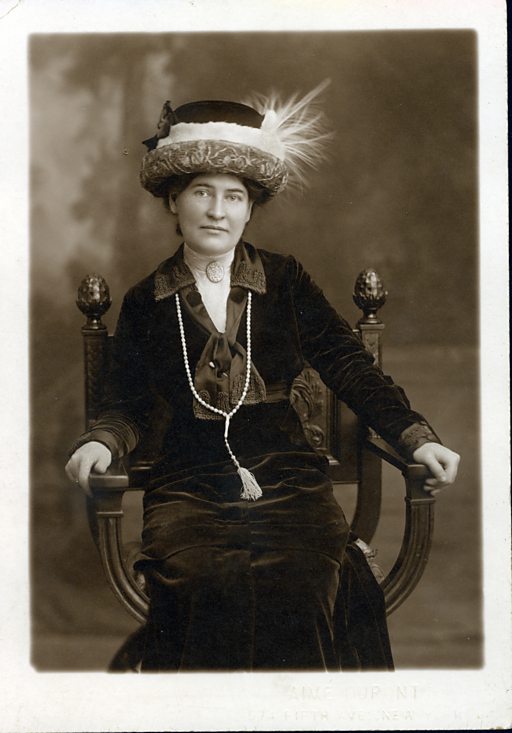
Willa is not amused.

*This could easily segway into a Snowden blog,, couldn’t it?

A Woolf in Read’s Clothing


photo: imdb.com

My first vague acquaintance with Virginia Woolf is associated with Elizabeth Taylor. Both are pivotal influences in their chosen professions.  As a last wave baby boomer cI recall a bit of a fuss when the movie Who’s Afraid of Virginia Woolf? came out.  Not being a Disney-generated flick my parents did not take me to see it.  In my childhood bliss of perceptual naiveté I believed Elizabeth Taylor to be Virginia Woolf and from the TV trailers she appeared to be a daunting person.  I could see why some might be afraid of her.

image: aroom.org

My second encounter with Virginia Woolf came way later when I began teaching high school English. Woolf’s essay “A Room of Her Own” was part of the senior lit curriculum, a prelude to a brief study in feminist writing.  Still getting my bearings about Shakespeare, I discovered through Woolf’s essay Shakespeare had a sister! I thought him to be like Atlantis, known but unknown, shrouded in mystery, waiting to be actually proven.  A sister?  It sent me scurrying to dedicated research and though Woolf got it all wrong about Willie’s sis, I now know much more about the Bard.

image: etsy.com

The third encounter came way of Meryl Streep.  She’s a fave, so I couldn’t resist picking up The Hours at the library.  Fascinating film (I admit some parts tweaked my comfort zone and my daughter squeaked, “you watched The Hours!”–my prudery is too well-pegged by family members). What truly fascinated me was Nicole Kidman as Virginia Woolf.  No wonder she received the Academy Award for her performance. A tortured artist always leaves me wondering  the why/what behind the reason of taking his or her  life instead of living it.

image: notreciinema.com

Finding Virginia a bit overwhelming I didn’t do my usual research and read on her. To be honest, although she intrigued me,she also made me nervous, much like James Joyce.  So much, almost too much in their writing for me to comprehend and absorb.  I felt unprepared to read her works.

At present I am a tiny bit more confident having an AP Institute training and one year of AP Senior Lit and Comp seated firmly on the resume.  I thought, “Okay, Ginny, let’s give it a whirl.”  I pulled down Orlando off the shelf and settled in for my summer chaise in the shade read.

Sigh.

I wonder if her writing would have been published if her husband had not set up Hogarth Press expressly for that purpose? Her writing is amazing, this is true. It’s rich, masterful, and paradigm pushing. Deemed ahead of its time, both Virginia and her writing nevertheless appeared to be respected and applauded.  Overall, I will have to pass on Virginia Woolf and her modernist approach to literature.  She and James Joyce are just enough of a different cup of tea to not be on my reread list.

I followed through on my research since I did not do my read on her.  I will definitely include her in my overviews on modernists. Virginia Woolf  may not be among my chosen authors; however, I do acknowledge her place in the literary hall of fame.

image: standrewsrarebooks.wordpress.com

Summer Read n Eat Poetry


Food and summer.  Yup.

Besides barbecue, picnics, reunions, vacation binges, craft fair nibbling, beach concession splurges and the like, there is also food found in our reading.  Take poems, for example.

This is just to say by William Carlos Williams

Watermelons by Charles Simic

Peach Blossoms by Carl Sandburg

A Ballad of Nursery Rhyme by Robert Graves

Orchard by Hilda Doolittle

Plums, watermelons, berries, peaches, oh my. Time to browse the Farmer’s Market!

For more summer foodie poems try this delightful site: TasteArt

Dandelion Summer


It’s always a pleasure to discover a new author, especially one who is prolific. Such is the case with my discovery of Lisa Wingate and her novel, Dandelion Summer.

Set in contemporary Texas, this is a character-rich story  with two polar opposites.  Imagine Henry Fonda from his role in On Golden Pond and a teenage Queen Latifah, you then would have Norman Alvord and Epiphany Jones, better known as J. Norm and Epie. Thrown together against their will, they reluctantly form a truce of temperaments as they launch out on a journey of discovery together.

One of the more delightful aspects of the novel is how Wingate swings the viewpoint from J.Norm’s to Epie’s, allowing the reader to fully realize the entire picture. Norman is a recent widower, ailing not only in health, but in regrets.  He is at odds with his only child, Deborah, a resentful professional woman who believes her efforts to run her father’s life is merely a way to honor her promise to her deceased, beloved mother. Epiphany is a troubled biracial sixteen year old who has it tough at home and at school. Both Epie and J. Norm want to break free of their circumstances and solve the mystery of who they really are.  The varying viewpoints provides the balance of age and youth, and it isn’t long before it’s clear that no matter a person’s age, status, or experience the basic need of family is foremost.  Epie and J. Norm form a family bond of sorts and what could have become oversweet in outcome turns into a realistic story of two hurting individuals who learn to rely on someone they least suspect of being a means of help to their situation.

My biggest takeaway from the novel is Norman’s letter to his daughter, Deborah.  He knows he wasn’t there for her when she was growing up and his letter is an apology, yet it is also an instructive that all fathers can learn from.  I plan on slipping this to my sons someday (never mind there aren’t married, or even have serious girlfriends yet), and maybe I can convince my pastor to read it for next Father’s Day. Here is an excerpt:

Dear Deborah,
Words do not come easily for so many men. We are taught to be strong, to provide, to put away our emotions. A father can work his way through his days and never see that his years are going by. If I could go back in time, I would say some things to that young father as he holds, somewhat uncertainly, his daughter for the very first time. These are the things I would say:
When you hear the first whimper in the nights, go to the nursery and leave your wife sleeping. Rock in a chair, walk the floor, sing a lullaby so that she will know a man can be gentle.
When Mother is away for the evening, come home from work, do the babysitting. Learn to cook a hotdog or a pot of spaghetti, so that your daughter will know a man can serve another’s needs.

The letter continues with sound advice and lyrical admonition to be all a man can be by being the best father a daughter can have and remember.  I read this to my writing compadres and the “oohs” and “aahs” circled around the table.

Dandelion Summer is definitely a book for perfect for the summer read list, yet  its warmth resonates long after the last word is read.

Fare thee Well, and so it ’tis…


English: Daguerreotype of the poet Emily Dicki...

English: Daguerreotype of the poet Emily Dickinson, taken circa 1848. (Original is scratched.) From the Todd-Bingham Picture Collection and Family Papers, Yale University Manuscripts & Archives Digital Images Database, Yale University, New Haven, Connecticut. (Photo credit: Wikipedia)


we part with such sweet sorrow,
the course is spent,
Come again Aprile as would t’morrow.


True–it’s over. Every day the Cricket has Mused her way through National Poetry Month.  Thanks for joining and I look forward to next year.  Thanks for the stop bys, comments, and new followers.


My favorite poems?  Certainly.  Glad you asked. Here a a couple I never tire of:


“Hope” is the thing with feathers


254

“Hope” is the thing with feathers—
That perches in the soul—
And sings the tune without the words—
And never stops—at all—

And sweetest—in the Gale—is heard—
And sore must be the storm—
That could abash the little Bird
That kept so many warm—

I’ve heard it in the chillest land—
And on the strangest Sea—
Yet, never, in Extremity,
It asked a crumb—of Me.

Emily Dickinson

English: Billy Collins at D.G. Wills Books, La...

English: Billy Collins at D.G. Wills Books, La Jolla, San Diego Deutsch: Billy Collins bei D.G. Wills Books, La Jolla, San Diego (Photo credit: Wikipedia)

Introduction To Poetry

I ask them to take a poem
and hold it up to the light
like a color slide

or press an ear against its hive.

I say drop a mouse into a poem
and watch him probe his way out,

or walk inside the poem’s room
and feel the walls for a light switch.

I want them to waterski
across the surface of a poem
waving at the author’s name on the shore.

But all they want to do
is tie the poem to a chair with rope
and torture a confession out of it.

They begin beating it with a hose
to find out what it really means.

Billy Collins


Emily rocks. Hands down, she is ThE Poet who has changed the landscape of verse, that is except for The Bard.  Now, as for Billy.  He’s cool.  He is such a poet pro he’s even been named Poet Laureate (high honors, that). His “Teaching Poetry” always reminds me to NOT beat the snot out of a poem when teaching poetry.

What are your absolute all time favorite poems?


500 Poems on the Wall…


Nope. A month is simply not enough. Thirty days hath April, but it would take a lifetime to truly discover the all and all of poetry.

There are at least a bazillion sites dedicated to poetry. I tend to gravitate towards http://www.poets.org, since they celebrate poetry in a BiG way. There is also http://www.poemhunter.com, which has this massive list of 500 poems.  Click and feast.

500 Poems

POETRY SOCIETY POSTCARD

POETRY SOCIETY POSTCARD (Photo credit: summonedbyfells)

Happy Poetry Month!!

Shaping Up Poetry: Found Poems


Found Poetry is another one of those amazing forms that tweak our known ideas of what poetry should look like or what it should be. So, today let’s look at finding poetry in unexpected places.

What is Found Poetry? (thanks Wikianswers)

A found poem is one in which words and phrases are taken from various sources and then strung together to make sense.

It is named because the elements which compose the poem are “found”. The words or phrases “found”, although they were written in totally different contexts and not meant to be used together, all have some kind of common theme. When placed together, they make a poem that makes sense.

Directions:

1. Grab any prose source (newspaper or magazine articles, ad flyers, instructions, directions, even textbook passages) and select a passage of 100 words or less.

2. Go through and find words and short phrases that have a “poetical” sound or are unusual or simply seem unique or interesting.

3.  If possible cut these out from the source, and if this is not feasible (some schools and libraries are picky about cutting up their books and magazines) write them down.

4.  Collect about 50 words and set them aside (roughly “find” about half of the original count 100=50).

5. Begin moving them around until the poem finds its way on the page.  One idea is to create the basic idea of the original piece. Found Poems can be typed out or formed into a collage.

Of course, these are basic guidelines and there is lots of flexibility to finding your own poem.  Here are a few examples demonstrating the creativity of this form:

First of all, go to Poets.orgto read a “legit” Found Poem.

Now, for some collage styles:


This is an example of  blocking out the words in the source (be source it’s okay to do so!):

One other example is taking prose, in this case an excerpt of a short story,  and finding a poem within it: (my rendered interpretation)

From “the Osage Orange Tree” by William Stafford
On that first day of high school in the prairie town where the tree was, I stood in the sun by the flagpole and watched, but pretended not watch, the others.  They stood in groups and talked and knew each other, and standing near the corner looking everywhere but at the crowd.

First Day
She stood lonely
as the tree
in the school courtyard.
Everyone busily
moving
and
greeting
one another
bridging summer into fall.

She stood alone,
like the tree.
I saw her.
She didn’t see me.
As you can read I didn’t follow my own directions of cutting the words down to half.  That’s the loveliest aspect of poetry–it’s aching to have its own rules broken.

Hoping you will find your own poetry in whatever prose you come across.  Finding a poem hiding within the everyday stuff words are made up of is a bonus.

Happy Poetry Month!

The Epicness of Poetry part three


Cover of "Paradise Lost (Penguin Classics...

Cover of Paradise Lost (Penguin Classics)

Paradise.  Lots of connotations. For some it is the place of perfection (Hawaii, for many), and for others it is the Garden of Eden, which is how Milton deemed the meaning in his epic poem Paradise Lost.

What makes this an epic poem?

For one thing it is like the other poems: BIG.  Milton transcribed a twelve book poem to his amanuensis, (he was blind at the time he “wrote” it), which came to over 10,000 lines.  He takes on the big topic of God’s way of doing things.  And there are the other  big characters of Adam, Eve, and Satan,. The theme of good and evil is a pretty big concept as well.

To understand the poem, let’s look at the poet.

File:Temple of British Worthies John Milton.jpg

image: wikipedia.org

During the 1600s in England, the government was undergoing change, which is definitely an understatement. John Milton got himself in trouble, and eventually into prison, due to his political beliefs.  As a writer, he considered himself among the upper echelon, but thought he could improve his game and be considered one of the truly big league guys (like Homer and Virgil) if he, too, wrote an epic poem.  Although he’d been planning to write Paradise Lost for some time, it’s thought his disenchantment with England’s government might have also been a catalyst for writing about a paradise (his country’s government) being lost.

The Poem
(thanks, Shmoop, you always say it so much better)

The other thing about epic poetry that you should know is that it always begins in medias res, or in the middle of things. This means that the poem begins, and then usually gives you a back-story before returning you to where you began, and then moving forward. For example,Paradise Lost begins with Satan already in Hell, but all the events leading up to it are narrated in Books 5 and 6. Similarly, the creation of the world, of Adam, and of Eve takes place sometime between Satan’s fall and the solidification of his plans for revenge (Books 1-2), but the creation is described in Books 7 and 8. In other words, the poem begins somewhere in the middle of the story, but then goes back and fills in the details. In medias res, baby.

Now, Milton’s poem doesn’t deal with war or the foundation of one of history’s greatest empires, and in this respect his epic poem is different from most of his major generic forebears (Homer, Virgil, and Spenser chief among them). While we do have a huge battle sequence in Book 6, something about it just seems funny. For example, it’s hard to take the battle seriously because we already know the outcome (Satan loses, which we learn in the very first book of the poem); if we’ve somehow forgotten the outcome, however, we always get the sense that God is going to win. The weirdness of Book 6 is explained at the beginning of Book 9, where Milton says flat out that he’s not interested in the type of martial heroism typical of epic poetry. He’s more interested in a type of internal, spiritual, Christian heroism, what he calls the “better fortitude/ Of patience and heroic martyrdom/ Unsung [i.e., not sung about in previous epics]” (9.31-33).

And he sticks to his guns: one could very well characterize Paradise Lost as an epic poem about “patience,” if only because it is Adam and Eve’s impatience that is the cause of their downfall. Now you might be asking yourself, what’s epic about patience, Adam, Eve, etc.? Well, for the Christian world, Adam and Eve’s story is of comparable significance as the founding of Rome or the Trojan War. According to the Judeo-Christian tradition, by eating the Forbidden Fruit, Adam and Eve introduced sin and death into the world, two very serious consequences. Seriously, who likes death?

Post-Thoughts

Paradise Lost is not light reading. Furthermore, it can be overwhelming to read, plus it addresses (for some) an uncomfortable topic. Nonetheless, Milton tackles the subject of choice (free will) in an eloquent manner, and his epic poem set a standard for tone and diction for English poets (probably all poets).  I have to admire a writer who dedicated so much time to one particular work. The results prove that tenacity and perseverance are part of a writer’s toolbox.

Coming to Terms with Poetry


education

education (Photo credit: Sean MacEntee)

They say the best education we receive is that learned while teaching.  I found this to be especially true for poetry fundamentals.

I don’t recall studying poetry in jr. high English, unless studying Simon and Garfunkel’s “Sounds of Silence” counts.  As for high school, I remember short stories, yet nothing on the poetry radar comes up for remembrance. College yes, ohmagoodness, poetry aplenty. I do recall a cacophony of emotions as I partook in the banquet of poets found in my Norton Reader. I transversed from embarrassment to  gratitude as I feasted on William Carlos Williams, Ezra Pound, Sylvia Plath and others I had not known existed.  Why, oh why, did I feel the compunction to resell my Norton at the campus bookstore?  College students out there?  Think twice before reselling your textbooks.  All those annotations and well-visited markings really do become appreciated some day.

norton reader

norton reader (Photo credit: cdrummbks)

These days I’m teaching to Common Core Standards and have come to terms with poetry.  They are an absolute on the schedule of attained knowledge.  I also have my AP crowd to cater.  Although I have over 200 literary terms we learn over the course of  the year in AP, I start out my ninth graders with double dozen or so.  How many do you know or remember?

  1. accent: emphasis or stress given a syllable or a particular word.
  2. alliteration: the reiterated initial consonants in prose or poetry.
  3. anaphora: repetition of an opening word or phrase in a series of lines.
  4. assonance:  the repetition of two or more vowel sounds in successive words, creating a type of rhyme.
  5. ballad: a song which tells a story; also be a poem with songlike qualities which tells a story.
  6. blank verse: the most common meter of unrhymed poetry in English; it lacks stanza form and rhyme.
  7. caesura: a pause within the line of verse.
  8. conceit: a fanciful expression, usually in the form of an extended metaphor or an analogy that usually displays intellectual cleverness due to the unusual comparison being made.
  9. consonance: a close similarity between consonants or groups of consonants, especially at the ends of words, e.g. between “strong” and “ring.”
  10. couplet: two consecutive lines of poetry that rhyme, and often have the same meter
  11. diction: the selection of words in a particular literary work, or the language appropriate for a particular (usually poetic) work.
  12. doggerel: crude verse that contains clichés, predictable rhyme, and inept meter and rhythm.
  13. elegy: a poem which mourns the death of someone.
  14. enjambment: when one verse runs into another verse
  15. epic: a long narrative poem on a serious subject, usually centered on a heroic or supernatural person.
  16. epigram: a short poem, which can be comical.
  17. figurative language: language which goes beyond what is denoted (see denotation), and has a suggestive effect on the reader; a figure of speech is part of figurative language.
  18. free verse: poetry which lacks a regular stress pattern and regular line lengths (and which may also be lacking in rhyme). Free verse should not be confused with blank verse
  19. haiku: Japanese form of poetry of seventeen syllables with three unrhymed lines of five, seven and five syllables
  20. heroic couplet: a couplet with iambic pentameter
  21. iamb: a metrical foot of one short or unstressed syllable followed by one long or stressed syllable.
  22. imagery: often taken as a synonym for figurative language, but the term may also refer to the ‘mental pictures’ which the reader experiences in his/her response to literary works or other texts.
  23. kitsch: sentimentality, tastelessness, or ostentation in any of the arts.
  24. limerick: a five line humorous poem involving a fixed aabba rhyme scheme
  25. lyric: a short non-narrative poem that has a solitary speaker, and that usually expresses a particular feeling, mood, or thought.
  26. metaphor: a direct comparison–it does not use “like,” “as,” or “than.” In literature it is a figurative statement asserting one thing is something that it is not.
  27. meter: the recurrence of a similar stress pattern in some or all lines of a poem.
  28. ode: a relatively lengthy lyric poem, usually expressing exalted emotion in a complex scheme of rhyme and meter.
  29. onomatopoeia: a word or expression which resembles the sound which it represents, like the meow of a cat or the quack of a duck.
  30. pastoral: usually written by an urban poet who idealizes the shepherds’ lives. The term has now been extended to include any literary work which views and idealizes the simple life from the perspective of a more complex life.
  31. prosody: the rhythm of spoken language, including stress and intonation, or the study of these patterns
  32. repetition: the duplication of any element of language such as a sound, word, phrase, sentence, or grammatical pattern.
  33. rhyme: the identity of the sounds of the final syllables (usually stressed) of certain proximate lines of a poem.
  34. scan: to assign stress patterns to a poem.
  35. simile: a figure of speech that draws a comparison between two different things, especially a phrase containing the word “like” or “as,” e.g. “as white as a sheet.”
  36. symbol: a person, place, thing, or event that stands both for itself and for something beyond itself.
  37. syntax: how an author chooses to join words into phrases, clauses, and sentences; similar to diction which is focused on individual words, yet syntax is concerned with groups of words.
  38. theme:  the central idea or insight about human life revealed within the work.
  39. tone: the attitude, as it is revealed in the language of a literary work, of a personage, narrator or author, towards the other personages in the work or towards the reader.
  40. voice: the writer’s distinctive use of language, which is created through the use of a writer’s tone and diction.

 Okay, there is about a triple dozen and a dose for good measure here. Some terms crossover into prose which is why we start off with poetry before short stories. We’ve found our students grasp analyzing smaller chunks of literary concepts and then retain those terms and skills for the longer works.

So, how did you do?  I didn’t include the various types of poems in this set.  Stay tuned…

Happy Poetry Month

Poetry

Poetry (Photo credit: Kimli)


American Rhyme and Reason


Walt Whitman's use of free verse became apprec...

Walt Whitman’s use of free verse became appreciated by composers seeking a more fluid approach to setting text. (Photo credit: Wikipedia)

In researching  material for upcoming National Poetry Month posts I came across an article which got me thinking on a couple of different levels.

First of all, how is it possible to narrow the immense possibilities to ten?

Secondly, the article is written from a British standpoint–is that observation, compliment, or review?

After perusing the list I find myself nodding to a couple of the choices, being perplexed at a one or two, and adding the others to my “must read.”

What are your votes and opinions?  Would you name these as “The 10 best American poems”? (click on “article” and read the reason and rhyme of each mentioned)

1.  “Song of Myself” by Walt Whitman

2.  “The Idea of Order at Key West” by Wallace Stevens

3.  “Because I could not stop for death” by Emily Dickinson

4. “Directive” by Robert Frost

5. “Middle Passage” by Robert Hayden

6. “The Dry Salvages” by T.S. Eliot

7. “One Art” by Elizabeth Bishop

8. “To My Dear and Loving Husband” by Ann Bradstreet

9. “Memories of West Street and Lepke” by Robert Lowell

10.  “And Ut Pictura Poesis Is Her Name” by John Ashberry

Post Navigation