Which three letter word sports the current title of having the most definitions?
A. lie
B. set
C. run
Lie?
Sorry—only two : to tell something that is untrue or to assume a horizontal position.
I’m not lying about not taking word knowledge lying down
Set?
Previously the champ, the Oxford English Dictionary (OED—THE leading dictionary) tagged it with 200 meanings, starting with the expected “put or lay something down” and then running on for another 32 pages with various meaning. Speaking of run—
Run?
Congratulations on this pick as the OED folk have determined that this little word carries a whopping 645 definitions. Impressive, right?
Here’s a sample (taken from RD.com)
When you run a fever, for example, those three letters have a very different meaning than when you run a bath to treat it, or when your bathwater subsequently runs over and drenches your cotton bath runner, forcing you to run out to the store and buy a new one. There, you run up a bill of $85 because besides a rug and some cold medicine, you also need some thread to fix the run in your stockings and some tissue for your runny nose and a carton of milk because you’ve run through your supply at home, and all this makes dread run through your soul because your value-club membership runs out at the end of the month and you’ve already run over your budget on last week’s grocery run when you ran over a nail in the parking lot and now your car won’t even run properly because whatever idiot runs that Walmart apparently lets his custodial staff run amok and you know you’re letting your inner monologue run on and on but, gosh—you’d do things differently if you ran the world. (And breathe). Maybe you should run for office.
And I have run the course on this post. Until next time.
Teacher Appreciation Day happened this week and I silently salute my former colleagues since I am now a teacher in the past tense.
A funny thing happened on the way to the classroom…
I started out my career with an AA in Early Childhood Education. The two year program held in a brand new interactive classroom was an amazing experience. I learned so incredibly much about little tykes and I also learned it would be difficult to make a sustainable living watching other people’s preschoolers since wages were barely above minimum wage. Hmm, that says something about how society values the care and feeding of our children. Let’s move on.
From there I enrolled in the university’s speech therapy program (having somehow been convinced by my dentist and mother to do so because he wanted to include a speech therapist in his practice and my mother probably liked the prestige of her daughter going into the medical field). I transferred out at the end of the year. Less said the better. Let’s move on.
Another university, another program. This time it’s Outdoor Education(officially dubbed Leisure Studies—I know. Outdoor Education is better for the resume). A BA later and an internship helped me understand this too was not a sustainable career since a camp director lives on site meaning time away from family and most camps are seasonal. Let’s move on.
I like to write. I like the outdoors. How about Environmental Writing? This university needed warm bodies for their new MA in the Teaching of Writing? Okay, I’ll switch. This one had possibilities providing I got hired on at a community college. One local CC with no openings. The library is hiring.
Twelve years later, a big move with a family now in tow I apply for the local high school library position. What? I need a teaching certificate to be a school librarian? More school. What? Budget cuts? The school district can afford a certified librarian? Options?
All those different paths helped me become an English teacher. An ECE degree definitely helped with classroom management (preschoolers and teenagers share distinct similarities), teaching outside the classroom when applicable thanks to Outdoor Education, and an MA in the Teaching of Writing absolutely came in handy. All that library time? What better place to apply literary knowledge than in AP English.
I didn’t intend on being a teacher because given my druthers I would have thoroughly relished being a long term librarian. I did appreciate my time in the classroom and do miss it (at times).
So happy Teacher Appreciation Day to those dedicated to educating our youth.
Having taught high school English for twenty years one of the biggest complaints my students voiced (besides writing essays) dealt with grammar rules. Well, as Bob Dylan sings, the times they are a-changing.
According to a recent Reader’s Digest article here are some grammar rules that are soon to be or are already changing going from missed to being acceptable (or is that mythed?).
Image: Tatiana Amazon/rd.com
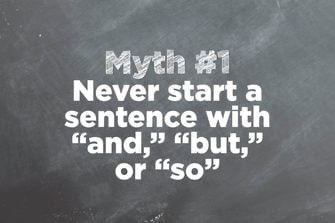
According to the grammar experts at the Chicago Manual of Style, there is no actual rule that states it’s an error to start a sentence with a conjunction. And I believe them.
Image: Tatiana Amazon/rd.com
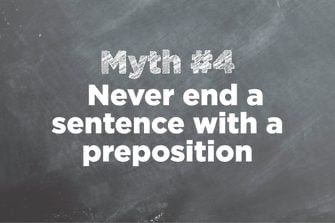
That age old rule of not ending a sentence with a preposition creates strange sentences such as, “What city from where did he travel?” instead of “What city did he come from?” Sometimes a sentence just has end naturally, like it’s supposed to.
Image: Tatiana Amazon/rd.com
Ah, the old discussion about splitting infinitives. First off know what an infinitive is before considering the need to split it. Says Wikipedia: An infinitive is a verb form that is used as a non-finite verb.
An example would be the well known tag line: “to boldly go where no one has gone before.” “To go” is the infinitive, and “boldly” splits it. No harm, no foul.
Image: Tatiana Amazon/rd.com
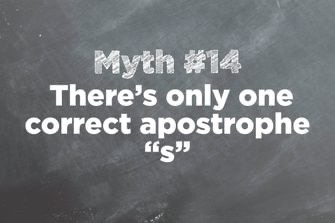
What to do when faced with the dilemma of adding that apostrophe “s” to a word ending in “s”? Which way is the write way (see what I did there?)
I’m going to go over to see Mr. James’s new car.
I’m going to go over to see Mr. James’ new car.
Trick question. They are both correct. It comes down to preferred style and consistency, using the same form throughout the writing is essential. Or it can be confusing to all those readers’ understanding of what your style is all about.
Of course I’m following the AI news. As a former English teacher I still have a vested interest in how students might tap into ChatGPT and all its marketplace cousins. I thought running herd on suspected cut and paste and plagiarism was challenging, now there is the matter if the assignments are student-produced or bot-generated. Did I mention I’m glad I’m retired?
Now that I am retired I am focusing on my own writing. I am beginning to notice publishers are posting their own AI cautionaries on their websites, about appreciating AI, but wanting original work. Yes, we’ll see how that turns out.
Then I read how someone created a picture book by plugging in prompt directives. This did not go over well in the comments. I have enough competition from humans, I don’t want any from machines.*
I decided to take ChatGPT for a test drive. I plugged in the prompt: Create an enthusiastic book review for Syria’s Secret Library.
I had just finished the book and was about to write up my Goodreads review and was curious what the ChatGPT approach would produce.
In less than a minute, more like 30 seconds, I was reading a seven paragraph review that was disconcertingly well-written. On first reading. Here is the first paragraph:
Prepare to be whisked away on a remarkable and inspiring journey as Mike Thomson takes us deep into the heart of Syria’s Secret Library. This is a truly exceptional work that not only sheds light on the power of literature but also showcases the indomitable human spirit in the face of adversity.
A decent introduction, a bit more enthusiastic in praise style than I would write, yet decent.
On second reading I noticed more glowing praise; however, it was what I refer to as “frosting” in that it looks good but has little substance. My AP students would write “frosting” essays when they weren’t fully knowledgeable about the topic prompt. They would write around the topic without truly addressing it. The AI result was much the same. It addressed the book in a very general way and the paragraphs became repetitive in its praise due to lack of detail. It’s as if it read the book jacket instead of the book:
The characters in this book are genuine heroes, ordinary people thrust into extraordinary circumstances, fighting to protect the essence of their culture and to safeguard the treasures of human knowledge. Their commitment and sacrifice are truly awe-inspiring, and their stories will stay with you long after you finish reading.
Which characters? What sacrifices? How were their actions awe-inspiring? These would be comments I would write on a student paper. Details. Give me the “so what?”—get me interested by providing specific details.
Then again, maybe it’s dependent on how well the prompt is formed. I revised my original prompt to read: Create a positive book review for Syria’s Secret Library including specific details from the book such as names, places, and events.
Here is a paragraph from the revised review:
The book eloquently captures the power of literacy and the profound impact it had on the people of Daraya. It was heartwarming to read about how children like Waleed and Reem found solace and inspiration in the pages of books, transcending the horrors of war. The author skillfully weaves their personal stories with historical and cultural references, painting a rich tapestry of the Syrian people’s resilience and unwavering thirst for knowledge.
It now mentions the place: Daraya, yet who are Reem and Waleed? And therein lies the problem with trusting bot research—it can get it wrong. There is no Reem and Waleed in the book. At least the the story I read.
I keep reading incidents where people, as in professionals such as lawyers, are getting into BIG trouble when it is revealed that their documents are flawed because they trusted what the AI produced. (Why they didn’t fact check is a question I had).
Overall, I am concerned where AI writing dependencies are taking us in both the creative and professional realm. From my brief forays though, I’m not too worried about my day job as a writer being threatened, especially after the results from my prompt concerning a young boy, a grandmother and feeding birds and squirrels in the park. AIiyiyi it was that bad.
*quick segue—my summer binge is “Person of Interest” which is an older series how a billionaire computer whiz invented a machine that watches the population for acts of terrorism, but he uses it to help prevent crime. I find this 2011-2016 series still relevant in how artificial intelligence becomes smarter than its programming.
Traditionally the month of September signifies the end of summer vacation and the return to school. September 2020 is the year of trying to attempting to educate during a pandemic. This month’s list seems to reflect an opinion on that essential issue. It’s indeed peculiar how the words happened to line up in this theme.
barmecidal: giving only the illusion of plenty
operose: done with or involving much labor
elide: to suppress; omit; pass over
slubber: to perform hastily or carelessly
outre: passing the bounds of what is usual or considered proper; unconventional; bizarre
horripilation: a bristling of the hair on the skin from cold, fear; goose bumps
strepitous: boisterous; noisy
chutzpah: audacity; nerve
oppidan: urban
peripeteia: a sudden turn of events
mythomane: a person with a strong or irresistible propensity for fantasizing, lying, or exaggerating
fettle: state; condition
blench: to shrink; flinch
cacoethes: an irresistible urge; mania
moil: to work hard; drudge
muzz: to confuse (someone)
moue: a pouting grimace
fardel: a bundle; a burden
succedaneum: a substitute
lassitude: weariness of body or mind from strain, oppressive climate; lack of energy; listlessness
stonking: used to emphasize something remarkable, exciting, or very large (thanks to Fiction Fan’s Book Reviews inspiring use)
Affect or effect? Is it all right or alright? Was it a blatant or flagrant mistake?
This month’s focus is from 100 Words Almost Everyone Confuses & Misuses (American Heritage Dictionary)
Using the right word correctly is part art and part science. Knowing the word’s definitions is a start.
Affect: transitive verb 1. simulate, as in “He affected a suave demeanor with his knowledge of lexicon usage.” 2. to show a liking for, as in “She affects huckleberry gelato.” 3. to tend by nature, as in “We read how the weather affects health.”4. to imitate or copy: “Spenser, in affecting the ancients, writ no language (Ben Jonson, Timber) 5.to have an influence on as in “The rain affects the tourist economy.” 6. to attack or infect, as in “Pollen can affect allergies in spring.”
Affect: noun 1. feeling or emotion, as in “The music was selected for its thrill of affect.”2. obsolete
Now that affect is squared away, let’s get effect squared away:
Effect: noun 1. a result, as in “Every negative comment has a lasting effect on the final vote.” 2. influence, as in “The child’s laughter had an immediate effect on the crowd.” 3. advantage, as in “The teacher used the rainbow as a positive effect of the rainstorm.” 4. a scientific law 5. a condition on full force, as in “The hands free cell phone policy goes into effect July 1.” 6. creating an impression, as in “The tall ceiling effects the sense of dimension.” 7. basic meaning, as in “He said he would never return, or words to that effect.”
Why are affect and effect confused and misused? For one, they sound the same and are nearly spelled the same. However, affect is a primarily a verb, while effect is primarily a noun (it can be used as a verb as in producing a result: “The change is primarily effected by the mixing of breeds.”
No wonder there is confusion. Try to remember if it is an action (affect/verb) or a noun (effect), as in “The abundant harvest affected the workers in a way of relieving them of worry for the upcoming winter, which created an lasting effect of peace and assurance.”
Affect/effect is a major contender for the confused and misused category. Here are a few other entries:
All right/Alright. All right is the correct and accepted spelling, at least formally. Some confusion may arise since words like, altogether and already are in use and accepted, which seems to clear the usage of alright—but it’s not correct. We don’t say “meese” for the plural of moose because we say geese for the plural of goose.
Blatant/Flagrant. These are not interchangeable. Blatant means noisy or fail to hide while flagrant focuses on the intended wrongdoing. While blatant is often used to mean “obvious,” this is not an accepted usage. The sentence, “Sam admitted to his blatant lie” should be changed to “Sam admitted to his flagrant lie” since flagrant refers to being offensive rather than it being unpleasantly loud. Although if Sam screamed his lie at the top of his lungs maybe it is a case for being a blatantly flagrant fib.
Capital is the official recognized city government.
Capitol is a building where the state legislature convenes.
Complement completes, as in “The added mushrooms complements the stew ingredients.”
Compliment is to praise, as in “The diner complimented the chef’s ability to create a sumptuous lamb stew by adding mushrooms.
A council is an assembly of people who deliberate, while counsel is advice. I imagine those involved in the council receive counsel regarding their decisions.
Fewer/less. Ah, the quick checkout dilemma. Fewer is used when counting things, as in “There were fewer than five pizza slices.”Less is used in reference to mass of measurable content, as in “There is less than a quart of ice cream left.” So when at the grocery store and you are looking to quickly checkout with your handful of items, select the line that has the sign stating, “15 items or fewer.”
PET PEEVE ALERT
A. Hopefully it won’t rain on Saturday’s picnic.”
B. “It’s hoped it won’t rain on Saturday’s picnic.”
Which is the correct sentence? If you chose B you would please the lexiconical folk. If you selected A, you are among the majority. While A is most frequently used, it is not considered acceptable by grammarians—not really clear on why, but as in the way of most of our language. Note:once it becomes widely used it becomes accepted, just look at how “their” is now embraced as a singular pronoun instead of a plural one. I had to finally let my teacher red ink dry on that one.
Inflammable/flammable both mean easily ignited. Nonflammable indicates not being able to catch on fire. Don’t let the “in” prefix fool you.
Irregardless—don’t go there. This is a blunder. It might be a blend of irrespective and regardless but it is nonstandard, so walk away. Stay with regardless.
UPDATE: Webster’s Dictionary has acquiesced and has recently added irregardless to the dictionary—I wonder if usage or peer pressure is the deciding factor.
Lay/Lie. Quick and easy: lay is a transitive verb and takes a direct object (noun) (think what was laid)—“He laid the letter (what) on the desk.”
Lies is an intransitive verb and does not take a direct object, as in “Auntie lies down after working in the garden.” There is no noun, direct object—lie is the stated verb of action. *Sigh* I’m still working on this one.
PET PEEVE ALERT
“I could literally scream until I am red in the face the way people pop literally into their sentences.“
Nope. Literally used as an intensive is incorrect since it means to be taken in truth. If I screamed until my face turned red I best be heading to the ER for a possible heart attack commencing, because that is a fairly intense reaction. I should be using virtually or figuratively instead. The next time you hear a sentence like, “I laughed so hard I literally thought my insides would burst” I suggest one of the above substitutes or maybe a dust pan.
And last of all is the old favorite: A principle is a statement or belief of truth and a principal is the leader of the school—think of him as your pal, who wants to impart truths while you are at school.
Hopefully this cleared up some of the confusion; irregardless if I muddled up the explanations, I literally tried so hard to make it clear that my brains nearly fried.
I wouldn’t lay, um, lie about my intended affect on your attaining greater knowledge.
[Ha—Wordpress has yet to perfect their auto correct].
I managed to go to school without any experience with Shakespeare (yeah, how did that happen?) I can easily relate to my student’s bewilderment when we begin our drama unit. Freshmen study Romeo and Juliet, sophomores experience Julius Caesar, juniors skip Shakespeare to study American Literature (The Crucible), and depending on the teacher, students have a range of selection from an overview of the comedies to a dive into tragedy with Merchant of Venice, Hamlet, or Macbeth.
I am usually prepared for groans from my sophomores when I announce we are studying Shakespeare. “Not again!” “We did him last year.” “Shakespeare is so boring.” Instead of coming up with excuses and defending our Wily Bard of Stratford, I agree with them. This gets me some interesting looks–most def.
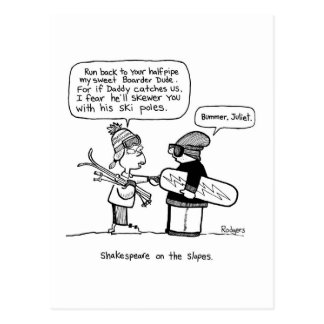
I do agree with my students. Shakespeare can be boring, or at least his plays were until I got the hang of them. Watching, let alone reading the plays, was painful to endure, and I felt I could never get anywhere, no matter how hard I tried. Then again, learning how to ski was painful, and I wondered if I would ever get down the mountain without a initiating a yard sale. Hmm, I should use this analogy with my students since they have grown up with a mountain in their backyard.
Here are two thoughts on Shakespeare:
“I am more easily bored with Shakespeare, and have suffered more ghastly evenings with him, than with any dramatist I know.” Peter Brook, English theatre director
“We find Shakespeare boring because we’re lazy. We’re not willing to get through the language. That’s the only barrier. If a play is performed right by those who are properly trained, after about twenty minutes you won’t be aware of the language because the human story is so strong.” –David Suchet, actor
What are your experiences with Shakespeare? Bored, frustrated, from having to endure year after year of his plays in school? Perhaps initially bored, but then the story unfolds and the words are no longer a barrier and serve as a contribution to the experience? Or maybe you grew to appreciate him with time and experience?
One of my standout memories of teaching my favorite play, Hamlet–sorry, I do mention that often, don’t I?–is after we wrapped up the unit, one student, from my regular, not AP class, stayed behind. “You know I’m going to miss discussing Hamlet, I really got to like this play.” He grew thoughtful. “I can’t discuss Shakespeare with my father.”
I never discussed Shakespeare with my father either. But I sure discuss him with my own children when I get the chance. Shakespeare boring? Not for long. Hang in there, dig in your poles, don’t cross your ski tips, and you will enjoy the thrill of going from snowplow to slalom. That applies to skiing as well.
April is National Poetry Month and is a time when I spotlight poetry as I teach. This year adjustments have to be made, but that doesn’t stop me from sharing a few of my favorite poems. The first one on my list is from Emily Dickinson.
“Hope” is the thing with feathers – That perches in the soul – And sings the tune without the words – And never stops – at all –
And sweetest – in the Gale – is heard – And sore must be the storm – That could abash the little Bird That kept so many warm –
I’ve heard it in the chillest land – And on the strangest Sea – Yet – never – in Extremity, It asked a crumb – of me.
Hope is just that: small, yet resilient, able to stay strong even in a tempest.
We are definitely in a tempest these days, and I pray that little voice of hope remains strong and provides the sweetness and surety that it will be heard.
In my day job as an AP teacher I have the privilege of introducing students to literary works of merit. I look forward to their insights and perspectives.
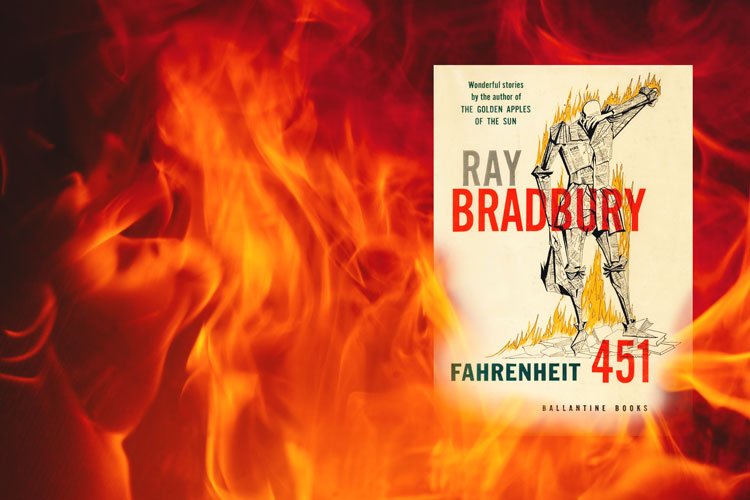
We have just begun Ray Bradbury’s classic dystopian tale of government control: Fahrenheit 451. This deceptively easy read contains complicated topics. One discussion topic is happiness. Guy Montag is not a happy fireman, or at least he was one until Clarisse asked him, “Are you happy?”
So I put it to my students a discussion statement prompted by Clarisse: “Happiness is a choice, not a given.”
A lively discussion developed with a split between total agreement and a few who decided happiness was a complicated issue and they couldn’t come to complete agreement about it.
I then prompted them with this question: “What is the difference between happiness and joy?”
Their conclusions were opposite of my mine.
They said: “Happiness is long lasting, while joy is a temporary emotion.”
Hmm, I’ve always reckoned it to be the opposite. Happiness is a temporary state, dependent on outside circumstances, yet joy lives deep in our being, dwelling in our soul.
Nope. They didn’t buy that. Maybe I did have it wrong. I proceeded in the course of action that all teachers must do when wondering if what they are teaching to their students is baloney. I Googled it.
What are your thoughts? Is happiness dependent on outside circumstances? Does joy stem from emotional contentment from within?
Interestingly enough Guy Montag, F451’s protagonist, upon realizing he is not happy begins making decisions involving enormous collateral damage. Joy is never mentioned as Guy Montag seeks happiness. Does he find happiness or joy? I will have to reread it and decide if he actually did. And that’s why F451 remains a classic—it keeps asking the reader questions after the last page is turned.
November is a conundrum, being a month that offers a mixture of pleasantries and of trauma.
First off, how can one hour wreak absolute havoc? The bonus of getting extra sleep when setting the clock back one hour quickly becomes a bad trade off since my body clock doesn’t easily adjust.
I’m one of those people who doesn’t need to set an alarm clock. No matter when I go to bed I wake up at 5 am. Sleeping in is an ideal, not a reality. DST now creates the dilemma of the time read on my bedside table blaring “4 am” in red LED numerals. Gah.
It takes until spring, about the time we spring forward, that my body clock reconciles the hour difference.
Another November trial is PTC—Parent Teacher Conferences. Our district provides two nights (after working a full day) where teachers are available to parents. As much as I enjoy meeting parents, it’s a tough schedule, especially since that hour sleep deprivation is amplified by a week. I hope parents don’t think their student’s teacher is a zombie because after a week of disturbed sleep cycle I am definitely feeling zombi-ish.
Fortunately, the long two days trades out nicely as it applies to two days off which coincides with Thanksgiving week. Having a week off after PTC while dealing with DST having graded a stack of SPRPs (Senior Project Research Papers) is definitely appreciated.
And I do enjoy thanksgiving. No holiday shopping hype. No endless rounds of obligatory events to attend. No gifts to stress about. Nope. Food, friends, family. Now, that’s what I call a grand holiday.
One another aspect of November that is irksome is the night factor. Having the sunset earlier and earlier each night means driving home in the dark which initiates the feeling I’m working the swing swift in the coal mines. After working inside all day stepping outside into the light is a necessity. Good thing D3 is inexpensive and I thank whomever for inventing the Happy Light.
perpetuating a perceived reality
November also begins the season which features that four letter word, and its presence stays among us much too long in the area of which I call home. Shiver, shudder, and grumble.
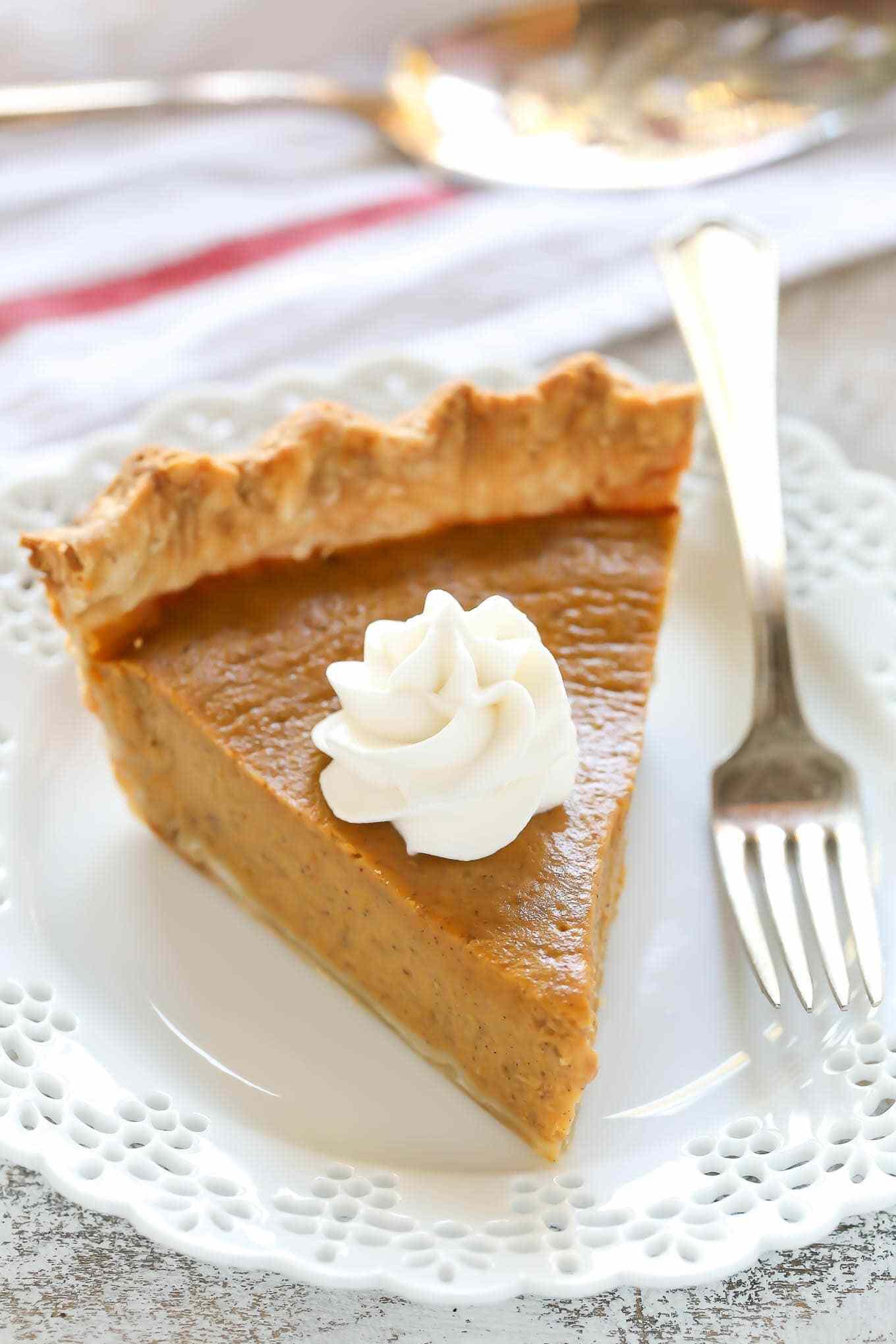
So—November is a bit of a trial, yet knowing there is a pumpkin pie waiting for me at the end of the month makes losing sleep, grading papers, working two twelve hour days, and dealing with that which shall not be named, a bit easier to swallow.










 Pam Webb