Pam Webb

a writer's journey as a reader

Archive for the tag “Word Nerd”

Word Nerd: Words Describing Words


Have you been there before, you know that time you were perhaps in a pub trivia round, or rooting for a Jeopardy contestant, or maybe just reaching for that word you maybe remember learning back in tenth grade English?

Those words that describe words is what this post is all about. You are no doubt familiar with that all time favorite onomatopoeia, which is fun to say (and less fun to spell), which means a word that sounds like what it is trying to emulate, such as buzz, ring, meow. Or what about oxymoron, when opposite words are used together, as in jumbo shrimp or Microsoft Works, or a loud whisper.

Ah, but there are so many other words that describe words. How about:

Tmesis: this is taking a compound word and inserting one or more words between the different parts.
“He abso-flippin-lutely said he refused to drive me to the airport.”

Portmanteau: blending two words to form a new word.
“Be a darling, and drive me to the airport. I’ll even treat you to brunch.”

Nonce: an invented word for a specific purpose, as often found in literature.
“Can you recite the Jabberwocky poem?”

Modegreen: replacing a word or phrase for misheard song lyrics.
“We got into a tiff about Cold Play’s song. He said “Dream of a pair of dice.” And I said, “Dream of paradise.” I was right of course, and he treated me to a gelato.

Crash blossom: when a news headline creates an ambiguous meaning, often creating inadvertent humor.
Dad almost fell over laughing when he read “Paramedics Rush to Help Bee Sting Victims” in his newsfeed.

Neologism: a new word or expression that becomes accepted into general use.
“Can you believe how many selfies Jana took on her vacation?”

Malapropism: mistakenly saying a similar sounding word, which can be both humorous and confusing to the listener.
“I tried not to smile when my niece said she liked the banana on my head, when I know she meant to say bandana.”

Counterword: a word that is used in a broader form than its original intent to the point that it has lost its true meaning.
“When I go shopping with Marjie she says everything I try on is nice, so it’s hard to believe if it is or not.”

Euphemism: using a word or phrase to more politely describe something that is awkward or unpleasant.
Wait for me while I go powder my nose.

Dysphemism: uses a word or phrase to more harshly describe something.
“My uncle has nothing good to say about that garage and called it a chop shop.”

Weasel words: those words signifying ambiguity that can lessen the impact of a statement.
“I might be able to take you to the airport. It’s likely that I will have time after my appointment.”

Synecdoche: using a figure of speech in which a part represents the whole.
“Grandpa will yell “All hands on deck!” when he calls us in to eat supper. I think he is remembering when he was in the Navy and was ordering his sailors to report to duty.”

So, which were new terms to you? I must admit I veer towards weasel words, and I have been known for my malapropisms, but try to pass them off as neologisms or portmanteau words. And for years I thought I was in modegreen thinking whenever I heard Creedence Clearwater wailing about that bathroom on the right. Thanks to YouTube I’m set straight.


Word Nerd: Springtime


With rowdy robins cheeruping all over the yard and bright green daffodils points bravely peeping up through the soil my vocabulary is attuned to springtime words.

nidificate: to build a nest–I’m seeing either last year’s nests populating the border hedge or there are some really early birds getting into that springtime feeling

Photo by Gundula Vogel on Pexels.com

kilig: a feeling of exhilaration or elation–that most excellent sense of “aah, yes” when the sun pops out and it is warm enough to sit outside and read and doze and doze and read.

wakerife: wakeful or unable to sleep–um, that would be related to DST…

psithurism: a whispering sound, as of wind among leaves–although lately it’s been more of a shout with wind gusts of 20 mph.

tootle: to move or proceed in a leisurely way–late afternoon walk around the block once the sun breaks through those cloudy skies.

sibylline: mysterious; cryptic–just how do the robins know when to return?

Photo by Arthur Brognoli on Pexels.com

bagatelle: something of little value or importance; a trifle–my attitude towards housework when deciding to clean or read a book outside.

inveterate: settled or confirmed in a habit, practice, feeling, or the like–it is indeed my habit to spend as much time as possible once the snow vacates the yard and the temperature is edging towards the upper end of the forties.

When it is considered spring for you? And what word best describes your thoughts on this welcome season?

Word Nerds: Spring Forth


As third winter silently adds to the already burdened snowscape, I look at my calendar and notice Spring is almost ten days away. It will take a bit of doing to get my front yard free of snow. In good faith I have bought a Costco 100 count bag of bulbs. The instructions indicate I can plant in April. The countdown begins…

Vernal: of or relating to spring. Oh, yes, bring on the vernal.

Raillery: good-humored; banter. I will definitely be in good humor once the snow melts.

Indite: to compose or write, as a poem. Wordsworth knew all about composing poems about spring.

Guerdon: a reward, recompense, or requital. Spring is undoubtedly a reward for toughing out winter.

Baksheesh: a tip, present, or gratuity. See “guerdon.”

Tisane: herb-flavored tea. Hercule Poiret sure liked his daily tisane.

Osculatory: the act of kissing. Spring does bring out the osculatory.

De novo: anew; afresh; from the beginning. Spring is a reset of the seasons.

Pensee: a reflection or thought. I have definitely been in a pensee state of mind about how long winter has been lasting this year.

Brume: mist; fog. There will be some brume as the warm weather (it’s hoped) starts to melt that dratted snow.

Sitzmark: the sunken area from when a skier falls backward in the snow. Not to be confused with making a snow angel (and farewell to sitzmarks as the snow melts).

Trachle: an exhausting effort, especially walking or working. Yeah, like my walking trail after five inches of snow have covered it up–giving my Sorels a good workout this year mucking through the snow.

Jouissance: pleasure; enjoyment. And when the grass once again appears, and the robins return, I will express jouissance that winter has passed.

Word Nerd: People


Terms of endearment, character labels, designations of gathering are all part of this month’s offering.

avuncular: acting like an uncle, as in being kind, patient, generous, etc., especially to younger people. Is there an auntie version? avauntcular?

macushla: darling

this would have been handy back in February

bibliophile: a bookseller, especially a dealer in rare or used books.

vicinage: a particular neighborhood or district, or the people belonging to it.

nebbish: a pitifully ineffectual, luckless, and timid person.

kith: acquaintances, friends, neighbors, or the like; persons living in the same general locality and forming a more or less cohesive group.

contumacious: stubbornly perverse or rebellious; willfully and obstinately disobedient.

Questions to ponder:

Is is possible to be a nebbish kith?

Have you known a contumacious bibliophile?

Are there any avuncular folk in your speed dial?

Word Nerd: Nouns of Distinction


As I remind my students, a noun is a person, place, thing, or idea. Here is a list of distinctive nouns.

haphephobia: an extreme fear or dislike of touching or being touched.

skerrick: a small piece or quantity; a bit.

tohubohu: chaos; disorder; confusion.

hugger-mugger: secrecy; reticence.

chiaroscuro: the treatment of light and shade in drawing and painting.

manavelins: miscellaneous scraps or small items, especially of food or gear.

exonumia: items, as tokens or medals, that resemble money but are not intended to circulate as money.

sumpsimus: adherence to or persistence in using a strictly correct term, holding to a precise practice, etc., as a rejection of an erroneous but more common form.

hydra: a persistent or many-sided problem that presents new obstacles as soon as one aspect is solved.

propinquity: nearness in place; proximity.

vibrissa: one of the stiff, bristly hairs growing about the mouth of certain animals, as a whisker of a cat.

concatenation: a series of interconnected or interdependent things or events.

foible: a minor weakness or failing of character; slight flaw or defect.

darg: a day’s work. Interesting that darg and darg share the same letters.

lustrum: a period of five years.

I need to find a way to wendle my appreciation for these fantabulous nouns in my sentences. It might become a foible in my darg to do so, give or take a lustrum.

And the bonus noun:

Do fribblers dribble away time and energy?

Word Nerd: October


October is noticing the changes in nature. Have you noticed any of these?

paraselene: a bright moonlike spot on a lunar halo; a mock moon

gloaming: twilight; dusk

cordate: heart-shaped

brumal: wintry

matutinal: pertaining to or occurring in the morning; early in the day

procellous: stormy, as the sea

plashy: marshy; wet

lucida: the brightest star in a constellation

Photo by u4e00 u5f90 on Pexels.com

Word Nerd: September


Ah, September. The slow farewell to summer as school begins and the beaches close. This batch of words focuses on learning as the transition from beach bags to school bags takes place.

  1. willyard: obstinate; willful (not all children, or adults, are joyful about attending classes)
  2. obsteperous: noisy, clamorous, or boisterous (have you ever entered a kindergarten class on the first day?)
  3. crankle: to bend; turn; crinkle (lots of paper, paperclips, pens and such to crankle in fall)
  4. pother: a heated discussion, debate, or argument; fuss; to do (let’s hope these are avoided)
  5. hebetude: the state of being dull; lethargy (this might be the case after a couple of months of vacation)
  6. antediluvian: very old, old-fashioned or out of date; antiquated (some students might feel this way about their teachers)
  7. tirrivee: a tantrum (students and teachers might throw one or two of these depending on how classes go)
  8. swivet: a state of nervous excitement, hast, or anxiety; flutter (applies to both students and teachers on the first day of school)
  9. faineant: idle; indolent (these moments do happen-to teachers as well)
  10. amity: friendship; peaceful harmony (getting along is a key goal)

If not attending school, do any of the above work for you in your situation?

Word Nerd Confessions: Random Exploration


Instead of a theme-oriented post I thought I pull out at random what I have collected over the last couple of months. Hope you find a few you can use.

  1. furphy: a false report; rumor

2. mellifluous: flowing with honey; sweetened with or as if with honey

3. yare: quick; agile; lively

4. desideraturm: something wanted or needed

5. supercilious: haughtily disdainful or contemptuous, as a person or a facial expression

6. mal du pays: homesickness

7. perfervid: very fervent; extremely ardent; impassioned

8. garboil: confusion

9. lagniappe: a small gift given with a purchase to a customer, by way of compliment or for good measure; bonus

10. friable: easily crumbled or reduced to powder; crumbly

Ten words that can zip up the most mundane of conversations. Think of the possibilities.

“He seemed to enjoy the lagniappe he received for spending so much money in the store.”

Word Nerd: November


This month is a mixture of archaic and contemporary. How do some of the cool words of the past slip out of usage?

  1. iwis: certainly (obsolete)

2. crepuscular: of, relating to, or resembling twilight; dim; indistinct.

3. mizzle: to rain in fine drops; drizzle; mist (I am so finding a way to use this in a story)

4. sagacious: having or showing great mental discernment; wisdom (I know this one, but haven’t yet found a way to insert it into any conversation)

5. gree: the prize for victory

6. zephyr: a gentle, mild breeze (so adore this word)

7. tantivy: to ride at full gallop

8. quiddity: the essence of something; its essential nature

9. soniferous: making or producing sound

10. chunter: to mutter

11. cavil: to raise trivial objections

12. hypethral: open roof (like the Globe theater!)

13. stownlins: secretly; stealthily

13. lunker: something unusually large for its kind

14. hypermnesia: having an unusually precise memory

15. cleek: to grab something unexpectedly; snatch

Such a preponderance of dictional expression! Which cleeked your fancy?

Word Nerd Confessions: Wander Words


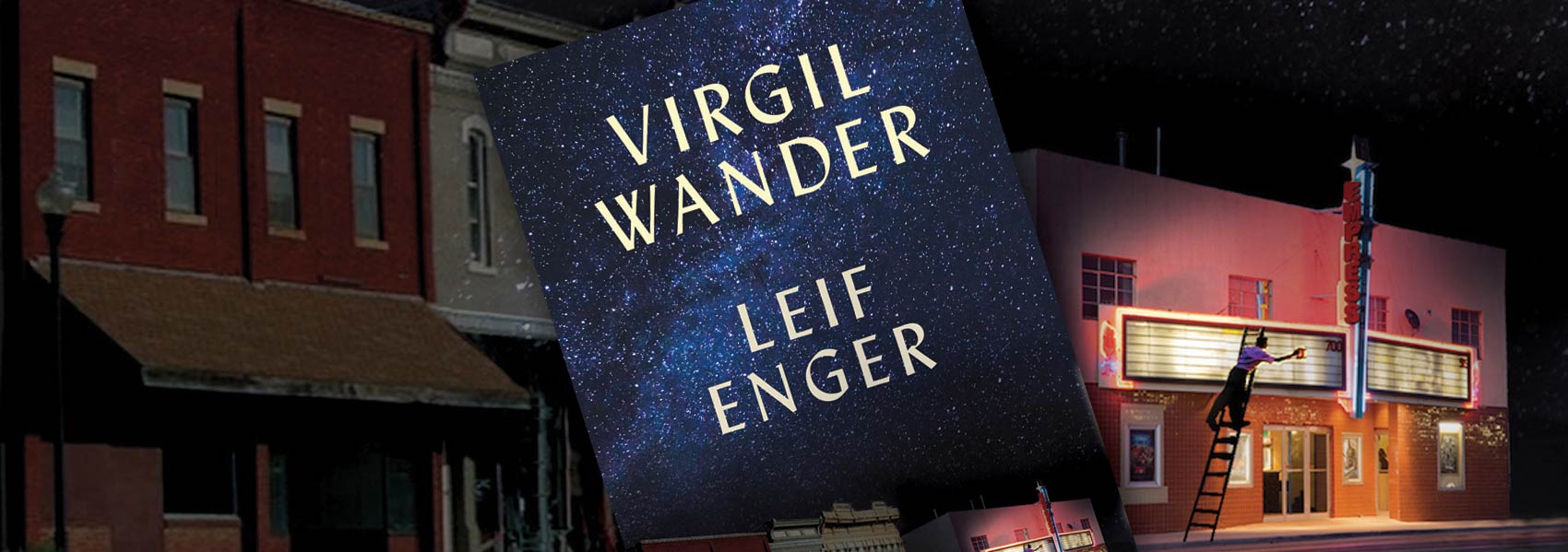
I do so enjoy picking up new words from a book I’m reading. Usually I garner a couple, now and then a handful. Sometimes though, a book will offer a plethora of new diction and I am in linguaphile bliss. Virgil Wander provides an amazing array of words. It’s not so much the actual word Leif Enger interjects, it’s how he applies it that makes the usage so noticeable and appealing.

Let’s begin…

Did you know there is a word for the sound of the wind flowing through trees or through the sea? I didn’t either. It’s known as soughing.

If something is rotten and falling apart, rightly call it out by saying its manky.

Why call it a bat when pipistrelle is more fitting.

As for contributing to the possible delinquent tendencies of minors, especially males, save them from future recidivism by taking away temptations.

Pick up a twin-coil guitar pick if you desire, although utilizing a humbucker sounds much more fun.

Once I realized I was on to a vein of golden lexicon, I began saving sentences and contemplating and translating into my own bag of definitions and choices.

“They had some devious sentience.” My choice would be sense of being or awareness.

“...wrote exegetical papers. Explaining something sometimes is not enough.

I then thought, “sentences and page number”:

“I won’t deny my vocal elan took a hit (p. 122). I would have said enthusiasm.

..left out the rumors of his expiry (p.130) Death is simply too bland.

…a fluminate ache” (p.164) Saying it’s a sudden, intense pain isn’t enough sometimes.

The sheriff is not laconic or severe” (p.136) Here I would have said the sheriff was a touch recalcitrant, but sheriffs of few words are bordering on cliche.

she had passerine eyes” (p.168 ) Is that a compliment or an astute observation if a girl has bird-like eyes? Is she a hawk, a sparrow, a chickadee? I need to take a look for myself.

“…he attenuated his budget” (p. 172) Why lessen the budget when attenuating it sounds more dire?

This word: repatriate*, threw me. This is where a prisoner of war, a refugee, or in some cases, artwork (such as 170 films ranging from Butch Cassidy and the Sundance Kid to Rock Hudson’s Pretty Maids All in a Row) are returned to the point of origin. Here’s the really interesting part–this is a bona fide job. What would it be like to roll up to someone’s house and say, “Hi, I’m here to repatriate that Van Gogh that you thought you purchased from a legitimate source, only to find out it was stolen from a museum? *One of they key elements of the plot was how Virgil inherited a stash of films when he purchased the movie theater. Their legal status created some angst on Virgil’s behalf. As a result, it might require an act of conscience to repatriate the films.

Instead of saying a building was similar in style, Enger says it’s an iteration (p.191)

Why saying the items were falling apart when putrescent is so much more exact? (p.191)

As for the bad guy in Enger’s story, he isn’t merely a villian, he’s “inveterate predator” (p. 219)

When throwing a wild studio fim party, drunken revel comes to mind, but that seems rather base, even banal–Enger describes these parties as bacchanalia (p. 222)

I favor the word brio, since it is a deeper, more expressive descriptive of enthusiasm. Enger interjects it to describe a particular film (p.223)

Remember that villian? He is also described as being avaricious (p.239).Being a bad guy is one thing, being a greedy bad guy is quite a different category of bad.

No one wants to be defined as a lout, especially not a raffish lout (p.423).

Obfuscation is always a better choice than plain old confusion (p.249).

I’ve not looked into the eyes of a sturgeon lately, or ever, for that matter. It would be of great consternation if the eyes of said sturgeon were insouciant (p.189). How can a fish have carefree eyes? Actually, if you read the book and make some decisive connections between the villain and the sturgeon, Enger knew that insouciant was appropriate.

Reading Virgil Wander kept me scampering between looking up the words, translating connotative and denotative meaning, and outright marveling over the usage. The only other book in which I do the dictionary shuffle is Bronte’s Jane Eyre.

What is most admirable about Virgil Wander and his first person vernacular narrative is that he complains how he can’t always find the right word since his accident, when he drove his car into the lake and sustained a few injuries including head trauma. I wonder what his lexicon abilities were prior to his concussion? As much as I love words I am fine staying on this side of the guard rail and the lake and will not be seeking water immersion to improve my vocabulary.

If you haven’t discovered Virgil Wander by Leif Enger, I hope my review and Word Nerds post have convinced you how it is a need to read selection.

Watch out for insouciant sturgeon, by the way.

Post Navigation