Pam Webb

a writer's journey as a reader

Archive for the tag “idioms”

Why We Say: #15


Watercooler chatter: “That new CEO doesn’t do much, does he?”
“Yeah, bit of figurehead, I figure.”

Today’s lesson involves some sailing knowledge. First, it’s important to know the front, the bow, from the back, the stern. The bow would be decorated with some sort of figure which actually is fairly interesting (go on–have a peek). They didn’t serve any real purpose, but they sure made the ships look imposing, important, regal, at times intimidating. There is also the thought that a figurehead, as in politics and business, can be controlled by other forces, much like the figurehead on the ship is controlled by the sails or other power. Hmm, is there a connection between these two figures in terms of being figureheads?

KONICA MINOLTA DIGITAL CAMERA  Elizabeth II greets NASA GSFC employees, May 8, 2007 edit.jpg (I think highly of the Queen, BtW)

Any Laurel and Hardy fans out there? You might recognize this saying, “This is a fine kettle of fish you’ve gotten us into.” If you recall, this was flustered out by Oliver Hardy to Stan Laurel after some frustrating incident. But why a kettle of fish? Maybe Ollie had some Scottishishness about him and was recalling how fishermen thought they could coax the best flavor out of the fish by cooking them right on the spot in a large kettle. They must have known the secret of cooking up a fine kettle of fish, since no one else could replicate it. Hence, from then on “a fine kettle of fish” is actually referring to a mess instead of success.


Singing in the Rain is a personal favorite, especially all those great song and dance numbers by Gene Kelly and Donald O’Connor. How about this one:

Why “fit as a fiddle?” Kelly and O’Connor might not have realized they were referring to boxers, the fighters (not the dogs) in their ditty. Apparently the original expression was “fit as a fiddler” because boxers had to be in top condition in order to go a few rounds in the ring. Wait, a minute, Gene and Donald must have known that to be “fit as a fiddle and ready for love” they would have to be ready to fight for their love. Makes sense…


(images from Morguefiles and Wikipedia)


Why We Say: #14


Facing the music. For most of us that does not mean we are a conductor or going to a concert. Usually it means we have messed up and are about to deal with our consequences. Wait a minute–music is considered pleasant. Wouldn’t facing music be pleasant? Not if the band is playing and you’re in the line up for the firing squad. And the band played on takes on a whole different meaning.


“So, Eddie–what’s with the guy in the blind fold over by the wall?” image: morgue file

The scene: a business exec, clad in suit enters suburban home circa 1950s and excitedly greets wife stirring up dinner at the stove.

“Hey, Martha! Guess what, honey? You’re looking at the guy who just landed the Happy Holstein account. Get ready for some serious vacation time once my commission check comes through.”

“Oh, George! That’s wonderful, dear. That’s quite a feather in your cap. You worked hard to get that account.”

Fade out: happy couple celebrates over dinner and raised glasses of cheer and smiles.

George was fairly pleased with himself, and deservedly so. That Holstein account involved many overtime hours to get the right campaign ready for presentation. George placed his figurative feather in his cap for his achievement. If George had lived in the days of Edward the “Black Prince” (think the nice prince Heath Ledger’s William character faced in Knights Tale), he would have received three ostrich feathers for his valor or perhaps he would have fared well as a Lycian soldier who added a feather to his cap for every enemy soldier vanquished. Either way George can be pleased how he absolutely slayed that tough assignment.


George rocks his cap feather. image: morgue file

fi·as·co
fēˈaskō/
noun
 a thing that is a complete failure, especially in a ludicrous or humiliating way.
“his plans turned into a fiasco
synonyms: failure, disaster, catastrophe, debacle, shambles, farce, mess, wreck
If George had blown the Holstein account he might have arrived home with the glum, instead of glad news, that his day had been a fiasco. Fiascos should be avoided, especially if one’s profession is a Venetian glass maker. Venetian glass is exquisite and craftsman pride is evident in the end product. If the slightest flaw became detected, the bottle was relegated to a common task which took on the name of “fiasco.” If you think about it, some mistakes can be as transparent as glass.

“Quartet of Fiascos” image: morgue file

A band of feathers and faulty glasses brought to you by Why We Say: a Guidebook to Current Idioms and Expressions and Where They Came From by Robert L. Morgan (if 1953 is considered current…)


Why We Say: #13


Today we learn about earning our salt, eating humble pie, and listening in on conversations.

“He’s worth his salt.”
“Oh, she earned her salt today, that’s for sure.”

Hear of these expressions? If so, then you know it’s in reference to someone who is worth the amount of money they are being paid. In fact, the word “salary” is derived from the Latin word “salarium” which refers to the old Roman practice of providing soldiers their daily salt allowance. A soldier earning his salt ration was earning his keep.

This soldier is looking forward to his salting his paycheck away for a rainy day.image: morguefile


Have you ever had to eat humble pie? You know what I’m talking about–that moment when you’ve been humiliated or had to admit you were wrong. Not a great feeling, but it beats having to eat real humble pie, which is actually the “umbles” or the liver and organs of deer. Yummy–right? Yup, back in the day when English noblemen trotted around bagging deer while hunting, they saved the best for themselves and left the less desirable umbles for the servants. The servants wanting to make their leftovers a bit more tasty would pack the dear bits of deer into a pie. I suppose it would be rather humbling to eat this culinary fare.

“I wonder if Radio would be saying ‘Where my pie?'” on this flavor of the day?” image:morguefile


Eavesdropping has taken on a more sophisticated form of listening these days due to the Internet and its penchant for hacking in on conversations. Yet, in the way old days, going back to England, a law existed where houses had to have enough room for the eaves to drip on the owner’s property. It was quite easy to stand in these spaces under the eaves to listen in on inside conversations. People got the inside scoop by being outsiders. Not much has changed, has it?

Not everyone is interested in the wayward tidbit that comes floating by. image: morguefile


Why We Say #12


Continuing on with our foray into unveiling the meaning behind those idioms we know (or not know) so well…


Jimmy Cagney voice: “You’ll never take me alive, copper.”

Gotta love those vintage gangster movies. Tommy guns blazing, trench coats, peroxide gun molls, and the dedicated police officers. “Copper” or “cop” an Americanism for police officers, actually owes it origins to London. Police uniforms of London’s finest were once adorned with large copper buttons–I wonder are they still?

I’m looking to get a cord of wood to bolster against winter’s chill. Red fir is the preferred wood by the MEPA’s standards and it has to be cut an irregular 14″ due to our small stove. Wait–what exactly is a cord? At one time a cord or string was used to measure a stack of wood to make it equal _____ feet long, _____ feet wide, and ______ feet deep. Got the answers? Try 8, 4, 4.

However, I still have to round up the wood before I can measure and it might be a wee late in the season to secure my snap, crackle, and poppers for the long winter nights. Presto logs just don’t lend the same ambiance.

Now, this is what I call combining a bit of fun with a full day’s work. Image: http://www.lumberjocks.com

“Oh, don’t give me those crocodile tears. You’re not really hurt.”

Crocodile tears–fake crying–insincere remorse–hypocritical sadness. We attribute that empty crying to being as empty as crocodiles shedding tears as they chomp down their victims. Wait–do crocodiles really cry? Apparently it’s been witnessed that these primitive reptilian cry when they are snacking? Try out this link. It’s more complicated than my little Why We Say book explained. Crocodile tears do make for some great social commentary:

image:kmuw.org


Why We Say: #11


Cold Feet

Maybe this falls into the TMI category, but I wear socks at night. My tootsies get cold, and cold tootsies prevent a good night’s sleep. However, having cold feet and being accused of having cold feet have two very different meanings.

The scene: Two soldiers from the 19th century are standing around on the battlefront and they are freezing cold, like most soldiers in winter.

“So, Joe, are you as cold as I am?”

“Yeah, my nose is cold, my ear lobes are cold. I think my eyelashes are frozen.”

“Mine too. I think my toes are frozen.”

“You got cold feet? You should report that. I hear they’re letting us out if we got cold feet.  Can’t fight if you’ve got cold feet, you know.”

“You’re right. Thanks for the tip. You know I could see how this could be considered an excuse for not standing your ground and fighting.”

“Yeah, I can see your point, Horace. Cold feet, cold courage. Whoa, look lively–incoming. Remind me to loan you a pair of extra socks. The missus sent me some handmade woolies in the last package.

“You’re a real buddy, Joe.”

“Don’t mention it.”


Well, maybe Joe and Horace could have had a similar conversation standing around in some frozen field as they stood around soldiering.

Cold feet. I still hear that expression today. That reluctance to do something because we are a bit nervous, or lack that needed chutzpah to grab the opportunity does seem to create a coldness in our extremities. I don’t think wool socks always is the solution either.

Why We Say: #8 (a backstock of Bs)


Well, Well…

I haven’t run a “Why We Say” since December. Tsk. Not wanting to disappoint I will make up the lost months in a bevy of Bs. Five months equal five reasonings for “Why We Say”–


1. Springtime is April showers and May flowers and baseball!  It is appropriate we begin our first B with Baseball Fan. Back when newspaper ruled the news, there would be great competition for space. Naturally, if a longer word could be exchanged for a shorter one, or if a long one could be condensed, the switch was made.  Charles Haas, apparently is the reason we now refer to sports enthusiasts as “fans.”  He was credited as being the greatest baseball “fanatic,” which became shortened to “fan” once it hit the press pages.  And here I thought “fan” referred to the paper waving needed for those hot days in the stands.


2. “Oh quit beating around the bush, and just tell me what you think!” Have you ever been accused of holding back information? If so, this statement might be flung at you. You might not realize how foxy you’re being by holding back from your audience.  Back in the day, hunters wanting to rout foxes from their hiding spots in the bushes, would send someone to beat the bushes to scare out the tawny evaders.  Not wanting to become some ladies fur stole, the foxes would learn to keep hidden, which meant it took a long time to get a fox to pop out.  The “aha” moment with this phrase: sometimes it takes someone a long time to get to the point of the story.


3. Do you suffer from getting in tight spots? Do you sigh at the getting behind, just when you thought you had it all in order? Do you wish you could be a winner, instead of being a loser?  If you checked “yes” to any of these questions, you will then most certainly relate to the expression “Behind the Eight Ball.” This expression is derived from the pool game of rotation, where each ball is played except the eight ball. If the eight ball blocks your shot, you have basically lost the game.

4. “I would love to be in your shoes.” This one makes sense all on its own.  It’s simple, right?  It simply means we want to trade places.  That’s true and then some.  Let’s go back as far as 1834 in England. At that time children who were to be adopted would step into their new father’s shoes to stress the importance of the new connection and family ties.  “Shoes me, are you my new dad?”

image: 74211.com


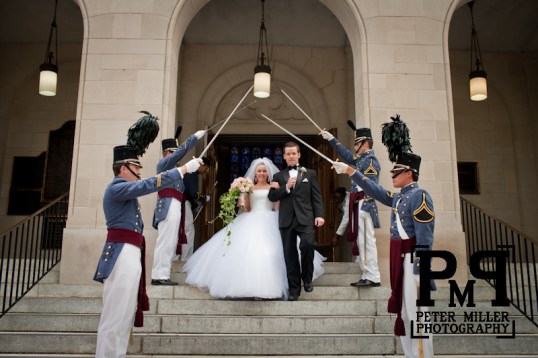
5.  With spring comes summer and with summer comes weddings.  Ooh, I love a summer wedding and I am so disappointed when I don’t get to go to at least one summer nuptial exchange.  I love the chance to actually dress up, mix and mingle with old and new acquaintances, eat, drink, and be merry and best of all I enjoy watching the bride and groom exchange their commitment to one another.  I look forward to the wedding theme and the fashions.  How many bridesmaid? Will the best man be serious? Or will he pull the old “ring, what ring?” routine.  The best man is naturally the groom’s best friend or close relation, and it’s a place of honor.  This custom stems from centuries ago (primarily in Europe) most weddings took place at night (don’t know the reason on that one–research time) and it wasn’t unheard of to have the rival come swooping in an attempt to kidnap the bride. One precaution against this shocking, and irritating practice, was to have the groom’s men stand guard during the service.  The main guard would be the groom’s most trusted or best man. Tuxedos optional with swords?


Next month B on the lookout for some more Bewildering “Why We Says.”  Until next time…

Why We Say: #1


The Word Geek in me is rising forth once again.

Having loaned out a book so long ago I thought I had inadvertently donated to Somewhere (Friends of the Library book sale, Goodwill, who knows), I did a happy dance to have it once again returned to me.  I gleaned it long ago when deleting old and dilapidated items from the school library.  Only a Word Geek would appreciate this title:

Why we say: A guidebook to current idioms…

It’s full of idioms and the background of why we say what we say.  Published in 1953, it’s actually older than I am; however, when I do utter some of these expressions now and then my students do that sideways eye glance at each other, and I will know they haven’t a clue what I am talking about.  This book, now back in my possession, helps me explain why we say what we say.

For instance:

“His excuse about not reading the assignment was above board.”

>What’s she talking about?<

>I dunno.  It’s one of her odd things she says<

Well, it’s not that odd when you think about it.  Sailors deal with the water in two ways: what goes on below, and thus unseen, and what goes on above, which is most easily seen.  When things could be seen easily, clearly, straightforward, and even honestly it was considered above board, or above the water line.

Hence, the student’s excuse about not reading the assigned homework was honest.  I believed the reason.

>Why didn’t she say that in the first place?<

>I dunno.  She says stuff like that all the time.<

Has anyone got an idiom you say but haven’t the foggiest what it means?  Betcha my lil book explains it.  Send ’em my way.


Post Navigation