Pam Webb

a writer's journey as a reader

Archive for the tag “authors”

Reader Round Up: June


I’m not sure why I think it’s automatically summer when May flips over to June on the calendar. It wasn’t the case this year. Our wet spring adamantly hung on through a major portion of June with only a scattering of sunny days. June ended with a torrential rainstorm complete with donner und blitzen (as my latent German surfaces).

Rainy days equal reading days. Here are the five star reads for June 2024.

Vendela in Venice by Christina Bjork, illustrated by Inja-Karin Eriksson

image: Amazon

The adult Swedish author recounts a trip she took to Venice with her father when she was a child presented as a picture book. Informative and charming with beautiful illustrations that capture and complement the text.

The Word is Murder by Anthony Horowitz
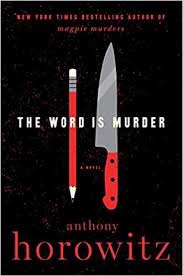
image: Goodreads

Anthony Horowitz is a talented writer. He is also a cheeky one in how he can get away with writing himself in as a character in a novel, dropping names hither thither, promoting his other works, and elaborating truths into meta fictional facts to suit his purpose.

His latest foray into adult fiction involves him teaming up with the irascible Hawthorne, a former police officer, who wants Horowitz to write a book about a murder case he’s working on. The problem is that Hawthorne is unreliable and unlikable, and that Horowitz gets dragged into the investigation at the risk of his career and even his life.

The Door-to-Door Bookstore by Carsten Henn

image: Amazon

Quite an original and superb novel emphasizing how books bring people together. Though translated, it easily becomes a story that any culture which values reading can embrace. Books, eccentric characters, even a cat with idiosyncrasies—a novel that is a delightful one sitting read.

Modernity overlaps tradition as the new bookstore owner wants to phase out home delivery service, which essentially phases out Carl. His simple life becomes more complicated when precocious nine year old Schascha joins him on his rounds. Her involvement on his deliveries begins the end of life as he knows it to open a door to other possibilities.

A Gentleman in Moscow by Amor Towles

image: Amazon

A few years ago I read the book and have recently watched the TV series, which necessitated rereading the book. This proved the best way to thoroughly enjoy the author presentation of a Russian fairytale that deftly weaves in Russian history. Watching the TV series with Ewan McGregor playing Count Rostov is proving the old adage “the book is the book and the movie is the movie.”

Now that July has arrived the weather report indicates a hot summer is anticipated. No problem—I just bought a new hammock with an umbrella. My TBR is fully loaded. I’m looking forward to lounging and reading in the backyard.

Where’s your favorite place to read in the summer?
How Cliché: Liking those “L” phrases


Lots of lovely “L” phrases coming your way…

Labor of love: to do something for the joy of doing so instead of doing so for personal gain. This phrase is found in the New Testament in Hebrews 6:10 and in Thessalonians 1:3. Both scriptures refer to those who labor in the name of God, doing so in love.

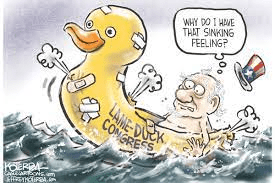
Lame duck: someone finishing out their term of office who will be replaced soon. Originally in 18th century Britain a broker who could not pay his debts were crossed off the membership and they would “waddle away” in shame. Moving to the USA in the 19th century the term was applied to congressmen who were not reelected yet had to serve out their term. perhaps causing them to “waddle away” in shame of losing their job.

Larger than life: appearing to be real. The original saying is from the Latin expression ad vivum, or “to the life.” In the 18th century the phrase appears, the 1799 Lame Jervas: “I see the puppets, the wheelbarrows, everything as large as life.” Other writers, such as Lewis Carroll and George Bernard Shaw began using the expression.

Last but not least: perhaps last but not not least in importance. It’s thought John Lyly originated the expression when he said, “Of these three but one can stand me in steede, the last, but not the least” in his 1580 Euphues and His England. It was also used by Shakespeare in his plays, including Julius Caesar and King Lear.

Last ditch effort: a desperate final attempt. In the 17th century the military term for last ditch applied to the last trench of defense. The 18th century saw the term used by Thomas Jefferson who said, “A government driven to the last ditch by the universal call for liberty.”

To lay an egg: to fail in an embarrassing manner. If a player or team does not score in the British game of cricket then a duck’s egg or zero is earned. Transfer this concept to America’s vaudeville and theater days when a performance failed to please the crowd or when a business fails the idea of laying an egg is applied, or in other words, an zero is achieved.

Left hand doesn’t know what the right hand is doing: taking an action that might indicate less than full knowledge. In Mathew 6:3 the passage indicates that a person should do good quietly instead of publicizing their action, basically keeping the action secret. Over time the secret aspect has taken to mean one department’s or organization’s action indicates a contrary action to another department’s or organization’s efforts, perhaps to the point of adding confusion or inefficiency to a situation.

Left-handed compliment: a statement that seems like praise, but is actually a disguised insult. Marriages between royalty and a commoner is known as morganatic and the ceremony involved the groom (the royal) giving the bride (the commoner) his left hand instead of his right as was done in conventional marriages. *This brings up the issue of the left hand being considered the “lesser” of the hands, which harkens back to superstitions about being left-handed.

Let one’s hair down: to behave informally, without constraint. Back in the day when women wore their hair up, the idea of wearing their hair loose and down around their shoulders was considered a breach of societal protocol. A woman let her hair down only in the privacy of her bedroom. P.G. Wodehouse had fun with this in his 1933 Heavy Weather: “We can take our hair down and tell each other our right names.” *I’m wondering why this only applied to men…

Let the cat out of the bag: to reveal a secret. In old-time open air markets people would purchase their goods and carry them home in bags and baskets. There existed the shady practice of placing a cat in the bag instead of the purchased pig. When the person got home the truth was revealed when the cat was let out of the bag.

There are lots of “L” phrases left. The one that surprised me most was the cat in the bag. I will probably think of pigs whenever I hear a secret revealed from now on.

Is It Possible to Avoid Phoney Writing?


No, that’s not a misspelling. I’m starting to realize as a writer that unless I get on board with reality my writing will be doomed to become phoney.

I’m not referring to fake, insincere, or even cheesy prose. The phoney I refer to the ubiquitous phone of the present. Writing a contemporary story means the phone automatically becomes a character because like the credit card ad of yesteryear once stated: we don’t leave home without it.

Thanks, Karl

Think about it. Phones today are part of us, attached by an invisible tether. They go everywhere we go. They are little companions traveling along with us every step of our life within reach and expected by others to be on hand when they want to reach us.

A comfort or a curse to be so readily able to communicate with others is a different pause for thought.

As a writer, I cannot ignore that a phone is part of a character if the setting is 21st century. Quick history check shows a portable phone being available in the ‘90s, but wasn’t readily in use. Then Apple came out with the iPhone in 2007 and the world has not been the same.

My kids dealt with flip phones in high school and not all students owned a phone. We only submitted to the need of instant communication when they began driving. My oldest son, being the effective salesman that he is, talked us into switching over to the iPhone on a fabulous family package with a leading carrier in the mid 2000’s and we haven’t looked back.

I’m glad my children had a phone free childhood. I did and I am living proof that I survived. Okay, a phone in my back pocket would have been handy more than a couple of times, but I managed. Do kids today even know what a phone booth is?

A real kid. Yet he is phoney.

So, here is the dilemma. When I write a story set in today’s time the phone has to be part of the story. Think about it. Do you know anyone who doesn’t own a smartphone? If you do then that would make for an interesting story.

Adults have phones. Fact. I don’t want to deal with phones in my story necessarily. Instant access. Texting. Voice mail. Low battery. Social media. Added work. Added complications.

That’s why I write mainly for children. Wait—kids have phones, not just teens. I’m seeing nine year olds walking around with devices that cost what used to be a down payment on my first car. Saw pre-teen at the library slip his sleek little smartphone out of his back pocket and called home. Spielberg’s E.T. could not have happened if the little space dude had landed a few years later in the world’s timeline. He would have had a phone with him or just borrowed a smartphone.

This is one reason I write picture books. Phones are still in the background as fuzzy actualities not needing to be in the story unless I absolutely, positively think it’s necessary. Middle read stories can be challenging because smart phones are beginning to be part of their world. Nope. They are part of their world. Definitely in YA.

This is disconcerting. I want to write sincere, character-driven stories, yet I can’t ignore the smartphone. Phones become characters with definite needs. They cannot be ignored. The dilemma of becoming a phoney writer is daunting.

I don’t think I am the only one pondering this issue. Has anyone else noticed the surge in historical fiction these days?

The phone is here to stay, but maybe I will have to dial into the more creative aspect of my world building and see if my characters can manage life without being phony or phoney.

Would a remake be titled Smartphone?

BookStop is Here!


Reader Round Up: August


Ah, August—the last month of summer. The weather is still amazing with its warm days and blue skies, essential ingredients for reading in the backyard hammock. I made good use of blogger suggestions and kept my library busy with hold requests. Unfortunately, the library has returned to only providing curbside service which means I no longer can browse the shelves and can request an unsatisfying six books at a time. *Sigh*

Some incredibly fun reads in August:

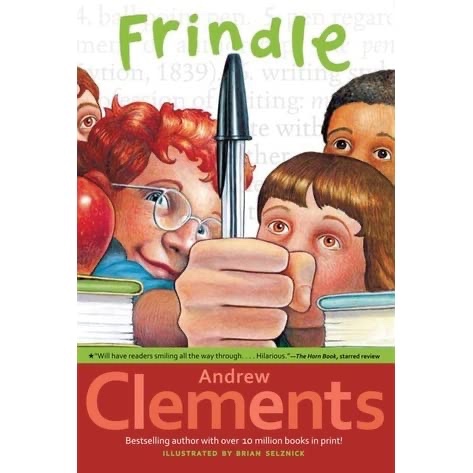
Frindle by Andrew Clements ⭐️ ⭐️ ⭐️ ⭐️ ⭐️

As a Word Nerd, I cheered how a boy created a new word as a prank only to have amazing consequences. A new favorite. Goodreads

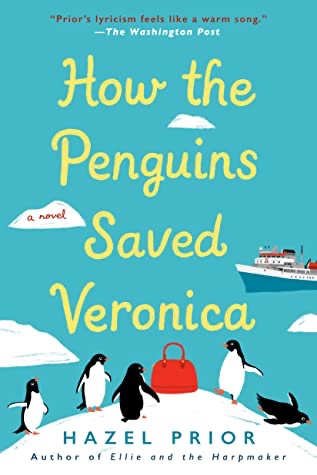
How Penguins Saved Veronica by Hazel Prior ⭐️ ⭐️ ⭐️ ⭐️ ⭐️

Having just watched March of the Penguins this was a natural to read. If you like cranky oldster novels, this is recommended. Goodreads

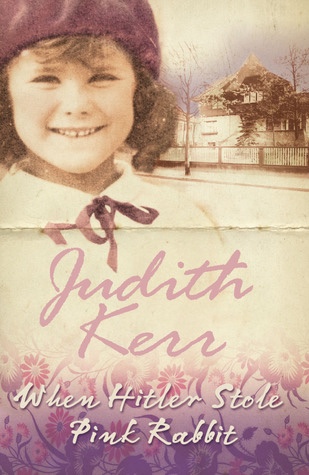
When Hitler Stole Pink Rabbit by Judith Kerr ⭐️ ⭐️ ⭐️ ⭐️ ⭐️

Semi-autobiographical, this is an engaging account of a Jewish girl and her family become refugees as they try to escape Hitler’s persecution. Goodreads

Coffee with Shakespeare by Stanley Wells ⭐️ ⭐️ ⭐️ ⭐️ ⭐️

As a Bardinator I am always up for another book providing more insights about Shakespeare. Stanley Wells create a mock interview and it is fun and informative. Goodreads

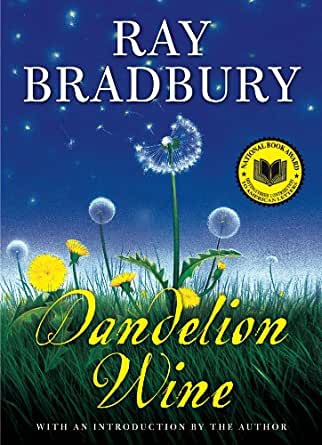
Dandelion Wine by Ray Bradbury ⭐️ ⭐️ ⭐️ ⭐️ ⭐️

A favorite read and reread. Bradbury supplies a truly spellbinding reminiscent semi-autobiographical tale of a summer before life became so dependent on technology. Goodreads

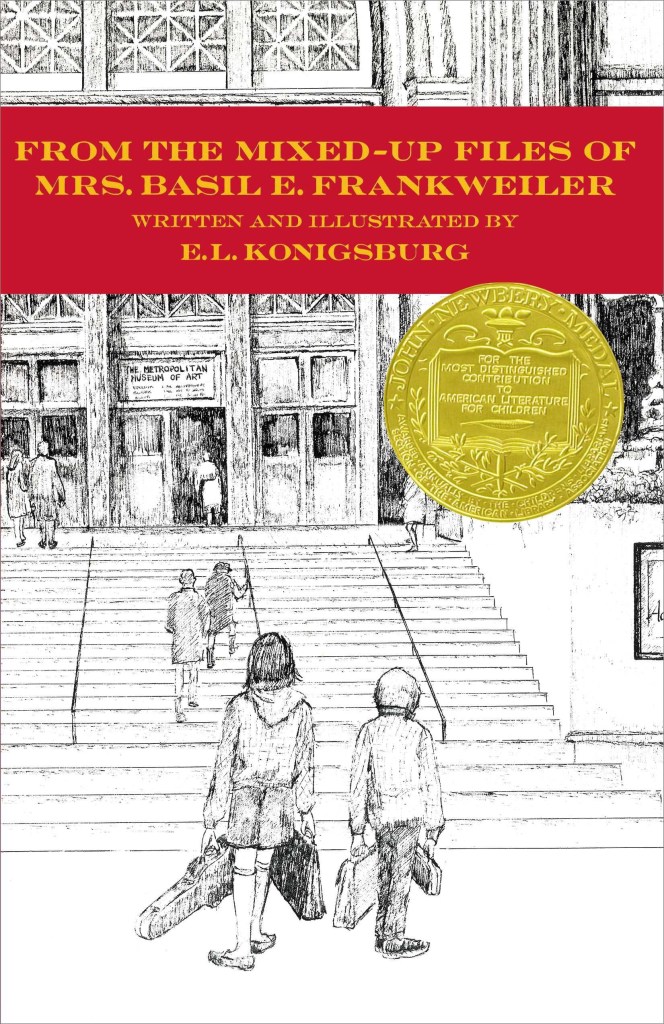
From the Mixed-Up Files of Mrs. Basil E. Frankweiler by E.L. Konigsburg
⭐️ ⭐️ ⭐️ ⭐️

I missed this one as a kid. Glad I caught up to it finally. Precocious children running away to a museum. Perfect. Goodreads

Dragonwyck by Ana Seton ⭐️ ⭐️ ⭐️ ⭐️

In the midst of my kid reads I found a classic adult gothic to read, much like those of Daphne Du Maurier. Goodreads

Onion John by Joseph Krumgold ⭐️ ⭐️ ⭐️ ⭐️

I thought I had read this as kid. As an adult I appreciate how it is a coming of age for young readers and as an adult I see it as a parent parable. Goodreads

The View from Saturday by E.L. Koningsburg ⭐️ ⭐️ ⭐️ ⭐️

Another unique story from Konigsburg. This one is about friendship and accepting differences and learning how to cope with difficulties. Goodreads

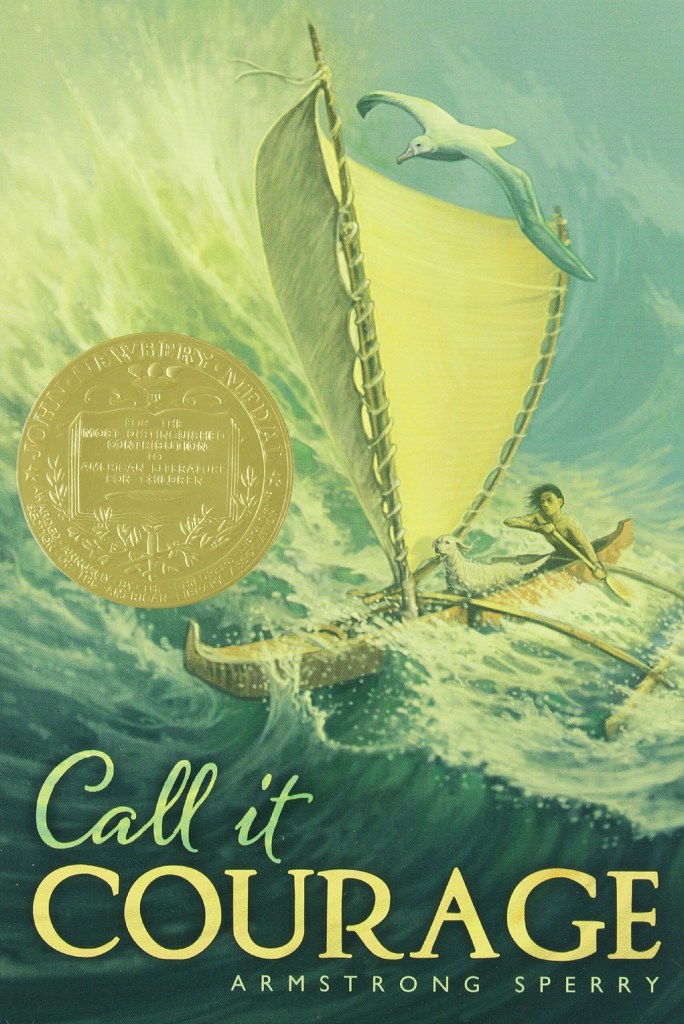
Call It Courage by Armstrong Sperry ⭐️ ⭐️ ⭐️ ⭐️⭐️

Published in 1940, it’s a fine classic adventure and its message about overcoming tough situations is quite appropriate for our current times Goodreads

Carry On, Mr Bowditch by Jean Lee Latham ⭐️ ⭐️ ⭐️ ⭐️⭐️

Another fine children’s classic, this is a biographical novel based on Nate Bowditch whose contributions to maritime navigation are still respected today. Goodreads

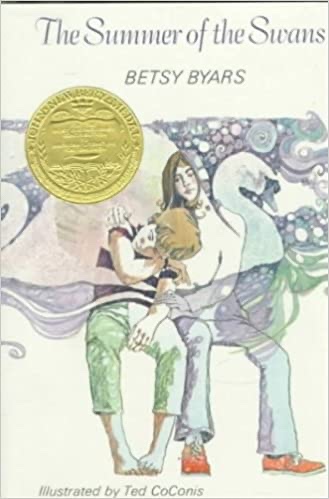
The Summer of the Swans by Betsy Bears ⭐️ ⭐️ ⭐️ ⭐️⭐️

The message of the book seems to be “Don’t sweat the small stuff” and how it’s caring for people is what really matters. Another timely story for today’s world. Goodreads

Because of Mr. Terupt by Rob Buyeau ⭐️ ⭐️ ⭐️ ⭐️⭐️

Surprised this isn’t a Newberry winner. For those who appreciated Wonder, this is another important book about how kindness makes a difference. Goodreads

I’d Rather Be Reading: The Delights and Dilemmas of the Reading Life by Anne Bogel⭐️ ⭐️ ⭐️ ⭐️⭐️

As a bonafide Book Booster I could not resist Bogel’s book of essays on being a Reader. Quite relatable. Goodreads

Yes, there were quite a few kid selections this month. I am trying to read all the Newbery winners, many I have read, but I have missed a few over the years. It’s never too late to enjoy a well-written kids’ book!

An update in statistics:

  • Hit my Goodreads goal of 101 books
  • I have read most of the Newberry winners
  • Read 55 books this summer (a number of them were children’s books, I grant that fact)

WONDERFUL UPDATE:

The library is opening its doors once again on September first!

Throughout the summer I appreciated the library’s curbside and inter-library loan service. I’m not sure what I would have done without the availability of books to checkout.

Reader Round Up: TAB Syndrome


Upfront and personal: I am not a quitter.

I will gamely finish the less-than-savory pasta I paid for at the overrated restaurant, keep eating salad until the last of the holiday pounds melt away, and keep grading essays until my eyeballs roll around to the back of my head.

I stick to it. Just so you know.

That being said. I am struggling with my reading habits these days. I used to stick with a book, even if it took me days and weeks to soldier on, I would finish it, gritting teeth if necessary (Henry James’ The Portrait of a Lady comes to mind). Lately, I give a book approximately five chapters, roughly a hundred pages, before I judge and jury it back into the library bag for prompt return. My dilemma is this: Would a true Book Booster succumb to TAB Syndrome? Is it acceptable that I wontly and willingly set aside a chosen read and it becomes The Abandoned Book?

Maybe it’s because I realize there are so many books out there waiting for me. Why should I commit to reading something that I really don’t like? Frank Zappa, of all people, is credited with saying:

I have dismissed the following books in the last couple of months.

Starlight on Willow Lake by Susan Wiggs.


image: amazon.com

My mom recommended this author. Often. Frequently. *sigh* Trying to be the good daughter,  I gave it go. Mom and I have different tastes in reading. I toss out titles to her. She tries them and politely responds how the book didn’t quite work for her. This time she tossed out an author to me.  Apparently Susan Wiggs is a popular, best selling author of over 35 books. I had no idea. A whole shelf is dedicated to her novels at our library, or at least ones that haven’t been checked out.

This particular plot focuses on a mother embittered by life since she is now a quadriplegic from a skiing accident that also killed her husband. Her three children are all successful and have aptly provided for her–she is at odds with the oldest son who would rather send a check than visit with mumsy. Mums burns through caretakers like bees flit through a garden. This is where the underdog caretaker is hired. There is also the cold, yet efficient assistant/fiancee to said distant son. I knew where this was going after I read the blurb. I would have hung in there, as I don’t mind the romantic trope of jerk-son-gets-bested-and-turned-around-by-single-mother-with-a-heart-of-gold-who-has- two-extremely-needy-daughters plot. I’m not terribly prudish, yet when everyone starting dropping profanity as if the educated 10% do so because it must be oh-so-cool, I thought “Five chapters–I’m out of here.” Sorry, Mom.

Next up was an AP recommended author I’ve been putting off reading because his writing style is so Joycian. I don’t mind creativity, but I do like commas and other regular punctuation. Emily D is an exception–dash it all, I can handle her penchant for pause for something as short as her poetry. An entire novel of creative punctuation is too much for this English teacher.  So I got Cormac McCarthy’s All the Pretty Horses as an audio book. If I can’t see the punctuation misdemeanors I can simply focus on the story. Wrong.

I really like John Grady Cole. He reminds me a bit of a young Paul Newman in his cool, calm and collected approach to life. I even tolerated Lacey’s potty mouth because his colorful vernacular was such a part of who is. He probably couldn’t talk if a swear word wasn’t in there. Plus, the audio book reader was talented at creating distinctive characters. I hung with Horses until John Grady and Lacey get hired at the Mexican ranch. As soon as the boss’s daughter arrives on the scene I couldn’t bear the heartache of watching John go down as he fell for her. I became too attached. Maybe I’ll watch the movie. I can always fast forward Matt Damon’s pain.


 A student wanted to do David Mitchell’s Cloud Atlas for his Author Spotlight and I try to check out what my students are reading. I tried to get involved in the book, the premise sounds fascinating; however, I couldn’t get past the guy sifting the rocks for cannibal teeth so he could make dentures for a high society lady and then tell her that she was chewing with said teeth. Too gruesome for me. I might give it go sometime, someday because the switched storyline style intrigues me. There is also the movie.

I have abandoned other books. Not often, but I do. I don’t feel this guilt out ejecting a movie from the DVD player. Somehow setting aside a book is like walking away from a conversation. It feels rather rude. I’m working on casting off this guilt. There are, after all, so many other conversations waiting for me out there.

Anyone else struggle with TAB Syndrome?


Oh de plume


Being a gregarious hermit means I have moments of friendly banter mixed with overpowering needs to keep myself to myself. This is why I hide behind my plumey of Cricket Muse. I chirp when in the mood, and spend the rest of the time ensconced thoughtfully in my little world of teaching, reading, and writing.

I have played around with what my pen name should actually be. So far I’ve been published under three. The Chicken Soup people wouldn’t let me publish my essay on “Piece of Quiet” as Cricket Muse–too, umm, cute. They did relinquish under my compromise of C. Muse. Friends and family responded with “why”? As in why not use my real name. I guess I could have used my own name, but where’s the mystery in that?  I am in good company. Look at these wonderful authors and their real names. See–it worked for them.

          Name               Nom de plume                           
  1.  Anne Bronte–Acton Bell
  2. Benjamin Franklin–Alice Addertongue
  3. Anton Chekov–Antosha Chekhonte
  4. Charles Dickens–Boz
  5. C.S. Forester–Cecil Smith
  6. C.S. Lewis–Clive Hamilton
  7. Charlotte Bronte–Currier Bell
  8. Washington Irving–Diedrich Knickerbocker
  9. Ray Bradbury–Douglas Spalding
  10. L. Frank Baum–Edith Van Dyne
  11. Emily Bronte–Ellis Bell
  12. Eric Arthur Blair–George Orwell
  13. Georges Remi–Herge
  14. James Alfred Wight —James Herriot
  15. Michael Crichton-John Lange
  16. Daniel Handler–Lemony Snicket
  17. Agatha Christie–Mary Westmacott
  18. Edna St. Vincent Millay–Nancy Boyd
  19. Isaac Asimov–Paul French
  20. Hector Hugh Munro–Saki
  21. Stanley Martin Lieberman–Stan Lee
  22. Victoria Lucas–Sylvia Plath
  23. Francois-Marie Arouet–Voltaire
  24. William S. Burroughs–William Lee
  25. Vladimir Sirin–Vladimir Nabokov

While I figure out under what name my masterpiece shall be published, I will keep playing with possibilities. I found the nifty pseudonym generator. So far I like:

Dewey Raferty

Grange Moser

Dalli Easton

Here: give it spin and see what you come up with…and do share it you get a doozer.

Name Generator

Author Snapshot: D.E.Stevenson


As we know authors wax and wane in popularity. Books that eager readers  once  grabbed off the shelves now forlornly gather dust, or go out of print or end up in the free bin. That’s why it’s exciting when an author can rekindle interest and prove she still holds staying power forty years after her death and last book was published. The author? D.E. Stevenson. Her devotees are known as “Dessies.”

  Some fine facts:

  • Dorothy Emily Stevenson was a related to THE Robert Louis Stevenson.
  • Educated by a governess and denied college because her father didn’t want an educated woman in the family.
  • She published nearly fifty books in her career.
  • At the height of her career, her books sold in the millions internationally.
  • A granddaughter discovered a couple of manuscripts in the attic in 2011 and they were immediately snapped up and published.
  • Being Scottish, most of her plots center around Scotland and England, with WWI and WWII’s affect on its people often being a main theme. 
  • Her books gave clear insights into the lives of those who called the countryside their home.
  • Adept at characterization, her books often overflowed and intermingled with one another.
  • Died in 1973, yet beginning in 2009, her books are slowing being reissued.

A snippet from a BBC article

Members of Stevenson’s family are amazed by her enduring popularity. Her daughter, Rosemary Swallow, remembers how her mother worked.

“She would sit down on the sofa, put her legs up and light a cigarette,” she said.

“She had a special writing board, a wooden board covered in green baize and she would just carry on writing whatever was going on around her.

“She was very, very good at character writing. There’s no rude sex or anything like that, just a good yarn with a beginning, a middle and an end.”

On a personal note: 

I discovered her books about twenty years ago when working at a public library. A friend and co-worker knew I preferred “gentle” reads and suggested Stevenson. I read everything the library owned, and even ventured into the scary overflow storage basement to retrieve forgotten copies. 

Currently I’m on a mission to read all her titles. The writing is solid, with its intriguing plots involving mysteries, light romance, and brilliant characterization. When I’m feeling a bit lost due to stress from a long week, I find myself again by reading a Stevenson novel.  

Writerly Wisdom: Quotes on Setting


One reason I read books is because I dread ever so much to travel. I do like the “here I am” of arriving. It’s all that packing, squishing into miniscule airline seats, fretting about schedules, realizing I brought the entirely wrong things to wear, that make traveling drearisome. I do like the exploring, discovering, reveling that is part of going somewhere new. This is a big reason why I read novels. Reading, especially fiction, takes me places that doesn’t involve packing a bag. This month’s Writerly Wisdom set of quotes focuses on that aspect of writing involving place: setting. How does a writer put me in the “there” of their writing?

“The house smelled musty and damp, and a little sweet, as if it were haunted by the ghosts of long-dead cookies.”
Neil Gaiman, American Gods

“An author knows his landscape best; he can stand around, smell the wind, get a feel for his place.”
Tony Hillerman

Eudora Welty said, “Every story would be another story, and unrecognizable if it took up its characters and plot and happened somewhere else… Fiction depends for its life on place. Place is the crossroads of circumstance, the proving ground of, What happened? Who’s here? Who’s coming?…”

“Don’t tell me the moon is shining; show me the glint of light on broken glass.” –Anton Chekov

How important is setting for you when reading? Is it more important than visualizing the character? What memorable settings have you discovered in reading–which authors are able to transport you to that place in the writing?

Author Snapshot: Lois Lowry


Sometimes a novel is similar to a wave in how its impact builds momentum, breaks, recedes, and begins the cycle all over again. The Giver by Lois Lowry is such a book. First published in 1993 it pushed societal paradigms, gathered a following, and is once again building another following due to the film adaptation. It’s still considered controversial some twenty years later. The story is deceptively simple, yet profound in its impact. There are so many issues presented: government control, euthanasia, loss of innocence, and dystopia versus utopia. Lowry presents these heavy issues with a light hand and leaves reader with hope in its ambiguous ending. It deservedly won the prestigious Newberry Award.

For many years The Giver remained a standalone title. And then Gathering Blue came out in 2000; however, it wasn’t a true continuation of The Giver and frustrated many readers looking for answers, because it teased a bit, alluding only slightly to Jonas’s world. Readers had to wait until 2004 for Messenger, which served as a bridge between The Giver and Gathering Blue. Alas, answers still weren’t totally available and finally in 2012 closure arrived with Son.

Having read The Giver when it first came out, I was impressed with its message, although a bit dissatisfied with its ambiguity at the end. “That’s it?!?” I felt like shaking the book to see if I could render out the last drop, maybe find the missing resolution or at least find a denouement of sorts. I wasn’t aware of the succeeding books that formed the quartet and had the distinctive pleasure of reading the quartet in succession after watching the 2014 film adaptation of The Giver. Due to the sizable waiting list for The Giver (could it be the movie stirred people to seek out the original?) I began reading the other three and saved The Giver for last. Glad I did so, because the library (love my library) bought the newest edition, which is a twenty year celebration of the novel, and it contains an introduction, a reflection, by Lois Lowry. Her humor and unique outlook is prevalent and added a dimension to the reading I wouldn’t have probably gained reading the standard paperback issue. A bonus section (special features?) included interviews of different actors from the movie including Taylor Swift.

Yet, there is more to Lois Lowry than The Giver. Her talent extends to comical middle reading found in the Krupnik series which is about the plucky Anastasia and her rascally brother Sam. Another notable book, her first Newberry Award, is Number the Stars, which covers the Danish Resistance in WWII. Lowry’s diversity is evident when scrolling through her impressive book list of thirty plus titles which range from picture books to historical fiction, and include young adult reads. I have been exploring other Lowry titles and I am amazed by her diversity. For instance, I just finished an audio reading of  Silent Boy, which reminds me of Scout from To Kill a Mockingbird recalling her childhood memories from an adult perspective. Another audio novel, The Willoughbys is radically different from any of her other works. This a parody of all those long ago old-fashioned tales starring orphans who make good after much travail. Think Lemony Snicket meets Pollyana. The reading was enhanced by the reading talents of Arte Johnson, best remembered by his Laugh In days. The humor varies between lampoon and subtle, the vocabulary rivals SAT prep exercises, and there is a constant anticipation of “What next?” right up there with “This is a kid’s book?”
Lowry is one of those authors who provides the reason why adults peruse the kids’ section when searching for a good read.

Interesting bits about Lois Lowry:

  • she’s been a contestant on Jeopardy
  • traveled to Antarctica
  • had The Giver turned into a play, opera, film, and musical
  • she’s been a clue in a New York Times crossword puzzle
  • has owned numerous dogs, cats, and horses
  • has a great little author website

Post Navigation