Pam Webb

a writer's journey as a reader

Archive for the category “Writing”

Lost in Translation: Part Three or “The Glad Idings of March”


The Ides of March have come and gone and so as the unit on Julius Caesar.  Between Odysseus, Hamlet, and the Roman senate I feel I have been wading in testosterone for a month. Lots of wanderlust, stabbings, and confused emotions of doing the right thing.  Next month it’s satire, heroes,  and star-crossed lovers, which should provide a decent change up of scenery.

Image Detail

I learned my lesson about front loading Caesar a few years ago when I first started teaching the play to sophomores.  I thought my students knew all about Julius Caesar. Wrong, so wrong.  Roman history is not a featured item in most history books up to ninth grade, and it’s not much of a feature in high school at all–that is, unless students opt for World History as one of their electives, and even then not a lot of time is part on the Roman Empire.  This is why there wasn’t much impact when the protagonist is bumped off by the second act.  Why should my students care about the hero dying when they hardly know him?

Speed it up a few years, interject some marketing savvy, and Julius Caesar becomes a dynamic unit.  My recipe for getting kids to care about Gaius Julius Caesar.

1.  Show a Hollywood version of Caesar that is colorful, even though historical correct: baiting the hook

Jeremy Sisto plays a likable Caesar. I play the movie up to the point of where Caesar returns to Rome after Gaul, receiving the cheers of the Romans and the news that Pompey has fled, fearing for his life.  This builds up intrigue and my students better understand what is going on when we began reading the play.

2.  Fishing for interest: Assign parts, upping the reluctance with bonus reading points.

After writing the parts on the whiteboard I stand back and let my students sign up for who they want to read.  Equal voice prevails in that it’s okay for guys to read female parts and vice versa.  I’ve had some lovely deep-voiced Portias, and some commanding lighter-toned Cassius readers.  Shakespeare would understand the need to pinch-hit.

3.  We read up to the assassination.  I used to include it as part of the agenda, yet my wanna be thespians somehow couldn’t do the death scene with proper dignity.  I decided to give that over to the more experienced.  There are a number of productions to choose from, although I keep with the tried and true John Gielgud version.

4. After each act we have class discussions about themes, issues, and notables.  This is my favorite part, getting students to realize how history has shaped the world they live in.  Events of a thousand years ago still echo down the corridors of their everyday life.  We discuss ideas such as: Is murder ever valid? Do political leaders always act in the best interests of their country?  Are beliefs worth dying for?  These fifteen year old minds begin grasping the need to be informed and how being informed influences the vote they will cast in three years.

5.  Once the play is packed up, the packet turned in, I reel in my students as we move on to the really fun stuff: Who was Caesar?  I want my students to understand his far-reaching influence (beyond calendars, salads, and quippy quotes) and get to know the man and form their own opinion about him.  I know Shakespeare had his reasons for not including Cleopatra in the play; however, Cleo cannot be ignored.  So she gets showcased because she was a larger-than-life influence on Caesar:

I annoy my students with all kinds of move trivia: costs (1 million to Liz–a shocking amount; 44 million to make–equaling about 300 million today); tracheotomy scars (Liz almost died, you know); thousands of extras (pinch police to protect the ladies); real sets (CGI in ’63?).  Grand stuff, indeed.

I also slip in a documentary with the idea that Hollywood and history don’t always see eye to eye on the truth.

The Sparknotes folk have done a really new cool thing by creating learning videos.  This one was also helpful:

Then the assignment: Write an opinion essay on who you believe Caesar to be?  Was he a megalomaniac who murdered for his own means?  A philandering player  who used women as stepping-stones to increased power?  A frustrated tyrant? A genius strategist? A leader cut short in his prime?  I guess the term is officially called synthesizing–gathering all the evidence and sifting it to form a valid opinion.  Kind of like suffering through election year.

The play itself is not one of my favorites: “Hey, I’ll stab you, you stab me, will all die so nobly.” A little too gritty for my tastes.  I do find a fascination in Caesar and I look forward to reading those essays.

In our district it’s mandated we have our objectives up on the board so that all may see what it is we are trying to get our students to learn.  Mine for the Julius Caesar unit?
May my students learn from the experiences of the past in order to better apply the knowledge that is gained

Writerly Wisdom II


For those of you who are site stat checkers (I confess I check once, maybe twice a day) you will notice certain types of posts get more hits than others.  Such is the case with my Writerly Wisdom post.  Dunno.  I thought visitors would be wooed by my own words.  Ehh (shrug of shoulders) “if the people like it, serve it up”–C. Muse  So, here is Writerly Wisdom part II:

I try to leave out the parts that people skip.  ~Elmore Leonard

The act of putting pen to paper encourages pause for thought, this in turn makes us think more deeply about life, which helps us regain our equilibrium.  ~Norbet Platt

I’m not a very good writer, but I’m an excellent rewriter.~James Michener

The time to begin writing an article is when you have finished it to your satisfaction.  By that time you begin to clearly and logically perceive what it is you really want to say.  ~Mark Twain

The wastebasket is a writer’s best friend.  ~Isaac Bashevis Singer

The pages are still blank, but there is a miraculous feeling of the words being there, written in invisible ink and clamoring to become visible.  ~Vladimir Nabakov

Easy reading is d*mn hard writing.  ~Nathaniel Hawthorne [*mine–liberties, I know]

And the best for last

Proofread carefully to see if you any words out.  ~Author Unknown

Happy Pages,

CricketMuse

Sources: http://www.quotegarden.com and googleimages galore

I Know I Should Be Writing–But


I get distracted by Internet rabbit trails.  I sit down at my laptop with great intentions.  Such as putting that final edit on my manuscript and getting into the mail.  Or organizing my works-in-progress folder.  And I really should be finding all my receipts and getting my taxes ready. But I check my blog mail and respond, comment, and visit other blogs and get to rabbit trailing.  For instance I found these amusements today after I visited Scriptor Obsura’s site):

Oh my, I had too much fun with all these widgets

I selected the adorable hamster

And then I spent too much time messing playing with the other widgets like the typing game

Ha: made #2

Okay, okay, back to work.

 High Scores for Type-it

Daily     Weekly     Monthly     All Time


Name

Score

Level

Difficulty

Date

1. bel 1705 6 Intermediate 2012-03-03 03:28:23
2. CricketMuse 4240 11 Beginner 2012-03-03 15:10:46
3. lily 4000 11 Beginner 2012-03-02 15:28:16
4. lily 2980 11 Beginner 2012-03-02 15:22:10
5. ines 2895 9 Beginner 2012-03-02 00:06:22

The Ultimate Valentine Found in My Favorite Book


Happy Pages,

CricketMuse

Of Pioneers


Image DetailImage Detail


I don’t know when I first became interested in pioneer stories.  No doubt Laura Ingalls Wilder and her Little House on the Prairie books had some influence.  There is something about establishing one’s mark upon the landscape, the taming of the wilderness, the making of a home and creating a legacy that is so very appealing.  As a child I have fond memories of my family’s little cabin in the woods, the weekend getaway we built together. Helping my father hack down sticker bushes to clear the building site, learning how to shingle the roof, chopping wood, digging up clams for chowder, all those getting-my-hands-dirty-and-blistered chores created in me the sense of being able to accomplish something–being able to be self-sufficient and capable. Although I have no hankering to travel back to those days of the pioneers, I do admire them and recently read Bound for Idaho:The 1864 Trail Journal of Julius Merrill.

Researching for my own pioneer novel I am always on the lookout for new material.  I thought this would be yet another boring account along the lines of “Walked today.  Another long day” type of journals, Merrill’s writing and accounts were fascinating.  Really, they were.  While it may not be like reading a novel, it did manage to transport me a bit.  At least it disspelled some of those John Wayne wagon train movie images instilled by the Saturday television matinees my dad and I were so fond of watching.  Merrill’s writing proved there were humorous moments among the hardships of traveling the endless miles.

Bound for Idaho: The 1864 Trail Journal of Julius Merrillpage 44: June 14th (Fort Kearny toFort Laramie)
We saw nothing having animal life except a skunk.  He was saluted with a shot from Carey’s rifle (an old Irish blunderbuss), whereupon he looked around to Carey with an inquistive glance as if to know where the noise came, evidently caring but little for half an ounce of lead.  Revolvers in hand, we gave chase and succeeded in getting another shot but not the skunk.

Running after, and shooting at skunks, may not seem funny, yet the dignified, stiff language combined with my mental play-by-play brought a smile to my reading.  Merrill’s descriptive writing shows it wasn’t all circling up in wagons and shooting it out with hostiles.  I’ll be able to liven up my own writing by remembering to insert the fun moments along with the adventures and stress-filled daily life of living the pioneer life.

Fave Movies About Writers or the Writing Life


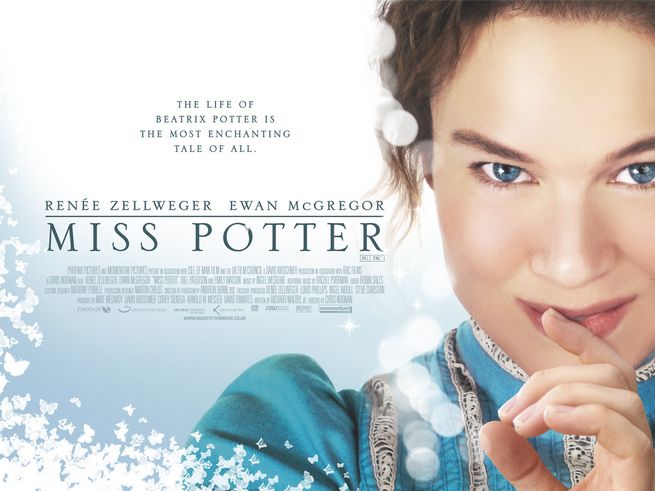
 All about Beatrix Potter–enchanting tale of the Peter Rabbit lady

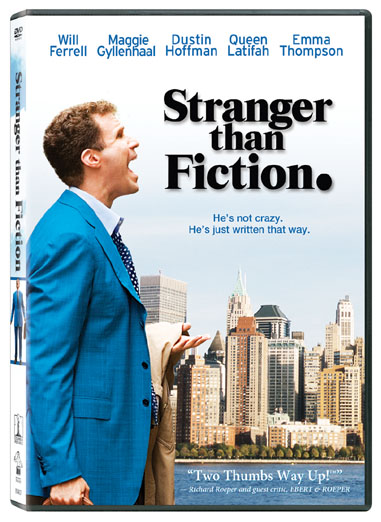
Emma Thompson as a writer and Will Ferrell as her character–funny and poignant        

 Sean Connery as a type of J.D. Salinger writer–never tire of this one

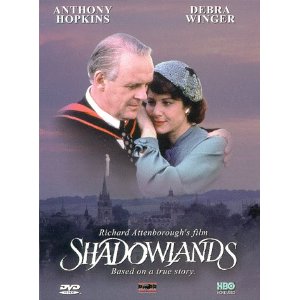
C.S. Lewis–the man beyond Narnia

 An inspiring TRUE (based on) account of how writing can change lives

Writerly Wisdom


Either write something worth reading or do something worth writing.
Benjamin Franklin

There is creative reading as well as creative writing.
Ralph Waldo Emerson

There is nothing to writing. All you do is sit down at a typewriter and bleed.
Ernest Hemingway
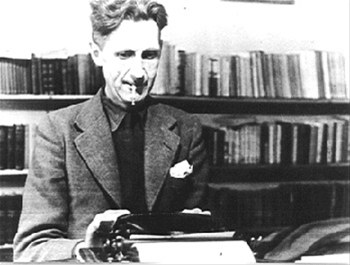
Good writing is like a windowpane.
George Orwell

You fail only if you stop writing.
Ray Bradbury
Read more:http://www.brainyquote.com/quotes/keywords/writing.html#ixzz1k4ODaafs

Post Navigation