Pam Webb

a writer's journey as a reader

Archive for the category “Words”

BMW Moments


Have you lately experienced any of the following?

a. At the store you see one aisle over that person from (fill in the blank) and want to say “Hi” but forgot their name, so you avoid their aisle and suddenly become interested in something to avoid meeting up with them.

b. You are watching a movie and an actor steps into the scene, you know who they are, and can even recall all the other movies you’ve seen them in, but their name is just out of reach.

c. You’re out in the garage looking for that one tool needed for your project and can’t locate it so you ask if anyone has seen it but right then you’ve lost the actual name of it so you invent a close facsimile like “air blower” for the “leaf blower.”

Any of these ring true for you?

I call them BMW moments. Not to be confused with this:

Not the BMW for now

It’s more like this:

Yeah, definitely

A BMW moment is what I have come to call “Brief Missing Word” moments. It’s where for a nanosecond (or sometimes longer) the name or term, that needed word that is hovering just out of reach cannot be reeled in by those little grey cells (Poirot no doubt had those brain glitches now and then).

In my younger days, about ten plus years ago, I noticed this would happen when I was teaching. I’d merrily be explaining something to my students and suddenly the word I needed evaporated right when I needed it. Most perplexing and vastly irritating.

My hubs eased my concern saying my brain is a computer and like a computer its memory files just needed some defragmentation. Plus being tired no doubt also affected my memory recall.

I bought it and learned to adjust becoming adept at word switching or talking around the missing word through descriptive embellishments.

Once retired, I thought with my mind less filled with lesson planning, grading, evaluation demands, etc. my brain files would have more space. And sleeping in, along with naps, meant being less tired. Right?

Nope, BMW moments were becoming more of a regular feature of my life. So, I naturally think dementia and go to my doctor. He gives the test.

I pass.

His comment is that I shouldn’t worry about those missing word moments unless I start forgetting the names of my children or husband or start putting my car keys in the refrigerator.

Okay. I can accept that. I’m learning to live with those brief missing moments.

Now as soon as I find my keys I can go to that one store so get that thing. Maybe what’s his face has seen my keys.

Word Nerds: Yes, that is a word…


A Redbubble poster after my own heart

Your search for that precise descriptor has ended with this batch of discovered words. I must admit I am familiar with “twaddle” and have come across “quidnunc” no doubt due to those old English mystery novels from the forties that I favor.

kyoodle: to bark or yelp noisily or foolishly

gloze: to explain away

twaddle: silly, tedious talk or writing

otiose: serving no practical purpose or result

recondite: relating to, or dealing with something little known or obscure

parlous: full of danger or uncertainty

drouk: to drench

elucubrate: to produce (something) by long and intensive effort

opprobrium: harsh criticism or censure

quidnunc: person who seeks to know all the latest news or gossip

I need to find a way to work “kyoodle” into a conversation.

Word Nerds: A Little Word with Big Meaning


Quick quiz:

Which three letter word sports the current title of having the most definitions?

A. lie

B. set

C. run

Lie?

Sorry—only two : to tell something that is untrue or to assume a horizontal position.

I’m not lying about not taking word knowledge lying down

Set?

Previously the champ, the Oxford English Dictionary (OED—THE leading dictionary) tagged it with 200 meanings, starting with the expected “put or lay something down” and then running on for another 32 pages with various meaning. Speaking of run—

Run?

Congratulations on this pick as the OED folk have determined that this little word carries a whopping 645 definitions. Impressive, right?

Here’s a sample (taken from RD.com)

When you run a fever, for example, those three letters have a very different meaning than when you run a bath to treat it, or when your bathwater subsequently runs over and drenches your cotton bath runner, forcing you to run out to the store and buy a new one. There, you run up a bill of $85 because besides a rug and some cold medicine, you also need some thread to fix the run in your stockings and some tissue for your runny nose and a carton of milk because you’ve run through your supply at home, and all this makes dread run through your soul because your value-club membership runs out at the end of the month and you’ve already run over your budget on last week’s grocery run when you ran over a nail in the parking lot and now your car won’t even run properly because whatever idiot runs that Walmart apparently lets his custodial staff run amok and you know you’re letting your inner monologue run on and on but, gosh—you’d do things differently if you ran the world. (And breathe). Maybe you should run for office.

And I have run the course on this post. Until next time.

Running out of what else to add to this post

National Word Nerd Day


January 9th is set aside for those, like myself, who relish, celebrate, expound the joys of discovering and knowing how words can make one’s day that much better.

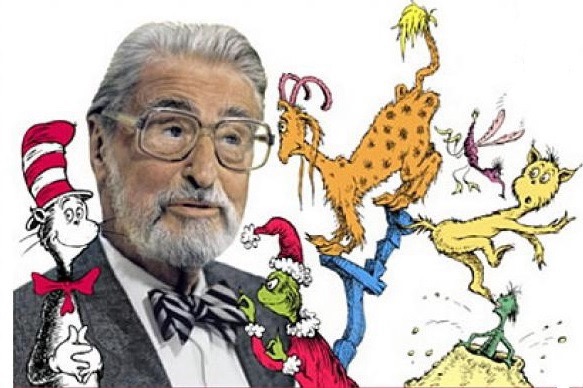
It’s a delightful fact that Ted Geisel, aka Dr. Seuss, provided the term “nerd” in his 1950 book If I Ran the Zoo.

image: Tumblr

While “nerd” used to be considered a mildly derogatory label to describe a person who was a bit too devoted to something or operated outside more established social norms, “nerd” is now a means to attach a reference to someone possessing expertise or enthusiasm.

There is a vast number of lexiconical connoisseurs residing within the greater populace.

It’s a quiet existence for the most part. No Jimmy Fallon appearances nor competitive reality shows featuring celebrities enthusiastically endorsing their favorite vocabulary.

It is gratifying to have this one special day though.

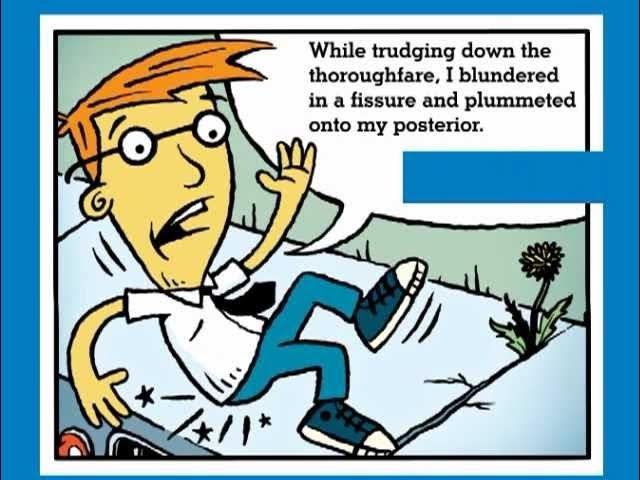
I browsed through the internet and discovered a few Word Nerds and decided to give them momentum in their efforts to expand the awareness of appreciating words.

image: The Qwiet Muse
image: Wordnerdopolis
image: Scholastic Storyworks

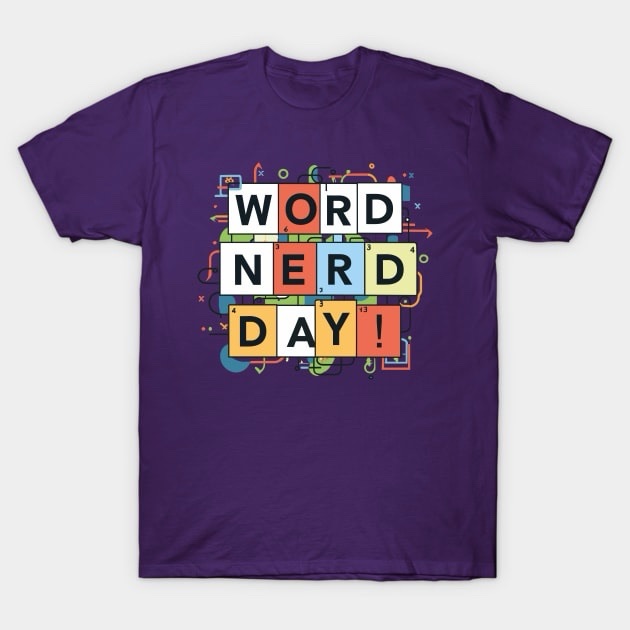
And just in case you want to proclaim your devotion to the dictionary:

image: www.teepublic.com

So embrace the day with a word that you especially fancy.

My word of choice? Thanks for asking—yet, how to choose among so many?

Verisimilitude comes to mind.

Now it’s your turn.

Word Nerds: Oof, Ew, Ai Yi Yi


Humans are prone to utter the most interesting interjections. Understatement, I know. Leaving aside those words that will get you making a deposit in the swear jar, let’s explore those odd guttural responses to surprise, getting hurt, and showing displeasure.

Photo by Gratisography on Pexels.com

oof
Surprisingly, “oof” is an invented word. It’s most connected with pain, dismay, or even sympathy. Apparently, there is connection to the game Roboblox and “oof” which is uttered when the Robos are hit or regenerated. Tommy Tallarico, the original creator, is surprised how “oof” has become such a popular utterance, that is has become a verb, as in “I oofed my driving test by running up on the curb when I tried parallel parking my Mom’s suburban.”

ew
This one is traced back to the movie Clueless when a character expresses her disdain for immature teen boys, although it had been in use since the 1960s as “Ew, what’s that smell in your locker?”

aye yi yi
Probably derived from the Spanish/Latin languages, “aye yi yi” is often found in song lyrics, although it is also used to express pain, dismay, or even shock. For example, “Aye yi yi, the cat got into the meatloaf I set out for dinner.”

oy
Another interjection borrowed from a foreign language, “oy” is often teamed with “oy veh” and can express dismay, sadness, or grief. Once upon a time I lived way out in the country and the main road was a county maintained thoroughfare (please read in a dismissive tone) that was dented with potholes and washboarded to every vehicle’s detriment. Someone spraypainted an addition to the road sign “Vay” the word “Oy.” Yes, driving that road daily initiated that response of dismay.

ugh
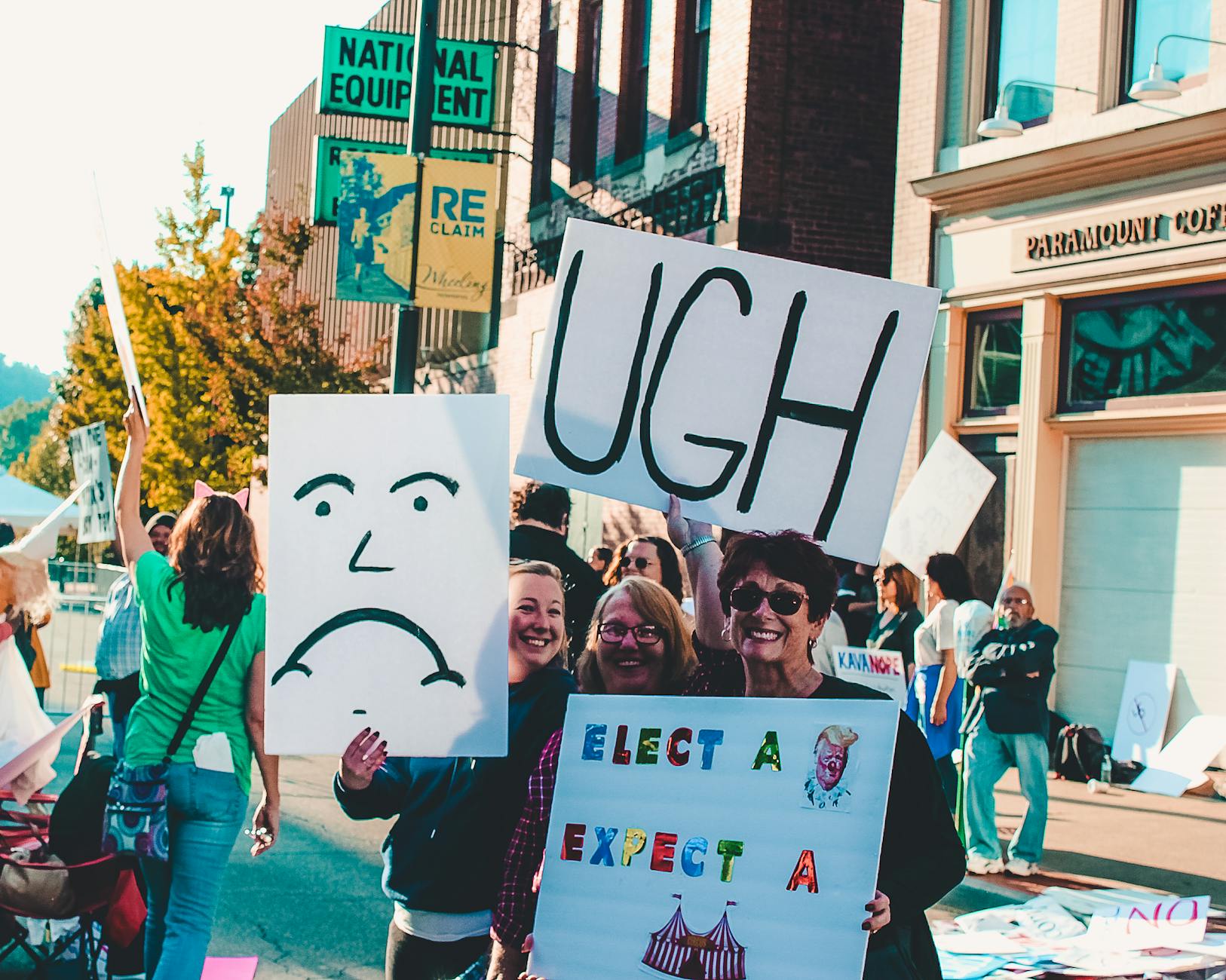
Similar to “ew,” the interjection “ugh” was also made popular by Clueless; however, its use can be traced clear back to the 1670s. Trot this one when expressing disgust. “Ugh, we have a pop quiz today.”

Photo by Rosemary Ketchum on Pexels.com

yuck or yuk or yucky
If it’s gross it’s usually deemed as “yuck” or “yucky.” Going back to the sixties, the Poison Control center’s warning label used to be skull and crossbones, but there was the thought children would be attracted to the pirate aspect of that emblem and so the green unhappy face with the tongue sticking out became “Mr. Yuk,” providing a clear message to steer away from the substance.

oops
Then there is the ubiquitous “oops,” that interjection associated with making a mistake, a blunder, or being clumsy. Britney Spear’s gave “oops” some spotlight with album Oops!… I Did It Again.

Photo by Designecologist on Pexels.com

What favorite go tos do you utter when surprised, disgusted, or wanting to express delight (especially when scrolling Instagram reels of capybaras).


How cliche: Nnnnyah


N as in I need to post a batch of cliches.:

Naked truth: the plain facts. Derived from a fable in which Truth and Falsehood were bathing, perhaps outside in a lake. Falsehood got out first and for some reason decided to put on Truth’s clothing. Well, when Truth got out wearing Falsehood’s clothing did not appeal. So Truth went…well, let’s just hope it was a warm day to wear al fresco.

Naked as a jaybird: An American expression with the British counterpart being naked as a robin. Both being plain birds the expression makes sense.

image: Flickr

Name is mud: being discredited. In the nineteenth century the British Parliament used this expression in reference to someone who had made a fool of himself–mud was a euphemism for fool. Eventually the term referred to someone admitting they had made a hash of something or a bad mistake.

Neck and neck: a close finish. Related to horse racing. As the horses ran towards the finish line they could run so close together they appeared to be running side by side or neck and neck. Today the expression means to be in close competition with someone.

image:X.com

Neither fish, flesh, nor fowl: not one or another. From the sixteenth century, found in Heywood’s 1546 Proverbs: “She is neither fyshe, nor fleshe, nor good red herring,” which refers monks who ate fish, general folk who ate meat, and the poor who ate herring. Shakespeare’s Falstaff describes Mistress Quickly as a woman no man desires because, “She’s neither fish nor flesh.”

Never say die: not giving up. A term frequently used today which dates from mid-nineteenth century when Dickens wrote in Pickwick Papers “Never say die–down on your luck.”  James Bond should have paid attention to Dickens.

image:Redbubble

No news is good news: hearing nothing means everything is fine. King James I is credited with saying, “No news is better than evil news.” Over time others have expressed similar words such as James Howell, Charles. Dickens, and others.

And the ubiquitous–

No problem: everything is fine; glad to help. Around the mid-twentieth in America the term “no sweat” was often used to express the feeling of there being no problem. In other countries the expression transfers into something similar such as in Australia people say, “No worries.”

Dr. Strange says: “No problem.”

Word Nerds: Adding some seasonal nomenclature to the weather outside


Photo by Designecologist on Pexels.com

Although the temperature read 80 degrees the other day my trees are shedding their leaves like a toddler peeling her clothes off in order to be unfettered and free. It’s fall. That time of year when we pull on a sweater leaving the house and pull it off by midafternoon. The nights are cooler, the days are warmish. The weather is fickle. September remains my favorite seasonal month for all those reasons–it’s an unexpected month.

But is it Fall or is it fall? A quick trip to Dictionary.com is needed.

When applied as a title or is being personified, like in the poem below seasonal words are capitalized, otherwise use lower case.

Autumn Thoughts
by John Greenleaf Whittier

Gone hath the Spring, with all its flowers,
And gone the Summer’s pomp and show,
And Autumn, in his leafless bowers,
Is waiting for the Winter’s snow.

I said to Earth, so cold and gray,
‘An emblem of myself thou art.’
‘Not so,’ the Earth did seem to say,
‘For Spring shall warm my frozen heart.’
I soothe my wintry sleep with dreams
Of warmer sun and softer rain,
And wait to hear the sound of streams
And songs of merry birds again….

Wait, Mr. Whittier used Autumn instead of Fall. Is there a difference? Actually the terms are interchangeable; however, there are slight nuances.

The word “autumn” is French, being derived from autompne and is traced back to the late 1300s. Chaucer and Shakespeare applied the word in their works. Brits tend to use “autumn” while Americans refer to “fall” which came into use around the 1800s.

Fall being the third season is recorded in use in the 1500s, with thoughts that it referred to “leaf fall,” which makes sense since leaves are falling right and left come September. In some cases “fall” is more useful than “autumn.” For instance, “Spring forward, autumn back,” just doesn’t have the same mnemonic ring.

I tend to say “fall” as “autumn” is much more serious sounding and I think more of how November leads into winter rather than September’s stretch of sunny days. Although I can see why Miss Emily D. chose “Autumn” for her poem instead of “Fall.”

Enjoy those crisp mornings, warmish afternoons, and chilly nights whether you “fall” into the season or apply “autumn” to your wordscape.

Autumn

by Emily Dickinson

The morns are meeker than they were,
The nuts are getting brown;
The berry’s cheek is plumper,
The rose is out of town.

The maple wears a gayer scarf,
The field a scarlet gown.
Lest I should be old-fashioned,
I’ll put a trinket on.

Word Nerd: Baker’s Dozen


This month’s word list theme is all about those words that lead a person from a thought to the deed.

1. prevaricate: to speak falsely or misleadingly; deliberately misstate or create an incorrect impression; lie.
2. anamnesis: the recollection or remembrance of the past; reminiscence.
3. esperance: the feeling that what is wanted can be had or that events will turn out for the best.
4. plaudit: an enthusiastic expression of approval.
5. felicific: causing or tending to cause happiness.
6. perspicuity: clearness or lucidity, as of a statement.
7. insouciant: free from concern, worry, or anxiety; carefree; nonchalant.
8. susurrus: soft murmuring or rustling sound; whisper.

9. jannock: straightforward; fair.

10. cavil: to raise trivial and irritating objections; find fault unnecessarily.

11. valleity: wish or inclination not strong enough to lead to action.

12.risible: causing laughter; ludicrous.

13. taradiddle: a small lie.

*Just a side note: when compiling the list the words come straight from Dictionary.com—okay, then why does spellcheck not recognize most of them or insist on changing them into another word—like “velleity” morphs into “valley?” Are they not really words after all? Or is my spellcheck needing some tutor time in lexiconical studies?

Oh—what word caught your eye?

I’m leaning towards risible as it rhymes with laughter becoming visible.

Bard Bits: Talk Like Shakespeare Day


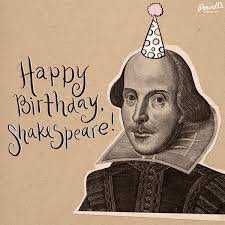
It’s here. The day you have been waiting for. Yes! It’s Talk Like Shakespeare Day, which happens to coincide with the day historians figure to be both William’s day of birth and day of death: April 23.

As an English teacher I had zero background in Shakespeare as somehow his works were never taught, presented, or discussed in my school days. And this took place in a modern school district!

This meant I came to the classroom on the same playing field as my students: zero knowledge and lacking comprehension. I dove right in and learned as much as I could in order to sound like I knew what I was talking about.

Something clicked because I am a professed Bardinator today and even attended Folger Library’s Hamlet Academy back in 2015. I am also adapting Shakespeare plays into reader’s theatre scripts and they are regular sellers on my Teachers Pays Teachers website.

All in all I’m quite pleased to have traveled the journey, transforming from Shakespeare zilch to Shakespeare rich over the years.

However, to talk like Shakespeare is a talent I am not quite conversant in yet. I did find this nifty website which takes randomly generated sentences and turns them into Shakespearean speech. I am having fun playing with it. Here are some examples:

Crouch before you jump or miss the mark. Our plans right now are hazy.

Becomes—

Crouch bef’re thee jumpeth ‘r misseth the marketh. Our plans even but now art hazy.

Or—

It was done before the boy could see it. Hop over the fence and plunge in.

Becomes—

T wast done bef’re the knave couldst seeth t. Hopeth ov’r the fenceth and plunge in.

image:Tenor

Word Nerds: Familiar Friends


While new words are appreciated finds, there are those favorites that are like old friends that I haven’t seen in awhile and suddenly pop up unexpectedly.

smithereens: small pieces; bits. I tend to associate this one with Yosemite Sam who I recall would now and then threaten to blow Bugs Bunny to smithereens.

copacetic: fine; completely satisfactory; okay. This is a great word to toss out when asked to describe how the meeting went.

morass: any confusing or troublesome situation, especially one from which it is difficult to free oneself. This is not how you want to describe the meeting.

egregious: extraordinary in some bad way. This one usually finds its way describing a mistake. All those “e” sounds make it worse than it probably is.

luddite: someone who is opposed or resistant to new technologies or technological change. Since learning about Luddites in English literature it’s fun to see how it is found in today’s world.

Resistance is futile.

collywobbles: a feeling of fear, apprehension, or nervousness. Hah! Used this one the other day and stumped The Hubs—“this is a word?” Indeed it is.

brouhaha: excited public interest, discussion, or the like, as the clamor attending some sensational event. This one is simply fun to say.

abscond: to depart in a sudden and secret manner. Chocolate tends to do this in our household.

twee: affectedly dainty or quaint. When it’s just too cute or trying to hard to be cute.

Too twee, or not to twee?

natter: to talk incessantly. Yes, this one is not far out of reach. It’s very appropriate in describing how some people like to have conversations in public with their phone speaker fully blaring.

ennui: a feeling of utter weariness and discontent resulting from satiety or lack of interest; boredom. Also found this one in English—from the short story “The Most Dangerous Game.”

Find any friends among the above?

Post Navigation