Pam Webb

a writer's journey as a reader

Archive for the category “Poetry”

Poet Appreciation: #4 George Santayana


Quick–what teacher did Conrad Aiken, T.S. Eliot, Robert Frost, and Wallace Stevens have in common? *Jeopardy muzak plays softly* If you answered George Santayana you either are a verse warrior or you clued in on the post title.

Santayana, a Spanish-born American, was a philosopher, essayist, novelist, teacher, and poet. Receiving his PhD from Harvard he joined the faculty in 1889. In 1912 he moved to Europe and must have liked it because he never returned to the states. Santayana, thought to be an important influences of critical realism, became part of what is known as the Classical American Philosophy. He died in 1952.

 
 There may be chaos still around the world
by George Santayana
 
There may be chaos still around the world,
This little world that in my thinking lies;
For mine own bosom is the paradise
Where all my life’s fair visions are unfurled.
Within my nature’s shell I slumber curled,
Unmindful of the changing outer skies,
Where now, perchance, some new-born Eros flies,
Or some old Cronos from his throne is hurled.
I heed them not; or if the subtle night
Haunt me with deities I never saw,
I soon mine eyelid’s drowsy curtain draw
To hide their myriad faces from my sight.
They threat in vain; the whirlwind cannot awe
A happy snow-flake dancing in the flaw.
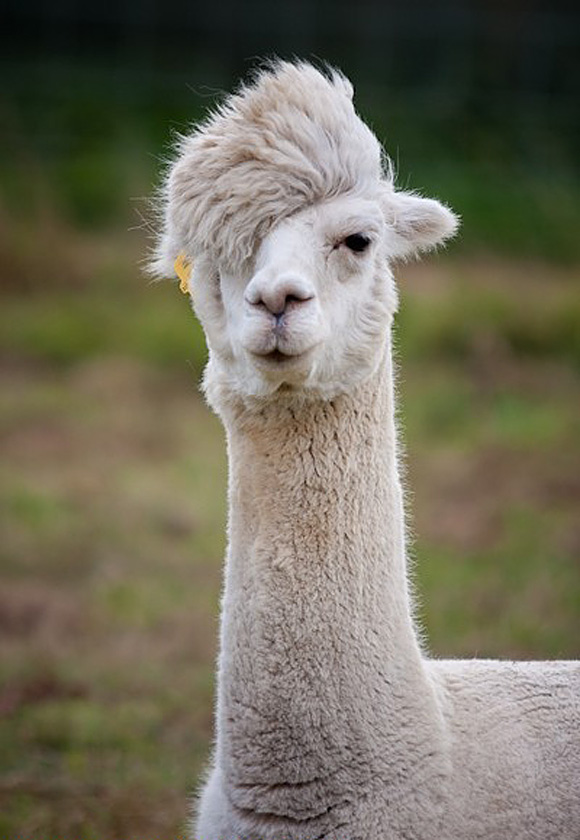
Unless I am way off base, I think this is the complex version of Bobby McFerrin’s hit ditty “Don’t Worry. Be Happy.” I hear in this poem how the world can be swirling and whirling about us, yet we can cocoon within ourselves and remain blissfully at peace.  I prefer the happy llama mode: humming along in life.

Poet Appreciation #3: Robert Penn Warren


Better known as a novelist, and perhaps as a scholar, Robert Penn Warren did provide some formidable poetry to ponder. You might be more familiar with his All the King’s Men, which garnered him the Pulitzer Prize in 1947, then his Pulitzer Prize collection Now and Then: Poems, 1976-1978. In all, he was awarded three Pulitzer Prizes, two being for poetry.  His southern background influenced his writing, particularly leaning towards the agrarian appreciation of the land. Receiving accolades and honors throughout his career, Warren left a rich legacy of both prose and poetry.

Image of U.S. Poet Laureate Robert Penn Warren

Image of U.S. Poet Laureate Robert Penn Warren (Photo credit: Wikipedia)

Vision
by Robert Penn Warren

I shall build me a house shall build me a house where the larkspur blooms
In a narrow glade in an alder wood,

Where the sunset shadows make violet glooms,
And a whip-poor-will calls in eerie mood.

 
I shall lie on a bed of river sedge,
And listen to the glassy dark,
With a guttered light on my window ledge,
While an owl stares in at me white and stark.
I shall burn my house with the rising dawn,
And leave but the ashes and smoke behind,
And again give the glade to the owl and the fawn,
When the grey wood smoke drifts away with the wind.

Like Cather’s poetry about the prairie, Warren provides a strong connection to nature. His diction is amazing the way it influences the imagery: “violet glooms,” “guttered light,” “glassy dark”. I don’t even notice the rhyme, it’s so fluid. Whether they poem is taken for its metaphorical meaning or literal, it doesn’t matter to me–I simply want to savor it, rather than analyze it. Good writing is like a good sunset in that words aren’t always sufficient to explain why the beauty is so moving.

Poetry Workshop: The Villanelle


The villanelle is one of those poem forms that when rendered well looks so effortless it’s surprising to learn how difficult they really are to write.


What is a villanelle?

This is a rather strenuous poem in that it contains nineteen lines, which amounts to five stanzas of three lines and one stanza of four lines containing four lines with two rhymes and two refrains.

Now if that isn’t complicated enough, keep this in mind: the first, and then the third lines alternate as the last lines of stanzas 2, 3, and 4, with stanza 5 ending in a couplet.  Oh, yes–the villanelle is usually written in a tetrameter, which is four feet or perhaps a pentameter, constituting of five feet

It’s best to see how a villanelle is wired together. If curious, or willing to try a villanelle with the example by Edward Arlington Robinson found at WikiHow

If you’re thinking, “Well, bosh and bother, I think I’ll pass on the villanelle,” I will leave you some well-known villanelles to contemplate.  Look for those repeating lines.  Like I mentioned earlier, a well-rendered villanelle won’t even appear to be trying so hard.  These poets make it seem rather effortless, don’t they?

Dylan Thomas’ “Do Not Go Gentle into That Good Night”  is one of the most famous villanelles. To demonstrate how the villanelle works the repetition is boldface and italics. A deeper discussion can be found at this link

Do not go gentle into that good night,
Old age should burn and rave at close of day;
Rage, rage against the dying of the light.

Though wise men at their end know dark is right,
Because their words had forked no lightning they
Do not go gentle into that good night,

Good men, the last wave by, crying how bright
Their frail deeds might have danced in a green bay,
Rage, rage against the dying of the light.

Wild men who caught and sang the sun in flight,
And learn, too late, they grieved it on its way,
Do not go gentle into that good night,

Grave men, near death, who see with blinding sight
Blind eyes could blaze like meteors and be gay,
Rage, rage against the dying of the light.

And you, my father, there on the sad height,
Curse, bless, me now with your fierce tears, I pray.
Do not go gentle into that good night,
Rage, rage against the dying of the light.


Another villanelle example:

When I saw you last, Rose,
You were only so high;—
How fast the time goes!

Like a bud ere it blows,
You just peeped at the sky,
When I saw you last, Rose!

Now your petals unclose,
Now your May-time is nigh;—
How fast the time goes!

And a life,—how it grows!
You were scarcely so shy
When I saw you last, Rose!

In your bosom it shows
There’s a guest on the sly;
How fast the time goes!

Is it Cupid? Who knows!
Yet you used not to sigh,
When I saw you last, Rose;—
How fast the time goes!

                            –Austin Dobson

You probably found those repeating lines all on your own, didn’t you?

Here’s a more contemporary villanelle.  Do check out more of Elizabeth Bishop’s poetry. She’s amazing.

One Art
Elizabeth Bishop (1911-1979)

The art of losing isn’t hard to master;
 so many things seem filled with the intent
to be lost that their loss is no disaster.Lose something every day. Accept the fluster
of lost door keys, the hour badly spent.
The art of losing isn’t hard to master.Then practice losing farther, losing faster:
places, and names, and where it was you meant
to travel. None of these will bring disaster.

I lost my mother’s watch. And look! my last, or
next-to-last, of three loved houses went.
The art of losing isn’t hard to master.

I lost two cities, lovely ones. And, vaster,
some realms I owned, two rivers, a continent.
I miss them, but it wasn’t a disaster.

–Even losing you (the joking voice, a gesture
I love) I shan’t have lied. It’s evident
the art of losing’s not too hard to master
though it may look like (Write it!) like disaster

If you haven’t filled up on villanelles yet, I suggest clicking here and reading on a rather nice collection.

Thanks for stopping in for the workshop.  I do hope you will give the villanelle a try, and even if you don’t, I hope you’ve gain an appreciation for a fascinating poem form.



Poet Appreciation #2: Edwin Arlington Robinson


English: Portrait of Edwin Arlington Robinson

Portrait of Edwin Arlington Robinson (Photo credit: Wikipedia)

I vaguely recall reading one or two of Edwin Arlington Robinson’s poetry as I dug through my AP selections. Needless to say, he is not a poet that I am familiar with; however, this gem dropped in my box as a my daily poem offering and it immediately reverberated within me: don’t we all wonder about that abandoned house?

Robinson took his poetry seriously, despite being unable to make a living from it, he persevered. Twice awarded the Pulitzer Prize he still remains relatively unknown, at least I can’t place him in the category of tip-of-the-tongue knowns, like Frost, Dickinson, and Whitman.  Have you heard of him or am I showing my poetry illiteracy once again?

The House on the Hill
by Edwin Arlington Robinson

They are all gone away,      
The House is shut and still,    
There is nothing more to say.

Through broken walls and gray      
The winds blow bleak and shrill:    
They are all gone away.

Nor is there one to-day      
To speak them good or ill:    
There is nothing more to say.

Why is it then we stray      
Around that sunken sill?    
They are all gone away.

And our poor fancy-play      
For them is wasted skill:    
There is nothing more to say.

There is ruin and decay      
In the House on the Hill:    
They are all gone away,
There is nothing more to say.

For a broader perspective of the poem follow this link

I personally am always curious about abandoned houses, or those that seem empty. Yet, there  isn’t a true emptiness, is there as long as houses remain standing, so do the memories. I like how Robinson intimates that though there may be memories, without the people inhabiting the house, there can be no conversations. An empty house is a voiceless house and a house without words is indeed empty.

English: abandoned house

abandoned house (Photo credit: Wikipedia)

Poetry Workshop: Getting in Shape with Concrete Poetry


First the grammar lesson, and then the poetry workshop lesson.

Nouns

A common noun is a noun referring to a person, place, or thing in a general sense. There are many types of nouns: common, proper, possessive, singular, abstract and concrete.

Concrete Nouns

A concrete noun names animate and inanimate things  that can be perceived through the five senses: touch, sight, taste, hearing, or smell. Examples are: cats, doors, waffles, teachers. A concrete noun is the opposite of an abstract noun such as concepts like: love, liberty, courage.


With the basic noun lesson understood, let’s move on to the Poetry Workshop: Concrete Poetry.

Concrete Poetry: aka Shape Poetry aka Visual Poetry

Poetry in which the overall effect is influenced through visual means by forming or arranging the words in a pattern that reflects the subject or meaning.

The concrete aspect comes from basing the poem on tangible nouns, ones in which employ the senses, as opposed to abstract nouns.  For instance, I can write about how cats see us, but are often invisible as they hide in plain view or I can emphasize the cat aspect by shaping the words around this concrete noun:

image: laurelgarver.BlogSpot.com

Sometimes the poem and its shape is humorous:


image: gardendigest.com

And sometimes it is more art than actual words:

image: prn.bc.ca


Other times there is a message within the message that turns out to be abstract after all:


concrete poem by jennifer Phillips

For the most part, concrete poetry is a visual blending of text and shape.  It’s an interactive expression, a melding and mixing of art, thought, feeling. Get into poetry by getting into shape.

Explore more with forming!


Poet Appreciate #1: Willa Cather


English: grass at , located on west side of ju...

Nebraska-Kansas prairie (Photo credit: Wikipedia)

Most recognize Willa Cather as a writer of prairie prose; however, before O Pioneers! came out in 1913, she had published a book of poems entitled April Twilights in 1903. The following poem from that book of poetry served as the prologue to O Pioneers!

Prairie Spring
by Willa Cather

Evening and the flat land,
Rich and sombre and always silent;
The miles of fresh-plowed soil,
Heavy and black, full of strength and harshness;
The growing wheat, the growing weeds,
The toiling horses, the tired men;
The long empty roads,
Sullen fires of sunset, fading,
The eternal, unresponsive sky.
Against all this, Youth,
Flaming like the wild roses,
Singing like the larks over the plowed fields,
Flashing like a star out of the twilight;
Youth with its insupportable sweetness,
Its fierce necessity,
Its sharp desire,
Singing and singing,
Out of the lips of silence,
Out of the earthy dusk.

Cather announces the coming of spring through abounding sensory imagery and metaphors. This poem encapsulates her mastery of description and exemplifies her love of the prairie. Where she found poetry in a land, many only found hardship and heartaches as they tried to subdue tangled, tawny grasses under their plow.

Portrait of Willa Cather

Portrait of Willa Cather (Photo credit: Wikipedia)

Marching into April’s Muse


It’s lovely that spring has basically sprung. There is no subtlety of seasons in my neck of the States.  One weekend eight inches floated down with the grace of a freight train, causing school to shut down (oh goodness was I bummed). The next the rain came in, melting all that amassed snowflakiness and suddenly I’m owner of lakefront property. I hope the assessor doesn’t drive by.

One of the nicer aspects of March of how it promenades in so roaringly, only to meekly usher in April and all her flowers.  Mixed in flowers are sunny days, longer days, taxes *cough*, and while these are sporadic occurrences of sweet sorrow (unless you like taxes), it’s an celebrating poetry.

Yes, this is a heads up that April is National Poetry Month.  This year I arranged a guest poet to appear about every other post. In between the celebrity verse readings there will be poetical bits like forms, clips, and images.  Ooh, I can’t wait. I’ve been working on April since last December.

Until April and the official start-up, here are some links to help you prepare:

Got questions about National Poetry Month?

Looking for ways to celebrate NPP?

Poet-to-Poet Project

And one of my absolute favorites: Poem-in-your-Pocket Day

Walt Whitman graces the poster this year. Find absolutely tons of great poetry info at http://www.poets.org.

See you around the corner!

Verse for Wear


1st edition

1st edition (Photo credit: Wikipedia)

First word purging and now onto verse wearing.

Throughout the year I also collected poems from my daily feeding from www.poets.org. Daily offerings are contemporary, while weekends focus on past classics. I began subscribing for a couple of reasons:

1. Poetry appreciation came into my life later than sooner and I’m making up for lost time.
2. Since becoming an AP teacher I figure it’s best practice to move beyond my basic knowledge of Frost–doctors must keep up on new practices, so as a practicing English literature teacher I should as well.

After a year of daily dosing of poems I have found I’m still drawn more to the classic poets, yet still appreciate the “now” of poetry today and listen, for the most part, what is being said.
So, here are the poems that I keep in my “save” file. I plan to wear these verse offerings by pulling them out for discussion in class. And here, as well. Any comments? Are you more contemporary or classic in your poetry choices?

All poems and bio information are from poets.org

Edgar Guest:
Guest has been called “the poet of the people.” Most often his poems were fourteen lines long and presented a deeply sentimental view of everyday life. When his father died, Guest was forced to drop out of high school and work full time at the Detroit Free Press, eventually considering himself “a newspaper man who wrote verses.” Of his poetry he said, “I take simple everyday things that happen to me and I figure it happens to a lot of other people and I make simple rhymes out of them.” 

Only A Dad
Edgar Guest 

Only a dad with a tired face,
Coming home from the daily race,
Bringing little of gold or fame
To show how well he has played the game;
But glad in his heart that his own rejoice
To see him come and to hear his voice.

Only a dad with a brood of four,
One of ten million men or more
Plodding along in the daily strife,
Bearing the whips and the scorns of life,
With never a whimper of pain or hate,
For the sake of those who at home await.

Only a dad, neither rich nor proud,
Merely one of the surging crowd,
Toiling, striving from day to day,
Facing whatever may come his way,
Silent whenever the harsh condemn,
And bearing it all for the love of them.

Only a dad but he gives his all,
To smooth the way for his children small,
Doing with courage stern and grim
The deeds that his father did for him.
This is the line that for him I pen:
Only a dad, but the best of men.

From the book "A Heap o' Livin'" ©1916


Joyful Moments Web Designs Graphics © by Mary  (Garren) Morand © MARY MORAND WEB PAGE – ALL RIGHTS RESERVED Webmaster ~ E-Mail ~ Comments
I appreciate this poem because it gets a shout out to dads. There are so many poems that exult moms (which I don’t mind) and I think fathers get shorted on all they do and how we feel about them.
Radar Data #12
by Lytton Smith
 
It was in the absence of light
as when near new moon and 
no moonlight; as when a part 
of a picture is in shadow (as 
opposed to a light); as when 
in the condition of being 
hidden from view, obscure, 
or unknown–in concealment, 
or else without knowledge 
as regards to some particular; 
and of the weather, season, 
air, sky, sea, etc., characterized 
by tempest; in times, events, 
circumstances etc. subject to 
tempers; inflamed, indicative, predictive, or symbolical of 
strife (harbinger of coming 
trouble)-a period of darkness 

occurring between one day & 
the next during which a place 
receives no light from the sun, 

and what if it is all behind us? 
I no longer fear the rain will 
never end, but doubt our ability 

to return to what lies passed. 
On the radar, a photopresent 
scraggle of interference, as if 

the data is trying to pretend 
something’s out there where 
everything is lost.

About This Poem   
“People are always curious where a name like ‘Lytton’ comes from–and it’s not from modernist biographer Lytton Strachey, but gothic novelist Edward Bulwer-Lytton. He famously came up with the opening phrase (in Paul Clifford) ‘It was a dark and stormy night.’ But I’ve begun to feel guilty mentioning that; his opening sentence is actually pretty good, so I’ve begun writing a whole series of poems that try to translate, rework, recuperate it.”  Lytton Smith

This is My Life
by William Stanley Braithwaite
 To feed my soul with beauty till I die;
To give my hands a pleasant task to do;
To keep my heart forever filled anew
With dreams and wonders which the days supply;
To love all conscious living, and thereby
Respect the brute who renders up its due,
And know the world as planned is good and true-
And thus -because there chanced to be an I!

This is my life since things are as they are:
One half akin to flowers and the grass:
The rest a law unto the changeless star.
And I believe when I shall come to pass
Within the Door His hand shall hold ajar
I’ll leave no echoing whisper of Alas!

Over the course of his career, Braithwaite founded a publishing company and taught creative writing at Atlanta University. His poetic style was influenced by English Romantic poets John Keats, Percy Bysshe Shelley, and William Wordsworth.
This poem smacks of resolution for the New Year. It stirs a resolve to become better than I am and to leave no regrets at the passing of the day. Yup, that’s what a poem should do–get some soul stirring going.
My hopes are that your New Year will be filled with verse, be it created or found, and that the words will resonate in your life into others!

A Bit of Bard for the Kidlits


List of titles of works based on Shakespearean...

How well do your kids know this guy? (Photo credit: Wikipedia)

Shakespeare. He probably isn’t on most parental to-do lists when it comes to childhood enrichment items. Then again–why not? We trot our kiddos to soccer practice, piano lessons, and the library to enrich their lives, why not foster the love of the Bard at an early age?
Acclaimed playwright Ken Ludwig believes infusing the Bard into our children’s lives is an essential, endearing adventure to undertake. His How to Teach Your Children Shakespeare is both inspirational and inventive in its approach. Although I no longer have kidlits at home since my progeny are now building their own nests, I can still adapt Ludwig’s methods by amending them to classroom instruction, especially since the ninth grade Common Core curriculum has a Romeo and Juliet section.

Teaching Shakespeare to our children is a notable endeavour. Ludwig states a few of his goals as to why he taught Shakespeare to his children on page 11:

  • giving them tools to read Shakespeare’s works with intelligence for the rest of their lives
  • enriching their lives
  • exposing them to literature to inspire them toward achieving great lives as they grow
  • providing meaningful shared experiences

Cool. Those are pretty much my intentions when I teach Shakespeare to my classroom kiddos.
Ludwig hits all the essential values of the “why” of Shakespeare:
1. The richness of imagery
2. The lilt of rhythm
3. The nuances and playfulness of language
4. The importance of memorizing and tucking away forever a few exceptional passages to pull out and nibble on throughout life
5. The joy of exploring character

Shakespeare’s plays showcase poetry at its best. Why wait until the kinder are all grownup before relishing the richness of English language? I am always amazed when I get a ninth grader who states, “Shakespeare? Who’s Shakespeare?” Admittedly that confession is rare. Unfortunately, the only Shakespeare most students know is Romeo and Juliet. On the other hand, by the time they leave high school they will become acquainted with at least three plays and a a handful of sonnets.  Sadly, I didn’t have any Shakesperience until I began teaching it.  That’s nearly thirty years of being Bardless.  Shocking, I know.  Now I’m a professed Bardinator and hope to put my acquired knowledge to page, one of these days.  We’ll see.  I have too many books in want of writing as it is.

For now, I am thrilled to introduce Shakespeare to my freshmen and strive to induce appreciation for his words and wit.

Mass-produced colour photolithography on paper...

Anyone out there have the Bard on their parent list? Is it squeezed in with ballet and soccer?

Committed to Poetry or Was that Commentary of Poetry?


English: Former United States Poet<br /><br /> Laureate (2... Admit it–we like poetry
because for the most part it’s a quick commitment. Two to five
minutes we get our emotions stirred, we open up our imagery files,
and we tuck away a line to ruminate on.  This is not cynicism,
merely observation. We love, love, love poetry more than we love,
love, love short stories. At least, this is what I am beginning to
surmise as I dole out literary experiences to high school students.
Since I’ve been English literature teachering for the past
decade, I have discovered poetry is amazingly versatile in its
ability to stir up passion in students.  Students  run
the Richter scale of response of “Just hand me a dull spoon so I
can dig out my eyeball” (LOL–actual quote from a senior) to
“Poetry! I love poetry! Can we write our own poems!” (yet, another
true quote). There doesn’t seem to be much of the middle roading
when it comes to reading or writing poetry. Why is that, I wonder?
My students aren’t sure either.  Somewhere between Shel Silverstein and Shakespeare
sonnets the love of verse becomes irrevocably squashed.
I think Billy Collins presented oh so well:

Introduction To Poetry

I ask them to take a poem and hold it up to the light
like a color slide

or press an ear against its
hive.

I say drop a mouse into a poem

and watch him probe his way out,

or walk inside the poem’s
room

and feel the walls for a light
switch.

I want them to
waterski

across the surface of a

poem

waving at the author’s name on the

shore.

But all they
want to do

is tie the poem to a chair with
rope

and torture a confession out of
it.

They begin beating it with a
hose

to find out what it really
means.

Thank you,
Billy. I am trying to convert my rubber hose approach into one of
ski rope handles.
One of my goals as a teacher is to inject the love of
words into my students.  I want them to turn to poems like
they do to their tunes.  After all, song lyrics are mostly
poetry with infused music.  Once students realize that if they
actually unplugged their buds long enough to actually read
their play list lyrics out loud they will see all those
literary terms of assonance, imagery, rhythm, rhyme, simile,
allusion floating around.
I try not to have them beat the stuffing out of
poems.  I much prefer them waterski and wave in
acknowledgement as we launch out on poetry’s
waters.  Grooving on poetry is, I hope contagious. My
excitement at reading a really marvelous poem out loud causes me to
have physical reactions.  The other day I read Seamus Heaney‘s “Digging.”

English: Picture of the Irish poet and Nobel P...

English: Picture of the Irish poet and Nobel Prize winner Seamus Heaney at the University College Dublin, February 11, 2009. (Photo credit: Wikipedia)

 Between my finger and my thumb
The squat pen rests; snug as a gun.

Under my window, a clean rasping sound

When the spade sinks into gravelly ground:
My father, digging. I look down

Till his straining rump among the flowerbeds
Bends low, comes up twenty years away
Stooping in rhythm through potato drills
Where he was digging.


The coarse boot nestled on the lug, the shaft
Against the inside knee was levered firmly.
He rooted out tall tops, buried the bright edge deep
To scatter new potatoes that we picked,
Loving their cool hardness in our hands.
By God, the old man could handle a spade.
Just like his old man.
My grandfather cut more turf in a day
Than any other man on Toner’s bog.
Once I carried him milk in a bottle
Corked sloppily with paper. He straightened up
To drink it, then fell to right away
Nicking and slicing neatly, heaving sods
Over his shoulder, going down and down
For the good turf. Digging.
The cold smell of potato mould, the squelch and slap
Of soggy peat, the curt cuts of an edge
Through living roots awaken in my head.
But I’ve no spade to follow men like them.

Between my finger and my thumb
The squat pen rests.
I’ll dig with it.


When I finished reading the poem
out loud I sucked in my breath and danced a bit in
place, so moved was I with Heaney’s wordsmithing.  My AP
students benignly tolerate my antics. I’m hoping my
unfettered appreciation will one day stir them  into
showing me their unabashed admiration.
Considering I had minimal
exposure to poetry during my own K-12 school days, and didn’t
really discover its merits until college, I am continually amazed
at its power to stir my emotions.  I valiantly want to pass on
this joy to my students and even before the Common Core required a
unit on poetry, I taught it anyway.
My commitment to poetry is my
commentary on how words artfully placed meaningfully lend a
dimension to our lives that makes us linger to inhale the
fragrance of as Coleridges states, “the best words in the best
order.”
Do you have
any poems that cause you to dance a bit in place when you read
them? Oh, do share.

Post Navigation