Pam Webb

a writer's journey as a reader

Archive for the category “Nature”

Wrap Up or Fall Flat


After five years of stop and go writing on my historical novel I’m nearing the end chapters. It’s rather intimidating. The ending involves the reuniting of a homestead mother with her family. The way I have presented the conflict is that there is some ambiguity of whether the mother left the family due to the grind of daily life as a pioneer women or if she wandered away due to fever delirium.
Here’s what I need to figure out:
-Is the husband readily accepting her leaving the family and not returning once she was better? (He’s a good guy overall, but was left with six children ages 3-15 to raise in her absence)
-How will the daughter (her POV) feel about her mama at this point? Anger, relief? This girl took on the task of raising her three ornery brothers and packed up her petticoats and put on pants to do so in order up keep up with them.

The right grab really counts… image: bodyresults.com


Reaching the end chapters is a lot like rock climbing. A cadence is developed in both–the reach and pull up towards progress. Just when the top is in sight, flat is sometimes hit, meaning no handholds and no way to go up. Finding a new path is sometimes the only direction left. Then again a risky move can be tried and what a sensation of exhilaration when it leads to success and pulling over the top.

Write now? I’m at that looking for a move that will pull me over the top.

So, writers–what do you do when you hit flat when the top ledge is in sight? Do you press on or look for a new route?
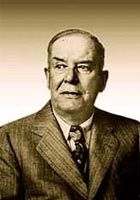
Poet Appreciation #9: Wallace Stevens


World War I affected the world in a way that changed forever our outlook on life. Losing 50,000 young men in one day alone, is a travesty of waste. Lost lives, lost dreams, lost generations have a profound impact. One section of the world culture which was touched was that of the artist in all forms. In poetry, the Modernist movement began with its focus on looking at how this brave new world affects us. T.S. Eliot is most frequented with modernist poetry with his offerings such as The Wasteland and The Lovesong ofJ. AlfredPrufrock.

Wallace Stevens

Another poet of that time, Wallace Stevens, is as important as Eliot in his contributions to Modernist poetry, although Eliot seems to pop up first in Modernist contribution conversations. Bio facts of note for Wallace:

  • didn’t get published until he 44
  • attended Harvard, but had to leave due to lack of funds
  • Editor for both of Harvard’s publications
  • His wife the model for the Liberty dime and half-dollar
  • Career primarily as an insurance lawyer
  • Won the Pulitzer Prize and National Book Award
  • His poetry collection, Harmonium, ignored by critics when first published, is now highly regarded
  • His home town of Hartford, Connecticut has a walk devoted to his blackbird poem with signs of each section along the way
  • Connoisseur of Asian art

Disillusionment of Ten O’Clock

The houses are haunted
By white night-gowns.
None are green,
Or purple with green rings,
Or green with yellow rings,
Or yellow with blue rings.
None of them are strange,
With socks of lace
And beaded ceintures.
People are not going
To dream of baboons and periwinkles.
Only, here and there, an old sailor,
Drunk and asleep in his boots,
Catches Tigers
In red weather.

Poet Appreciation #7: William Cullen Bryant


Are you a New Yorker? If so, then you know that William Bryant helped establish Central Park and the Metropolitan Museum of Art and that Bryant Park is named for him. He was also long time editor of the New York Evening Post. Of course you knew . More importantly, Bryant was part of the Romantics. While the Brits reveled in Wordsworth, Keats, and Shelley, America had its own Romanticist in the form of William Cullen Bryant.

William Cullen Bryant Cabinet Card by Mora-crop.jpg William Cullen Bryant: November 3, 1794 – June 12, 1878 (Wikipedia image)

November
by William Cullen Bryant

Yet one smile more, departing, distant sun!
One mellow smile through the soft vapoury air,
Ere, o’er the frozen earth, the loud winds ran,
Or snows are sifted o’er the meadows bare.
One smile on the brown hills and naked trees,
And the dark rocks whose summer wreaths are cast,
And the blue Gentian flower, that, in the breeze,
Nods lonely, of her beauteous race the last.
Yet a few sunny days, in which the bee
Shall murmur by the hedge that skim the way,
The cricket chirp upon the russet lea,
And man delight to linger in thy ray.
Yet one rich smile, and we will try to bear
The piercing winter frost, and winds, and darkened air.    

I do like fall. Each month has its own cadence. September has its drowsy warm days drifting into chilly nights, and then there is October with its brisk mornings rewarded with a gift of sun before rescinding into frost-quickened nights. Bryant has captured November with its bright, lingering colors mixed into the descending browns, graced with slights of snowfall. November is truly a mixture of seasons with its bits of summer mingling with the foreshadowing of winter. I added “gentian” to my imagery entries. Lovely word. Wonderful poem of images.

Poet Appreciation #3: Robert Penn Warren


Better known as a novelist, and perhaps as a scholar, Robert Penn Warren did provide some formidable poetry to ponder. You might be more familiar with his All the King’s Men, which garnered him the Pulitzer Prize in 1947, then his Pulitzer Prize collection Now and Then: Poems, 1976-1978. In all, he was awarded three Pulitzer Prizes, two being for poetry.  His southern background influenced his writing, particularly leaning towards the agrarian appreciation of the land. Receiving accolades and honors throughout his career, Warren left a rich legacy of both prose and poetry.

Image of U.S. Poet Laureate Robert Penn Warren

Image of U.S. Poet Laureate Robert Penn Warren (Photo credit: Wikipedia)

Vision
by Robert Penn Warren

I shall build me a house shall build me a house where the larkspur blooms
In a narrow glade in an alder wood,

Where the sunset shadows make violet glooms,
And a whip-poor-will calls in eerie mood.

 
I shall lie on a bed of river sedge,
And listen to the glassy dark,
With a guttered light on my window ledge,
While an owl stares in at me white and stark.
I shall burn my house with the rising dawn,
And leave but the ashes and smoke behind,
And again give the glade to the owl and the fawn,
When the grey wood smoke drifts away with the wind.

Like Cather’s poetry about the prairie, Warren provides a strong connection to nature. His diction is amazing the way it influences the imagery: “violet glooms,” “guttered light,” “glassy dark”. I don’t even notice the rhyme, it’s so fluid. Whether they poem is taken for its metaphorical meaning or literal, it doesn’t matter to me–I simply want to savor it, rather than analyze it. Good writing is like a good sunset in that words aren’t always sufficient to explain why the beauty is so moving.

Post Navigation