Pam Webb

a writer's journey as a reader

Archive for the category “language”

Word Nerd: Internet Influence


Let’s think for a moment about the 1990s. For some a moment might be too much for others it might be a welcome nostalgia nudge.

After all the nineties introduced fashion statements like grunge and the music genre hip hop. One influenced the other. TV shows and the workplace became more relaxed in attitude. But one, if not the biggest contribution to life, was the WWW. No, not World Wide Wrestling—the World Wide Web or what we mostly call the Internet (and now it’s such a ubiquitous aspect it’s not even capitalized anymore). The internet was still in its dial-up infancy.

some fashion statements are best left in the past

Since this is my Word Nerd post I’m going to focus on how the internet contributed to our cultural lexicon. Here are words that came out of the internet age:

viral: an infection that used to be related to health like how a cold can be spread, and in the same manner misinformation, memes, and other aspects can be quickly spread from one person’s computer to another.

catfish: it still refers to that strange whiskered fish but has taken on the meaning of being duped, usually when it comes to internet dating profiles. Read here for the backstory.

ghost: not like Casper, yet the term shares with the friendly entity the ability to disappear without warning or reason.

cookie: not the sweet treat you’re thinking of—instead it’s that little bit of information that websites use to keep track of user information. It’s not always so sweet to have personal data kept in a business file.

hallucination: not LSD related yet in the same sense that what you are looking at on the screen is not always real or to be trusted. Now that AI has entered our lives there is more hallucinations than ever before.

stream: relating to flow, like how water moves, information and more commonly, entertainment like movies, flow from our tech into our lives. No longer do we have to wait for our weekly episodes of our favorite sit-coms as some station no doubt is streaming Friends or The Dick Van Dyke Show 24/7.

24/7: the concept of easy access around the clock didn’t start with the internet, although it brought it to the forefront that information can be had at the push of a button at anytime day or night.

troll: these despicable creatures are found living under bridges in folklore and are all about harm and deception, which makes a perfect description of those who hide behind websites and do mischief with misinformation.

I could probably come up with a couple more but I really want to go stream another Death in Paradise episode and I’ve got to get an email out before being accused of ghosting, and I better clear out my cookies before a troll finds them.
Word Nerds: Mything Out on Grammar


Having taught high school English for twenty years one of the biggest complaints my students voiced (besides writing essays) dealt with grammar rules. Well, as Bob Dylan sings, the times they are a-changing.

According to a recent Reader’s Digest article here are some grammar rules that are soon to be or are already changing going from missed to being acceptable (or is that mythed?).

Image: Tatiana Amazon/rd.com

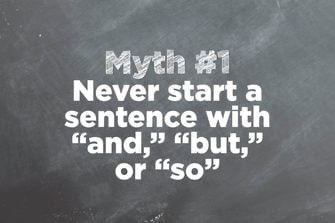
According to the grammar experts at the Chicago Manual of Style, there is no actual rule that states it’s an error to start a sentence with a conjunction. And I believe them.

Image: Tatiana Amazon/rd.com

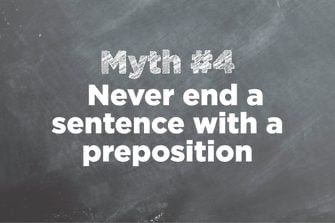
That age old rule of not ending a sentence with a preposition creates strange sentences such as, “What city from where did he travel?” instead of “What city did he come from?” Sometimes a sentence just has end naturally, like it’s supposed to.

Image: Tatiana Amazon/rd.com

Ah, the old discussion about splitting infinitives. First off know what an infinitive is before considering the need to split it. Says Wikipedia: An infinitive is a verb form that is used as a non-finite verb.

An example would be the well known tag line: “to boldly go where no one has gone before.” “To go” is the infinitive, and “boldly” splits it. No harm, no foul.

Image: Tatiana Amazon/rd.com

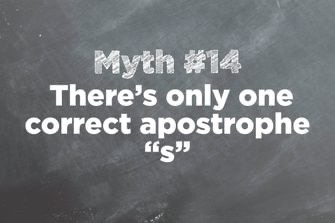
What to do when faced with the dilemma of adding that apostrophe “s” to a word ending in “s”? Which way is the write way (see what I did there?)

  1. I’m going to go over to see Mr. James’s new car.
  2. I’m going to go over to see Mr. James’ new car.

Trick question. They are both correct. It comes down to preferred style and consistency, using the same form throughout the writing is essential. Or it can be confusing to all those readers’ understanding of what your style is all about.

What other writing rules have you stumped?

Word Nerds: Familiar Friends


While new words are appreciated finds, there are those favorites that are like old friends that I haven’t seen in awhile and suddenly pop up unexpectedly.

smithereens: small pieces; bits. I tend to associate this one with Yosemite Sam who I recall would now and then threaten to blow Bugs Bunny to smithereens.

copacetic: fine; completely satisfactory; okay. This is a great word to toss out when asked to describe how the meeting went.

morass: any confusing or troublesome situation, especially one from which it is difficult to free oneself. This is not how you want to describe the meeting.

egregious: extraordinary in some bad way. This one usually finds its way describing a mistake. All those “e” sounds make it worse than it probably is.

luddite: someone who is opposed or resistant to new technologies or technological change. Since learning about Luddites in English literature it’s fun to see how it is found in today’s world.

Resistance is futile.

collywobbles: a feeling of fear, apprehension, or nervousness. Hah! Used this one the other day and stumped The Hubs—“this is a word?” Indeed it is.

brouhaha: excited public interest, discussion, or the like, as the clamor attending some sensational event. This one is simply fun to say.

abscond: to depart in a sudden and secret manner. Chocolate tends to do this in our household.

twee: affectedly dainty or quaint. When it’s just too cute or trying to hard to be cute.

Too twee, or not to twee?

natter: to talk incessantly. Yes, this one is not far out of reach. It’s very appropriate in describing how some people like to have conversations in public with their phone speaker fully blaring.

ennui: a feeling of utter weariness and discontent resulting from satiety or lack of interest; boredom. Also found this one in English—from the short story “The Most Dangerous Game.”

Find any friends among the above?

Bard Bits: How Insulting


Shakespeare is an unrefuted wordsmith. He knew how to pen a phrase with a lexiconical fragrance we still admire centuries later such as Romeo’s eloquent description of Juliet: “O, she doth teach the torches to burn bright.”

Shakespeare could also have his characters sling some stinging verbal mud as in The Comedy of Errors: “The tartness of his face sours ripe grapes.”

While insults aren’t something we should be dwelling on in our present societal focus on mindfulness, Shakespearean insults are more of a study of impactful imagery. There is also a plus of them being quite funny.

Creating a Shakespearean insult involves knowing the terms. Here are a few, some known and others relevant to only Elizabethans.

Ape(n) – 1. Imitator 2. Fool 3. Term of endearment

Beetle-headed(adj) – Thick-headed, doltish

Bootless(adv) – Fruitlessly, uselessly, unsuccessfully, in vain; (adj) fruitless, useless, worthless

Churlish(adj) – 1. Rude, blunt, ungracious 2. Violent, rough, harsh 3. Stiff, hard, unyielding

Candle-Waster(n) – Student, who sits late over his books

Dankish(adj) – Dank, damp, humid

Errant(adj) – Wandering, straying, erring

Fat-kidneyed(adj) – Gross and lubberly

Fustilarian(n) – Smelly old woman

Gorbellied(adj) – Pot-bellied, fat-paunched

Harpy(n) – Half woman/ half vulture

InfectiousTo infect (v) affect, influence, stir

Jolthead(n) – Blockhead, dolt, numbskull

Logger-head (adj) – Thick-headed, stupid, doltish

Month’s Mind(n) – Inclination, liking

Motley -minded(adj) – foolish

Nut-hook(n) – Constable, officer (a hook for pulling down nuts, hence a thief

Onion-eyed(adj) – Eyes filled with tears

Pribble(vb) – Vain chatter and silly quarreling

Rump-fed(adj) – Pampered

Scut – (n) Short tail (as of a deer)

Tottering(adj) – 1. Wavering, vacillating, fluctuating 2. Tattered, ragged, frayed

Varlet(n) – Knave, rogue, rascal

Wag(n) – Mischievous boy

Some of these surely grabbed your attention.

To assemble your insult find a noun and then a couple of adjectives that do it justice, and then begin with “You,” which depending on if it’s the 15th, 16th, or 17th century, is either a formal or informal address:

How about:

You rump-fed, gor-bellied wag!

This might be directed to a youth caught hogging the buffet at family gathering. Or, at a young man showing rude manners. Either way it’s a definite call out by an older person to a younger one.

If you are in need of inspiration I suggest referring to an automatic Shakespearean Insult Generator.

May this post prompt your tongue to choose words other than the usual curses, especially when driving. These also might be handy since it is an election year.

For more droll insults go to: www.classicfm.com

Word Nerds: Jest for the sound


As much as I am a fan of the new year because it provides a fresh start, I am not a fan of the cold weather January brings. Most of the first days have been in temperatures of single digits and in minus increments. And then there was those two four days of snow. Going outside has become a matter of great consideration and since cold weather is keeping me more inside than outside I’m looking for day brighteners. Words are often my go to happy place. There are some words that when I hear them bring a smile because of the way they sound, and sometimes their meaning is amusing:

hobbledehoy: an ungainly youth—I had a few of these in class

sklent: any slanting surface, such as a slope—noted, when it freezes after a snowstorm

feirie: healthy, strong—are fairies feirie?

cakeage: a few a restaurant charge for bringing in an outside cake—you can have your cake and eat it too, as long as you pay for it

kvetch: to chronically complain—the extra snow has me doing plenty of this

No more snow!!!

tintinnabulation: the ringing of bells—which gets tinnitus riled up

yestreen: during yesterday evening

elsewhither: in another direction; toward a different place or goal—I travel here often

nibling: a child of one’s sibling—a solution to gender identification?

quiddity: the essential nature of a thing—snowy days create this feeling that winter is essentially cold and annoying

pulchritudnious: physically beautiful—this one is baffling in that it is an unlovely sounding word to describe loveliness

skookum: large; powerful—can’t wait to try this one out

mountweazel: a decoy word used in a dictionary or encyclopedia to catch publishers who might try to copy the content—like paper towns

cromulent: acceptable or legitimate—reminds me of crumpets

And an appropriate word to end with is:

jollify: to make merry—when the snow fades and spring begins to be a reality

No more snow in the forecast happy dance

Oh no, that four letter word s**w


There is an unspoken rule that winter is not allowed to happen while autumn is still working on dropping leaves. And winter should hold off until November, preferably until after Thanksgiving. December is acceptable.

We all know winter doesn’t play by the rules.

Waking up to this while it’s still October set back my cheery outlook:

Insult to injury were the winds of 14+ mph all through the day. A few birds attempted to visit the feeder, like this persevering mourning dove.

Not being a winter fan (I don’t ski, walking is curtailed, and hammocking is postponed) snow is definitely a four-letter word in my realm.

Trying to recoup the day I tried to find some positives. A cozy fire was made, a cup of cocoa while I edited a manuscript, fave Pandora station in the background, a new jigsaw puzzle, and a stack of books from the library. Oh, leaf raking is on hold and the yard looks tidier with the leaves hidden by that fresh snow topping.

Okay, not so bad after all, especially since it all melted by 1 pm.

I can’t fight winter🥶

I can find ways of coping, and this winter preview made me realize that snow doesn’t have to ruin my outlook. Keep the cocoa coming and always have a few books on the ready and it will be April before I know it.

How Cliché: Liking those “L” phrases


Lots of lovely “L” phrases coming your way…

Labor of love: to do something for the joy of doing so instead of doing so for personal gain. This phrase is found in the New Testament in Hebrews 6:10 and in Thessalonians 1:3. Both scriptures refer to those who labor in the name of God, doing so in love.

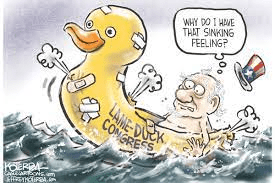
Lame duck: someone finishing out their term of office who will be replaced soon. Originally in 18th century Britain a broker who could not pay his debts were crossed off the membership and they would “waddle away” in shame. Moving to the USA in the 19th century the term was applied to congressmen who were not reelected yet had to serve out their term. perhaps causing them to “waddle away” in shame of losing their job.

Larger than life: appearing to be real. The original saying is from the Latin expression ad vivum, or “to the life.” In the 18th century the phrase appears, the 1799 Lame Jervas: “I see the puppets, the wheelbarrows, everything as large as life.” Other writers, such as Lewis Carroll and George Bernard Shaw began using the expression.

Last but not least: perhaps last but not not least in importance. It’s thought John Lyly originated the expression when he said, “Of these three but one can stand me in steede, the last, but not the least” in his 1580 Euphues and His England. It was also used by Shakespeare in his plays, including Julius Caesar and King Lear.

Last ditch effort: a desperate final attempt. In the 17th century the military term for last ditch applied to the last trench of defense. The 18th century saw the term used by Thomas Jefferson who said, “A government driven to the last ditch by the universal call for liberty.”

To lay an egg: to fail in an embarrassing manner. If a player or team does not score in the British game of cricket then a duck’s egg or zero is earned. Transfer this concept to America’s vaudeville and theater days when a performance failed to please the crowd or when a business fails the idea of laying an egg is applied, or in other words, an zero is achieved.

Left hand doesn’t know what the right hand is doing: taking an action that might indicate less than full knowledge. In Mathew 6:3 the passage indicates that a person should do good quietly instead of publicizing their action, basically keeping the action secret. Over time the secret aspect has taken to mean one department’s or organization’s action indicates a contrary action to another department’s or organization’s efforts, perhaps to the point of adding confusion or inefficiency to a situation.

Left-handed compliment: a statement that seems like praise, but is actually a disguised insult. Marriages between royalty and a commoner is known as morganatic and the ceremony involved the groom (the royal) giving the bride (the commoner) his left hand instead of his right as was done in conventional marriages. *This brings up the issue of the left hand being considered the “lesser” of the hands, which harkens back to superstitions about being left-handed.

Let one’s hair down: to behave informally, without constraint. Back in the day when women wore their hair up, the idea of wearing their hair loose and down around their shoulders was considered a breach of societal protocol. A woman let her hair down only in the privacy of her bedroom. P.G. Wodehouse had fun with this in his 1933 Heavy Weather: “We can take our hair down and tell each other our right names.” *I’m wondering why this only applied to men…

Let the cat out of the bag: to reveal a secret. In old-time open air markets people would purchase their goods and carry them home in bags and baskets. There existed the shady practice of placing a cat in the bag instead of the purchased pig. When the person got home the truth was revealed when the cat was let out of the bag.

There are lots of “L” phrases left. The one that surprised me most was the cat in the bag. I will probably think of pigs whenever I hear a secret revealed from now on.

AI—iyiyi


Take me to your reader…

Of course I’m following the AI news. As a former English teacher I still have a vested interest in how students might tap into ChatGPT and all its marketplace cousins. I thought running herd on suspected cut and paste and plagiarism was challenging, now there is the matter if the assignments are student-produced or bot-generated. Did I mention I’m glad I’m retired?

Now that I am retired I am focusing on my own writing. I am beginning to notice publishers are posting their own AI cautionaries on their websites, about appreciating AI, but wanting original work. Yes, we’ll see how that turns out.

Then I read how someone created a picture book by plugging in prompt directives. This did not go over well in the comments. I have enough competition from humans, I don’t want any from machines.*

I decided to take ChatGPT for a test drive. I plugged in the prompt: Create an enthusiastic book review for Syria’s Secret Library.

I had just finished the book and was about to write up my Goodreads review and was curious what the ChatGPT approach would produce.

In less than a minute, more like 30 seconds, I was reading a seven paragraph review that was disconcertingly well-written. On first reading. Here is the first paragraph:

Prepare to be whisked away on a remarkable and inspiring journey as Mike Thomson takes us deep into the heart of Syria’s Secret Library. This is a truly exceptional work that not only sheds light on the power of literature but also showcases the indomitable human spirit in the face of adversity.

A decent introduction, a bit more enthusiastic in praise style than I would write, yet decent.

On second reading I noticed more glowing praise; however, it was what I refer to as “frosting” in that it looks good but has little substance. My AP students would write “frosting” essays when they weren’t fully knowledgeable about the topic prompt. They would write around the topic without truly addressing it. The AI result was much the same. It addressed the book in a very general way and the paragraphs became repetitive in its praise due to lack of detail. It’s as if it read the book jacket instead of the book:

The characters in this book are genuine heroes, ordinary people thrust into extraordinary circumstances, fighting to protect the essence of their culture and to safeguard the treasures of human knowledge. Their commitment and sacrifice are truly awe-inspiring, and their stories will stay with you long after you finish reading.

Which characters? What sacrifices? How were their actions awe-inspiring? These would be comments I would write on a student paper. Details. Give me the “so what?”—get me interested by providing specific details.

Then again, maybe it’s dependent on how well the prompt is formed. I revised my original prompt to read: Create a positive book review for Syria’s Secret Library including specific details from the book such as names, places, and events.

Here is a paragraph from the revised review:

The book eloquently captures the power of literacy and the profound impact it had on the people of Daraya. It was heartwarming to read about how children like Waleed and Reem found solace and inspiration in the pages of books, transcending the horrors of war. The author skillfully weaves their personal stories with historical and cultural references, painting a rich tapestry of the Syrian people’s resilience and unwavering thirst for knowledge.

It now mentions the place: Daraya, yet who are Reem and Waleed? And therein lies the problem with trusting bot research—it can get it wrong. There is no Reem and Waleed in the book. At least the the story I read.

I keep reading incidents where people, as in professionals such as lawyers, are getting into BIG trouble when it is revealed that their documents are flawed because they trusted what the AI produced. (Why they didn’t fact check is a question I had).

Overall, I am concerned where AI writing dependencies are taking us in both the creative and professional realm. From my brief forays though, I’m not too worried about my day job as a writer being threatened, especially after the results from my prompt concerning a young boy, a grandmother and feeding birds and squirrels in the park. AIiyiyi it was that bad.

*quick segue—my summer binge is “Person of Interest” which is an older series how a billionaire computer whiz invented a machine that watches the population for acts of terrorism, but he uses it to help prevent crime. I find this 2011-2016 series still relevant in how artificial intelligence becomes smarter than its programming.

Word Nerd: Words I Want to Find in a Story


I see words come alive…

snollygoster: a clever, unscrupulous person. What a fabulous word! It reminds me of a villain lurking in the pages of a Lemony Snicket book.

banderole: a small flag or streamer fastened to a lance, masthead, etc. I imagine this will be a handy term for upcoming Fourth of July parades.

ferdutzt: confused; bewildered. It sounds like have a fuzzy brain.

skrik: a sudden fright or panic. Yes, that’s exactly the word when I’m startled.

quidnunc: a person who is eager to know the latest news and gossip. I am surprised I don’t come across this word in my English village novels. It so sounds like a person found in a Miss Marple story.

reboant: resounding or reverberating loudly. Definitely describes the train horns that barrage our area on a daily basis.

pluviophile: a person who enjoys rain and rainy days, and who is fascinated by the sights, sounds, etc., of rain. I grew up in the Pacific Northwest where you learn to live the rain or go bonkers in winter, spring, and fall.

farouche: sullenly unsociable or shy. Not just shy but shy with an attitude. That is inspiration for a character, for sure. Maybe this person meets up with the local quidnunc and sparks fly. Hmmm…

ferhoodle: to confuse or mix up. A companion of ferduzt.

bloviate: to speak pompously. You know, that part of the movie where the snollygoster monologues about how clever they are right before they are undone by the clever hero.

tawpie: a foolish or thoughtless young person. I see this being home in a Gaiman tale for some reason.

ceilidh: a party, gathering, or the like, at which dancing, singing, and storytelling are the usual forms of entertainment. Shakespeare’s A Midsummer Night’s Dream!

scintilla: a minute particle; spark; trace. It’s right companionable with “smidge”and “scootch.”

pwn: to totally defeat or dominate, especially in a video or computer game. Did the vowel get vanquished when this word came into being?

pervicacious: extremely willful; obstinate; stubborn. Oh dear, what if they are farouche as well?

proceleusmatic: inciting, animating, or inspiring. The problem is by the time the word is properly pronounced the moment has passed.

oppugn: to assail by criticism, argument, or action. This when the snollygoster shows their true colors.

lambent: running or moving lightly over a surface. Oddly, this is an adjective not a verb.

rubricate: to mark or color with red. So for equality purposes other colors should have their own verb—yellow would be “yubricate” and brown would be “bubricate”?

schmatte: an old ragged garment; tattered article of clothing. This sounds more like the state of my door mat after a hard winter of snow and ice abuse.

Challenge!

What word will you work into a conversation this week?

How Cliché: The “J” Phrases


There are not too many notable cliché “J” phrases, so let’s look them over.

Jack of all trades: someone who is able to do everything. This phrase dates to around the 1600s, Shakespeare’s time, yet there was a prevailing thought that if someone is good at everything they will not be outstanding in anything. Ouch. That’s harsh. I have moved away from saying Jack of all trades and just go with my personal reference of calling someone a MacGyver if they can fix anything and everything. MacGyver, I’m talking about the 80’s version, not the reboot. Great show. Angus MacGyver could take chewing gum and a paper clip and save the world from bad guys. He rocked an awesome mullet, which alone made him memorable.

image: Wikipedia

Jet set: the socially fashionable group. This term was introduced in the 1950s when airplanes became jets and moved people around quickly from one hot spot to the next. Flying was still out of easy reach for most people and mainly the affluent could afford jet travels. Not sure if jet set still applies today since platforms like Hopper make it more affordable to bounce from one place to the next more easily.

Jockey for position: to get into an advantageous place or position. A horse race term that literally meant that the jockeys were vying for the best position on the track. It later transferred to other situations such as the 1955 London Times that included the sentence, “Lawyers jockeying for position to appear before the right judge.” These suit and tie folk are smiling now, but it may not be so pretty once the gate bell rings, “And they’re off!”

image: Idioms4you

John Hancock: a person’s signature. A personal favorite. John Hancock signed the Declaration of Independence in a large and bold manner so that King George could read it. Today, anyone’s signature on anything is considered a John Hancock. Kings not included.

image: Online Library of Liberty

Johnny-come-lately: a newcomer or someone arriving late. A nineteenth-century British seaman would be referred as Johnny Newcomer. This term became Johnny-come-lately in the United States.

image: Amazon

Johnny-on-the-spot: someone who is available at the right time. An early nineteenth American term that is not as popular as it once was when it appeared in the 1896 Artie by George Ade: “I could see that a Johnny-on-the-spot…was trying to keep cases on her.” Although it’s pretty clear that the phrase still has found its way to being useful.

image: johnny rentals
image: johnnysvegas

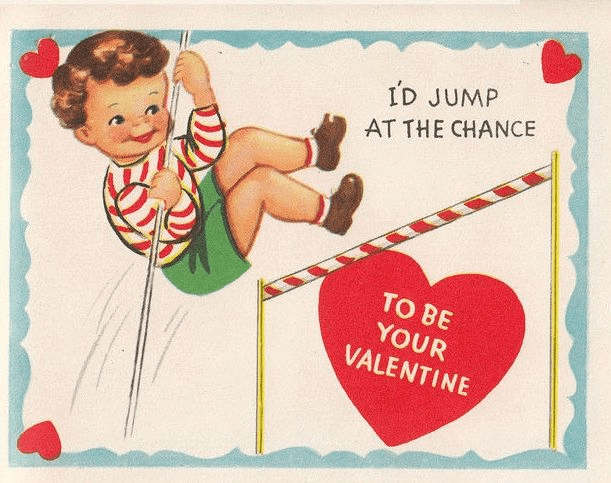
Jump at the chance: to grab an opportunity. Strangely enough this expression was likened to a rooster jumping at a berry. Apparently Sir Walter Scott liked the expression and would refer to someone jumping at the “ready penny.” It certainly shows a degree of eagerness.

image: Free Dictionary

Jump down someone’s throat: to rebuke someone sharply. A metaphor still in use from its start in the late nineteenth century.

Jump the gun: to start too soon. An easy one to figure out when thinking about how sport participants are not supposed to set off before the starter’s gun goes off. To do so, to jump out into the race before the starter indicates to go, could scratch the participant from the race, let alone get the other participants a tad upset at the false start. Originally the expression was “beat the pistol,” which changed to its present form by 1942. The expression is a metaphor that goes far beyond athletic competitions.

Just deserts: a deserved reward or a deserved punishment. I would consider getting dessert a reward, except notice the spelling—“desert” refers to “deserve” not in cheesecake or pudding after the main meal. A mid-eighteenth century proverb: “Desert and rewarde be oft tuned things far of,” which means what one deserves and the reward they receive is not always the expected. Just deser is indeed different than just dessert.

Any surprises! I always thought it was “dessert” and wondered why someone would fling out, “they got their just dessert.” They weren’t talking about a slice of pie. Now I know.

Post Navigation