Of course there are no Thanksgiving scenes in any of Shakespeare’s works since that holiday was not on his creative road map. However, he did have several worthwhile lines about giving thanks. Feel free to share as you gather round your table on Thursday.
“O Lord that lends me life, lend me a heart replete with thankfulness!” — 2 Henry VI
“Small cheer and great welcome makes a merry feast.” — The Winter’s Tale
a. At the store you see one aisle over that person from (fill in the blank) and want to say “Hi” but forgot their name, so you avoid their aisle and suddenly become interested in something to avoid meeting up with them.
b. You are watching a movie and an actor steps into the scene, you know who they are, and can even recall all the other movies you’ve seen them in, but their name is just out of reach.
c. You’re out in the garage looking for that one tool needed for your project and can’t locate it so you ask if anyone has seen it but right then you’ve lost the actual name of it so you invent a close facsimile like “air blower” for the “leaf blower.”
Any of these ring true for you?
I call them BMW moments. Not to be confused with this:
Not the BMW for now
It’s more like this:
Yeah, definitely
A BMW moment is what I have come to call “Brief Missing Word” moments. It’s where for a nanosecond (or sometimes longer) the name or term, that needed word that is hovering just out of reach cannot be reeled in by those little grey cells (Poirot no doubt had those brain glitches now and then).
In my younger days, about ten plus years ago, I noticed this would happen when I was teaching. I’d merrily be explaining something to my students and suddenly the word I needed evaporated right when I needed it. Most perplexing and vastly irritating.
My hubs eased my concern saying my brain is a computer and like a computer its memory files just needed some defragmentation. Plus being tired no doubt also affected my memory recall.
I bought it and learned to adjust becoming adept at word switching or talking around the missing word through descriptive embellishments.
Once retired, I thought with my mind less filled with lesson planning, grading, evaluation demands, etc. my brain files would have more space. And sleeping in, along with naps, meant being less tired. Right?
Nope, BMW moments were becoming more of a regular feature of my life. So, I naturally think dementia and go to my doctor. He gives the test.
I pass.
His comment is that I shouldn’t worry about those missing word moments unless I start forgetting the names of my children or husband or start putting my car keys in the refrigerator.
Okay. I can accept that. I’m learning to live with those brief missing moments.
Now as soon as I find my keys I can go to that one store so get that thing. Maybe what’s his face has seen my keys.
I’ve experienced Shakespeare plays (one experiences his works, versus watches them—a bit pompous sounding,sorry) in a variety of forms: live on stage (several as an audience member and once as Horatio—very brief); large screen theater; small screen TV; reading, and teaching.
One favorite form is watching a performance in the park, as it is open air, much like a Globe performance. Plus there is the anticipation of lively audience response, the atmosphere being one of shared spaces and camaraderie. And the plays are usually free, at least the one that comes to our fair city is.
Every year in August the Montana company arrives and performs one of Shakespeare’s popular plays in a local park. This year they presented a As You Like It, which is one of Shakespeare’s more popular comedies.
Laughing Out LoudBard in the Park
Arriving at the park 40 minutes early I discovered the space already teeming with people, but no matter since I prefer the back for that quick exit to avoid the parking lot tangle.
As the sun drifted behind the trees the temps cooled down and the stage action heated up with runaway sons and daughters, tangled romance, and character arcs. As You Like It is a fun romp and the audience showed its appreciation with plenty of applause and laughter.
Bard in the Park signifies the transition from summer fun to back to school readiness. And Jacques mentions going to school in his famous “All the world’s a stage” soliloquy.
Anyone catch a Shakespeare in the Park performance this summer?
January 29th is going to be a puzzling day. Literally.
It’s National Puzzle Day. And we are finding puzzles have found their way into our lives.
I grew up with puzzles. My dad had a special table set up and would spend hours piece by piece putting together some scenic masterpiece. I wasn’t too interested in doing puzzles then and barely acknowledged them over the years.
When my hubs sprang his knee skiing it looked liked the long winters were going to get a more tedious since heading up to the slope would no longer be a viable option.
Of course I brought him books from the library. On a whim I brought home a puzzle because why not? There is a free puzzle exchange on the lobby.
As Hemingway said “One puzzle leads to another.” Well, he kind of said that.
We have now been puzzling for several years and we have come to realize there are some etiquette aspects:
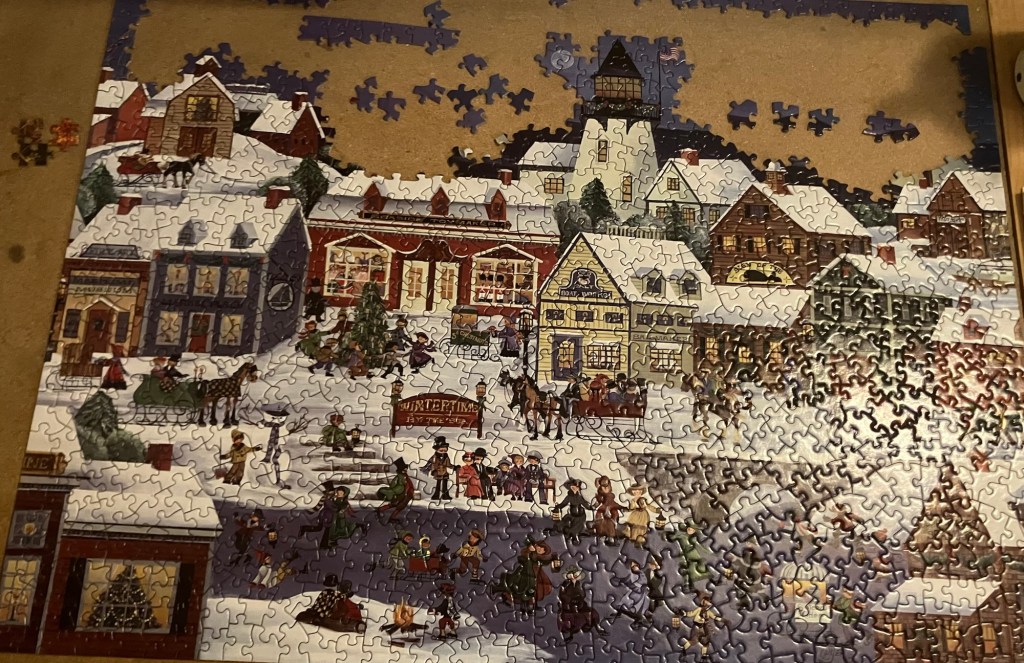
Borders first. Creating the perimeter makes it easier to get the picture in perspective.
Sort pieces. A half dozen plastic picnic plates do nicely in separating out the many pieces into a manageable order.
Clean Hands. Yeah, learned that one day while eating my almond butter with honey toast.
No Pets. Cat hair. Dog hair. Not good companions with puzzle pieces.
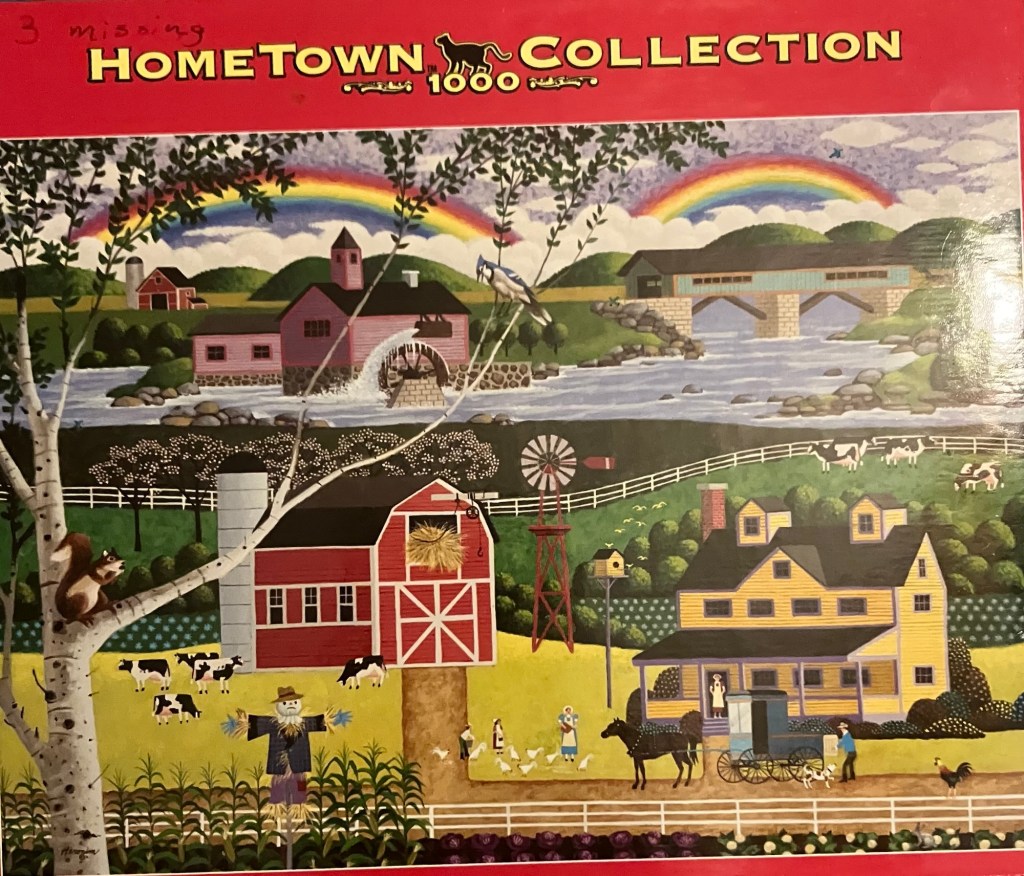
Track Pieces. Drop a piece. Oh, oh. Better find it. Or at least mark “piece missing” on the box. Don’t forget to circle the place.
No hogging. Sharing is caring. Set a timer if needed. *Oh no, honey. That a general comment—no worries*.
Break down. Just like the last person to use the milk replaces the milk, the last person to finish the puzzle breaks it down and puts it in the box.
Those are the basics. Did I miss any?
Happy puzzling.
Hometown are faves. Liking all that detail.Ugh. Sky. An unspoken rule—leaving the sky last is, well, ugh.
January 9th is set aside for those, like myself, who relish, celebrate, expound the joys of discovering and knowing how words can make one’s day that much better.
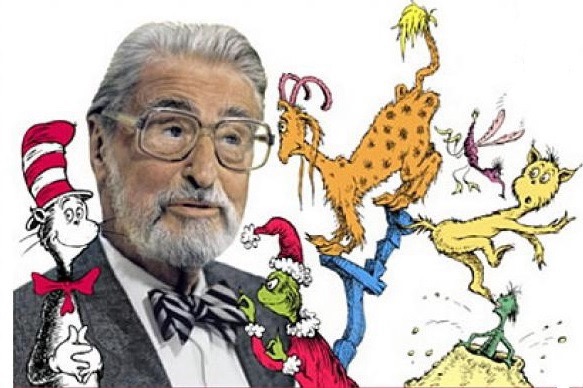
It’s a delightful fact that Ted Geisel, aka Dr. Seuss, provided the term “nerd” in his 1950 book If I Ran the Zoo.
image: Tumblr
While “nerd” used to be considered a mildly derogatory label to describe a person who was a bit too devoted to something or operated outside more established social norms, “nerd” is now a means to attach a reference to someone possessing expertise or enthusiasm.
There is a vast number of lexiconical connoisseurs residing within the greater populace.
It’s a quiet existence for the most part. No Jimmy Fallon appearances nor competitive reality shows featuring celebrities enthusiastically endorsing their favorite vocabulary.
It is gratifying to have this one special day though.
I browsed through the internet and discovered a few Word Nerds and decided to give them momentum in their efforts to expand the awareness of appreciating words.
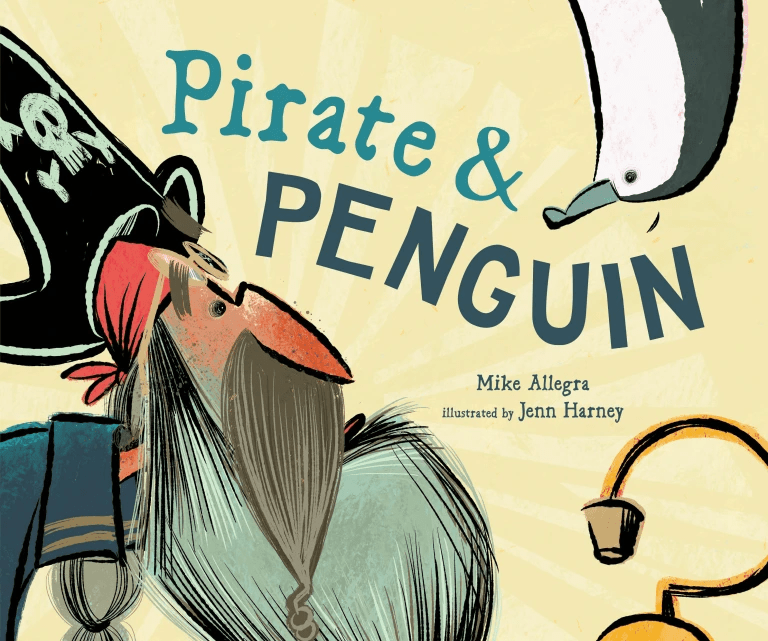
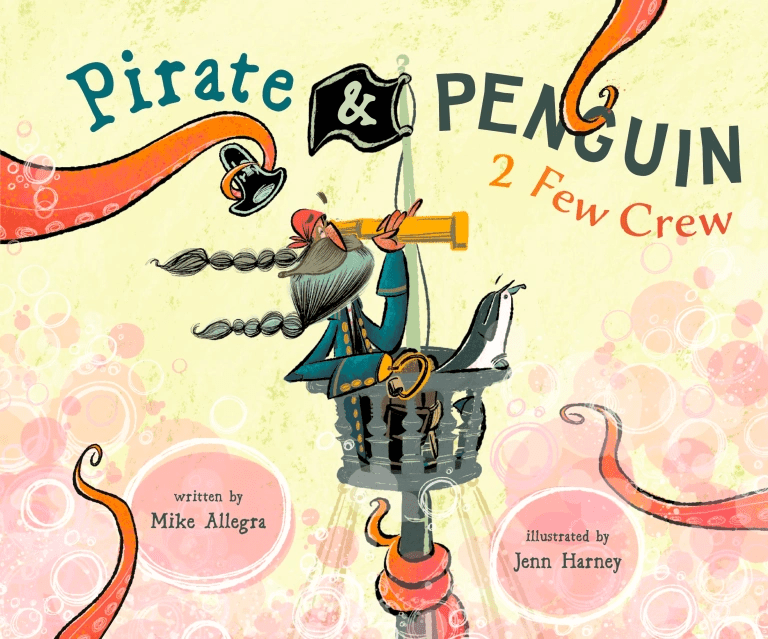
Mike Allegra is a funtastic writer, blogger, humorist. He and I both share an appreciation for mice and capybaras. But those are other books and this post is about pirates and penguins. My mother was a pirate once–that’s a different story.
I figure we have been bloggy pals for over ten years 😳. We have even traded opinions in a series of posts called Debatables.
We both write for children. Mike is more prolific than I am. His books are funnier too. Like his latest books that combine a salty vision-impaired pirate and his new companion, a penguin. No offense, Mike. A pirate who identifies a penguin as a parrot needs an eye exam.
Pirates. Penguins. Definitely a winning combination.
Anyway-
Mike is running a contest where one special entrant wins copies of his Pirate and Penguin books. I would like to win copies of these books. I’m sure you would too.
I can get another ticket in the drawing by posting a blog post about his contest which, of course means you can trot over to Mike’s blog and enter the contest thus reducing my odds of winning…
I see what you’ve done, Mike.
So—check out Mike’s blog, enter his contest, and check out my book as well.
C’mon, Mike. I’m sure you don’t mind me edging in with just a little self-promotion.
Shakespeare is an unrefuted wordsmith. He knew how to pen a phrase with a lexiconical fragrance we still admire centuries later such as Romeo’s eloquent description of Juliet: “O, she doth teach the torches to burn bright.”
Shakespeare could also have his characters sling some stinging verbal mud as in The Comedy of Errors: “The tartness of his face sours ripe grapes.”
While insults aren’t something we should be dwelling on in our present societal focus on mindfulness, Shakespearean insults are more of a study of impactful imagery. There is also a plus of them being quite funny.
Creating a Shakespearean insult involves knowing the terms. Here are a few, some known and others relevant to only Elizabethans.
Ape(n) – 1. Imitator 2. Fool 3. Term of endearment
To assemble your insult find a noun and then a couple of adjectives that do it justice, and then begin with “You,” which depending on if it’s the 15th, 16th, or 17th century, is either a formal or informal address:
How about:
Yourump-fed, gor-bellied wag!
This might be directed to a youth caught hogging the buffet at family gathering. Or, at a young man showing rude manners. Either way it’s a definite call out by an older person to a younger one.
May this post prompt your tongue to choose words other than the usual curses, especially when driving. These also might be handy since it is an election year.
Of course I’m following the AI news. As a former English teacher I still have a vested interest in how students might tap into ChatGPT and all its marketplace cousins. I thought running herd on suspected cut and paste and plagiarism was challenging, now there is the matter if the assignments are student-produced or bot-generated. Did I mention I’m glad I’m retired?
Now that I am retired I am focusing on my own writing. I am beginning to notice publishers are posting their own AI cautionaries on their websites, about appreciating AI, but wanting original work. Yes, we’ll see how that turns out.
Then I read how someone created a picture book by plugging in prompt directives. This did not go over well in the comments. I have enough competition from humans, I don’t want any from machines.*
I decided to take ChatGPT for a test drive. I plugged in the prompt: Create an enthusiastic book review for Syria’s Secret Library.
I had just finished the book and was about to write up my Goodreads review and was curious what the ChatGPT approach would produce.
In less than a minute, more like 30 seconds, I was reading a seven paragraph review that was disconcertingly well-written. On first reading. Here is the first paragraph:
Prepare to be whisked away on a remarkable and inspiring journey as Mike Thomson takes us deep into the heart of Syria’s Secret Library. This is a truly exceptional work that not only sheds light on the power of literature but also showcases the indomitable human spirit in the face of adversity.
A decent introduction, a bit more enthusiastic in praise style than I would write, yet decent.
On second reading I noticed more glowing praise; however, it was what I refer to as “frosting” in that it looks good but has little substance. My AP students would write “frosting” essays when they weren’t fully knowledgeable about the topic prompt. They would write around the topic without truly addressing it. The AI result was much the same. It addressed the book in a very general way and the paragraphs became repetitive in its praise due to lack of detail. It’s as if it read the book jacket instead of the book:
The characters in this book are genuine heroes, ordinary people thrust into extraordinary circumstances, fighting to protect the essence of their culture and to safeguard the treasures of human knowledge. Their commitment and sacrifice are truly awe-inspiring, and their stories will stay with you long after you finish reading.
Which characters? What sacrifices? How were their actions awe-inspiring? These would be comments I would write on a student paper. Details. Give me the “so what?”—get me interested by providing specific details.
Then again, maybe it’s dependent on how well the prompt is formed. I revised my original prompt to read: Create a positive book review for Syria’s Secret Library including specific details from the book such as names, places, and events.
Here is a paragraph from the revised review:
The book eloquently captures the power of literacy and the profound impact it had on the people of Daraya. It was heartwarming to read about how children like Waleed and Reem found solace and inspiration in the pages of books, transcending the horrors of war. The author skillfully weaves their personal stories with historical and cultural references, painting a rich tapestry of the Syrian people’s resilience and unwavering thirst for knowledge.
It now mentions the place: Daraya, yet who are Reem and Waleed? And therein lies the problem with trusting bot research—it can get it wrong. There is no Reem and Waleed in the book. At least the the story I read.
I keep reading incidents where people, as in professionals such as lawyers, are getting into BIG trouble when it is revealed that their documents are flawed because they trusted what the AI produced. (Why they didn’t fact check is a question I had).
Overall, I am concerned where AI writing dependencies are taking us in both the creative and professional realm. From my brief forays though, I’m not too worried about my day job as a writer being threatened, especially after the results from my prompt concerning a young boy, a grandmother and feeding birds and squirrels in the park. AIiyiyi it was that bad.
*quick segue—my summer binge is “Person of Interest” which is an older series how a billionaire computer whiz invented a machine that watches the population for acts of terrorism, but he uses it to help prevent crime. I find this 2011-2016 series still relevant in how artificial intelligence becomes smarter than its programming.
Names can be a real stumper. Selecting the right name for a place, character, or in my current writing dilemma, a magazine.
Vogue is a hard act to follow
Names and places aren’t usually a problem when writing a story. I have dictionaries and other resources that inspire me. Yet, coming up with an invented name for a magazine is proving difficult. The frustrating part is that the magazine is only mentioned by the character a couple of times, yet it will set up more about the character if readers can associate the magazine with its connotative style. I’m a basic person when it comes to clothing (go Old Navy) so fashion magazines aren’t my usual read; however, my character, Carla, works for a fashion magazine in New York, and she is all about style. Coming up with a magazine about fashion without it actually being a real world magazine has taken far too much of my creative time.
Here are some titles I have come up with that got nixed after doing some fact checking:
Style–out there
In Style–out there
View–out there
Modus–out there
Mode--out there
Mirror–out there
Preview–out there
Clique–out there
Allure—out there
Then there is associated terms, like what The Devil Wears Prada did emulating Vogue by calling the magazine Runway. Maybe I could go there, although some terms have connotations:
Lipstick–nah
Blush–that’s leading somewhere I don’t want to go
Reflect or Reflects–sounds like a mindfulness posssibly
Today–TV show
Now–too demanding
I’m running out of ideas. Just need one word, maybe two, that both entices the reader to pick up the magazine and to understand what it is about. These are possibilities
Regard–-kind of like En garde, as in the directive when fencing (being on one’s toes, being ready)
Prev–a bit like “preview” as in getting in on new fashion before everyone else—possibility Preva?
Esteem-too much bragging
Sass and Saz--unbelievably are out there
Nouvo—a twist on nouveau, as in new
Maybe go with a single letter
M–oops, out there
Q–as in quest for fashion, yet too much like GQ
Z–too generational
W—yup, out there
So–I encourage you, I implore you–please help me out with possible magazine names. Think fashion. Think New York. Think chic. As incentive I will mention your contribution in the novel’s acknowledgements.







 Pam Webb