Pam Webb

a writer's journey as a reader

Archive for the month “October, 2019”

Word Nerd Confessions: October


This image has an empty alt attribute; its file name is img_0576-3.jpg

I might have mentioned it before that my heritage harkens back to the Isle of Skye in Scotland. Since that discovery I have grown more aware of all that is Scottish. This month I favor words that have Scottish roots. I might have to dedicate a post to famous Scots. I do enjoy listening to David Tennant and his broguish wit.

Who has the knack for Scottish wit and bravado? The Doctor, of course.

grumphie: a pig

hooly: gently

sennachie: a storyteller

blellum: an indiscreet talker

atweel: surely

shavie: a trick or a prank

I’ve come across other Scottish words in my readings of authors such as D.E. Stevenson and Allan MacKinnon that leave me puzzled to the point of setting my book down and searching out its meaning.

One of the words that stumped me was “ken.” Sentences like, “I ken your meaning,” really threw me. Context sleuthing pointed me towards understanding, but I finally looked it up and got this from dictionary. com:

verb (used with object),  kenned or kent, ken·ning.

Chiefly Scot.

  1. to know, have knowledge of or about, or be acquainted with (a person or thing).
  2. to understand or perceive (an idea or situation).

Scots Law. to acknowledge as heir; recognize by a judicial act.Archaic. to see; descry; recognize.

To “ken” something means to have a deeper understanding that just a mere acknowledgement. It’s one of those words that doesn’t translate well out of its cultural context–I ken that some words do better in their home language.

What Scottish words have you come across? Better yet, which of the above is one you are adopting? I’m leaning towards grumphie, as I do enjoy Guinea pigs. Then again, tossing out hooly at the right instance could be satisfying.
Why We Say: Oh, “G”


Why are jokes considered a “gag”?
The term is originally from the days (as is today) when actors would toss in an ad libbed line to throw another actor off his own lines. Often this change up in the script would stop the actor from talking as effectively as being gagged and silenced. Isn’t the hope there is a gag reel why we buy the DVD?

Why does someone “run the gamut” ?
“Gamma” is the last note on the Guido d’Arezzo music scale with “ut” representing the first note sung. If someone goes through the “gamut” they are basically going from one end to the other.

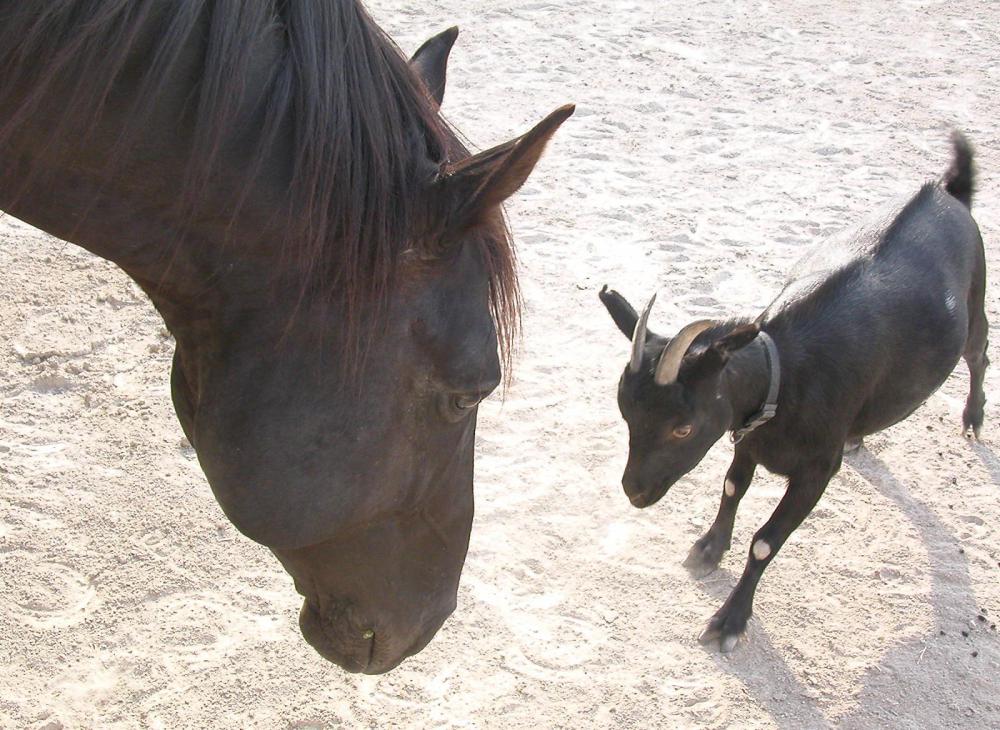
Image result for getting your goat expression
Don’t horse around with my goat…

What is meant by “getting someone’s goat”?
Apparently in the horse racing world a nervous horse in the gate can be calmed by the presence of a goat. Unscrupulous owners might try to turn the race towards their favor by taking their rival’s goat. That’s baaadd business.

How is “being on good footing” an indication of rank with someone?
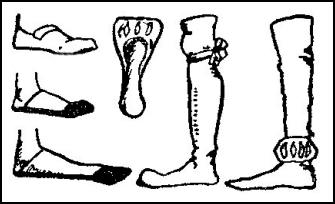
During the reign of England’s King Henry VIII a person’s social standing could be measured by his shoe. Peasants typically wore small shoes, being insignificant on the grand scale of social importance. The closer to the king, the larger the shoe. Hmm, wasn’t Henry known to be of dubious sole and a heel?

Image result for shoes king henry VIII wore
If the shoe fits?

Why do we call idle chatter “gossip”?
In earlier times godparents were called “God-sibbs” with “sibb” meaning “related.” Godparents were usually selected among distant relatives who, it is said, when they met at gatherings, such as christenings, were known to exchange news and tidbits. These idle chatter became associated with God-sibbs and slipped into “gossip.”

How did “guy” come into use?
The British expression “guy” refers to someone who is not respected from the revolutionary Guy Fawkes, who lead the 1605 Gunpowder plot. In America, the term comes from the circus reference to the “guy wire” the main wire that holds up the tent which meant refer to who is in charge when one asks for the “main guy.” Today “guy” is more or less a general term for people.

Well, “G” that’s it for this month for another round of Why We Say based on findings from the Dictionary of Word Origins: A History of the Words, Expressions, and Cliches We Use by Jordan Almond.

Movie Musings: Genius


During my weekly library stop I loaded up book titles and found some possibilities on the free rack. Now to find the time for them all. Stocking up on movies for the weekend I focused on the “G” section at our library pulling old favorites such as The Giver and found Genius next to it. Realizing it was about the friendship between an author and an editor I added to my fare. Good choice.

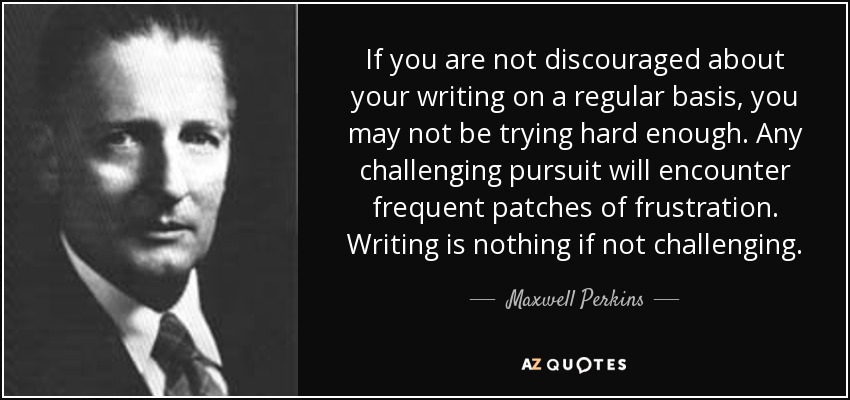
Image result for maxwell perkins

Image result for look homeward angelImage result for maxwell perkins

I know nothing about Thomas Wolfe beyond him being a well-known writer who couldn’t go home again. Oh yes, he was also tall enough (6’6″) to use the top of his refrigerator as his writing desk. I also recall something about wearing a white suit. I later discovered there are two writers by name of Thomas Wolfe. This Thomas Wolfe is the writer from the Jazz Age, not the writer of The Right Stuff. This Wolfe did not wear white, but he proved fairly distinctive in his own way.

The 2016 film Genius added much more to that knowledge. Yet, the film isn’t so much about Tom Wolfe (played by Jude Law) as it is about Max Perkins (Colin Firth), his editor at Scribner’s. Apparently Maxwell Perkins was a legend amongst the publishing community having discovered Hemingway and Fitzgerald, among other writers.

As the movie unfolds we understand that Max and Tom form a bond that goes much deeper than a working relationship. Max loved his five daughters, yet wanted a son. Tom, losing his father earlier in his life, needed another father figure. For a time these two men met each other’s needs and also produced some brilliant books that are still referred to today.

Often books are sourced to become movies and less often a movie inspires a book. In the case of Genius, I am intrigued enough to find the books of Thomas Wolfe and read about the man who encouraged an undisciplined writer to produce laudatory prose. It makes one wonder who the true genius is in this film.

Post Navigation