Then again I tend to celebrate bees everyday. We keep a bee-friendly yard by planting lots of flowers that bees favor, such as a huge mound of lavender.
I will often go out and search for bees once the lavender comes into bloom. My favorites are the big black bumblebees. They remind me of little bears as they flit around gathering pollen.
Reading about bees is also a favorite. Here are few recommendations:
The Secret Life of Bees by Sue Monk Kidd
The Bees by Laline Paull
The Music of Bees by Eileen Garvin
He Should Have Told the Bees by Amanda Cox
Hour of the Bees by Lindsay Eager
The Keeper of the Bees by Gene Porter-Stratton
And I definitely tune into nature shows about bees. One of my favorites is found on PBS’ Nature called “My Garden of a Thousand Bees.” A wildlife filmmaker is stuck at home in Bristol, England during the pandemic lockdown and decides to film the busy bees in his backyard. I’m on my third rewatch. Here is the preview.
What are your thought about bees?
P.S. Don’t forget to nudge your congressperson to support PBS. Public broadcasting benefits everybody!
I’m a boomer, which means I grew up with television. I remember that freestanding television set that sat in the room off my parents’ bedroom. There was a couch and a coffee table which I guess would make it a den.
The early years
Shows were black and white, channels were three, and times were 6 am (farmer’s report) to 11 pm (news). Then nothing played except the sign off signal and this:
mystical—isn’t it?
Color TV was for the income bracket above ours. My uncle had one.
TV furniture
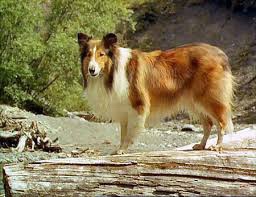
I remember being mesmerized seeing Lassie in color.
from this
to this
It didn’t take long for our family to get a color console. I think my mom and her brother had a friendly competition going about keeping up with the latest.
I grew up with shows like “Dobie Gillis,” my older brother’s liking. My faves were “The Mickey Mouse Club,”“Romper Room,” and “Soupy Sales.” And sometimes “Captain Kangaroo.”
this guy didn’t always come with a filter
Locally we had JP Patches. Yes, among my first celebrity crushes was a clown. This was before Stephen King changed our perspective about them.
great show
Of course there was “Walt Disney’s Wonderful World of Color” hosted by Uncle Walt. It was a highlight of the week.
Every Sunday night right before bedtime
Television sounds like a huge part of my childhood and yet I have more memories of being outside playing than being inside watching.
As I grew up so did television in depth and presentation. There were more channels, more programs, more dedication to certain shows. Instant access to world events, which wasn’t always a positive.
Setting up a college dorm room involved packing a portable TV. These were black and white, but hey, it beat having to go to the dorm lounge and have to watch the show of whoever got there first.
handy, so handy
Young married life had other priorities besides buying a TV, yet somehow we bought one.
sleek, not fake furniture
Without cable or a dish the access to stations remained limited to the basic three stations: ABC, NBC, and CBS. We mainly tuned in to PBS. My kids were “Reading Rainbow” fans. Since I worked at a library books were a bigger focus than TV shows and we watched our fair share of VHS movies.
Once we became an empty nester household there were more evening hours and more income. PBS and DVD movies were still the norm. Buy into cable or dish? Pay to watch TV?!?
Then our oldest son convinced us to buy his old flat screen. Very nice. Then with my government economic boost check I invested in my own smart TV with a soundbar and installed it in a vacated kids room (now my office or Mom Cave). The hubs was shocked. Considering how much I wasn’t into watching programmed television suddenly I had more stations than I could possibly imagine at the tips of my fingers.
not my cave, yet it’s got the gist
Choice and availability didn’t change my habits though. I still watch PBS, being annoyed with commercial TV,I still abstained from paying for TV. That is until T-Mobile came up with such a customer deal: free Netflix and Apple TV. Couldn’t resist.
At first I binged on all those shows I had heard about (sure beat having to check them out as DVDs from the library, if that had that series and if they weren’t too scratched to play). Then I realized I often spent a half hour or more trying to find something to watch.
With winter’s early evening darkness I tend to retreat into my Mom Cave around five or six and zone out until bedtime. Not my best use of time, I admit.
I read in the morning and afternoon, preferring natural light. And dislike working on my computer at night (too much of a throwback to those nights of grading papers and creating lesson plans). I even tried resurrecting my interest in playing the recorder (I didn’t want to disturb my husband’s restful reading time so have that up).
I’m open to suggestions of how to spend those long winter evenings without resorting to streaming (which induces that inner scream of “turn it off—you can do this—just set down the remote).
Maybe I should move somewhere that doesn’t get dark until 9 pm. Then again that would invite a different sort of problems.
At the end of the week I’m ready to kick back with a bowl of popcorn with a remote in hand.
As much as I need to read, there are times when settling back to watch a movie is the ticket to totally unwinding from the week’s stress.
I have discovered I have lost my interest in films that are steeped in human dramas—maybe it’s because I’m living my own. Big, raucous CGI flicks, like the Marvel world offers, are okay for mindless escapism. What I discovered that engages my interest most are nature documentaries. I subscribe to PBS mainly for their Nature program.
Our library carries an impressive array of DVD and Blu-Ray offerings, especially in nature shows. Browsing the stacks one day I discovered an amazing series:
A definite WOW!
From the library catalog description:
Narrated by David Tennant, this exhilarating adventure was filmed over four years and forty countries with help from camera-carrying birds, drones, paragliders and remote-countrol microflight planes. This wondrous aerial spectacle will make your spirits soar!
It is indeed exhilarating to be so up close to birds in flight and to witness behaviors not easily accessible by humans. The dedication and ingenuity of the film crew is certainly impressive.
As a Whovian, it was an added bonus listening to David Tennant’s Scottish-infused narration. I half expected the Tardis to be spied among the migrating flocks of geese.
Film Faves:
Extras: the behind the scenes of how the series was filmed
the gathering of the flamingos, acres and acres of the delicate pink birds was visually stunning
murmurations—how starlings swarm and cavort in the sky
penguins-it’s hard to go wrong with penguins
I suppose there is some therapeutic aspect to watching the life and times of animals, especially birds. There is wonder and appreciation for the natural world. The joy and satisfaction of knowing there is so much beauty and marvel in the world that is available with a click of the remote is indeed a welcome balm after a long, long week.
Settling into a corset series, one of those lavish PBS costume dramas based on a historical figure or event, has been a go to strategy for dreary winter evenings, long before stay home/stay safe became a mainstay.
The truth is in the telling
Watching people come to life in all their period finery, re-enacting events that shaped history is both enlightening and entertaining. Although show runners tend to lean more towards the entertaining, rather than the enlightenment aspect when presenting their slice of history.
Victoria, now in its third season, is quite guilty of drifting towards a soap opera since its attention to accurately portraying events leans more towards hysteria than historical.
Major considerations:
Victoria constantly refers to her miserable childhood at Kensington, especially being an only child. While it’s true life at Kensington was abominable in many ways, Victoria was not an only child, a lament she emphasizes. In actuality she had the company of her much older half-sister Feodora until she was eight years old and they had a close relationship through correspondence, although actual visits to London were rare. The scheming frenemy relationship portrayed is all for show.
Skerretelli: ah, the romance of the head cook and the queen’s dresser is so endearing, so captivating—so untrue. Charles Francatelli never married the Queen’s Head Dresser. Nancy, whose real name was Marianne Skerrett, served the queen for twenty-five years (and was 44 years old when she came to the palace to serve the 18 year old monarch). She spoke several languages, came from a well-connected family, and had considerable responsibilities. Francatelli did not work long at the palace, and there is no record of he and Skerrett being together. Skerrett was married to her job. So much for that romance.
Another false romance is that of Ernest and Harriet. In real life, Ernest was married at that time, and so was Harriett, plus, she was twelve years older than him. Oh, she eventually had eleven children, while Ernest did not have any with his wife. He did have that problem referred to throughout the episodes—thanks to his dear Papa who introduced him to brothels. Albert declined, of course that initiation.
Albert’s parentage remains a historical titillation since Leopold happened to be visiting when Albert’s mother conceived. Even historians tend towards questionable conclusions.
And yes, there were several assassination attempts on Victoria.
As for Lord M…much ado about nothing. Lord Melbourne did indeed have a huge influence as her prime minister, yet he acted as a mentor for the young queen, advising and guiding her first years as a monarch. He was more of a father figure, although it might be conceivable Victoria had a crush on Lord M, although being 40 years older creates doubt.
Other points of detouring from fact include the Duchess of Bucceouth being in her spritely 30s instead of the curmudgeonly older woman Diana Riggs brought to the role.
The duchess and the footman romance is loosely based on Caroline Norton’s sad experience (accused of adultery with Lord M), and being denied access to her children. She was able to change the law so women had more rights—now that would make for an excellent episode. Instead we get trysts and time outs.
Although Queen Victoria is not one of my British monarch faves, costume dramas, BBC style, are so colorful and elaborate, such a visual feast, such an escape, especially in winter when evenings start at 4 pm.
I do wonder why the writers feel the necessity to tinker with the historical truths. Actual events were plentiful and interesting enough in their own without elaboration or bending.
So, an open request to BBC showrunners: Really, we can handle history as it happened. If we want dramatized history we can turn to Shakespeare.
That reminds me—maybe it’s time to revisit The Hollow Crown since I’ve gone through All Creatures Great and Small, Sanditon, Wolf Hall, and even a revisit of Dr Who’s second season.
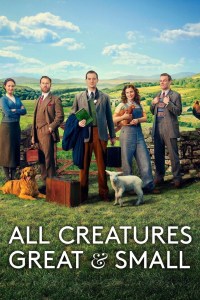
As a fan of All Creatures Great and Small, both the books and the original television series, I have mixed feelings about the recently released update to Herriot’s classic.
New faces for an old favorite
On one hand, I’m thrilled to see an updated version since the old version’s filming style was not very creative, just basic camera angles and editing.
Then again, an update might focus too much on making the series “pretty” through extra scenery shots which takes away from how the books focused on the dynamics of the people, as well as the wonderful animals.
On one hand, I look forward to seeing new faces in old roles.
Then again, how can anyone expect to replace the absolutely marvelous cast led by Robert Hardy?
So—last night I tuned in my PBS Passport (best ever Christmas present to myself) and watched the first two episodes of the first season.
Verdict:
It is a pretty update, with its sweeping shots of Yorkshire, and there is plenty attention on building dynamics within the cast. We’ll make that a positive.
As for the cast itself. Samuel West brings credit to the inexplicably frustrating, insufferable, yet charming Siegfried Farnon. The other cast members are unknowns, and hold their own. I am puzzled by Mrs. Hall, the housekeeper. I remember her being much older in the books, and in this update she appears to be Siegfried’s age, and their inevitable clashes come off more as married couple bantering than the respected nemesis that the original Mrs. Hall appeared to be. This is a marring point, because Mrs. Hall apparently has a wayward son by the name of Edward, but she doesn’t appear old enough to have a son able to be out and about living independently. Sadly, this is a sticking point for me. Mrs. Hall wasn’t that prominent of a character, yet here she is quite entrenched in the household.
Overall verdict:
To be fair, I will have to put aside my strong allegiance to the old series and view this new series on its own merits.
What are your thoughts on the updated All Creatures Great and Small?
Someone finally got it right: they created a movie that showed how librarians are more than capable of saving the world from evil doers. I discovered these movies long after they had first been released, but enjoyed them nonetheless.
Noah Wyle from ER fame, established himself in that long running role (11seasons!) as the likable character who was a bit different from others due to background and interests, and sets the tone by choosing what is beneficial for others. This appeal transferred well into the Librarian series.
In the initial movie, Quest for the Spear (2004), Flynn Carsten is a poster boy for failure to launch. He has 22 degrees, lives with his mother, doesn’t have a job or any relationships going (never has, and doubtfully ever will), and would rather spend time with his books because they “speak to him.” His professor signs him off, telling him to go live in the real world. Flynn looks for a job, but then a job finds him. Sent a personal invitation to apply as The Librarian (notice the emphasis), Flynn joins the que of perhaps a hundred applicants.
Thumbnail: he gets the job, he discovers his penchant for all the knowledge that he amassed comes in handy, and that the most important knowledge is not what is in the head, but is found in the heart (great mom advice).
While the movie’s initial production quality is a bit thin, it does have a campiness that is fun. There is a combination of all those jungle adventure movies, mixed in with some Sherlock Holmes, Indiana Jones, Tomb Raider, and James Bond. Sometimes there is a hint of Doctor Who, as Flynn gains experience and status as the “fixer” of what is strange and how it affects the world. Fairly clean family entertainment, except for hinted love scenes, and tame fighting sequences.
A total of three movies plus a TV series meant The Librarian has a fan base of reckoning. Noah Wyle’s character grew in each movie and TV episode until he became a legend in his own time.
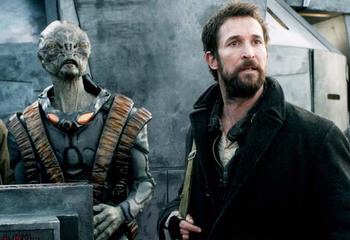
His Librarian skills transferred well to Falling Skies, a Steven Spielberg TV series about life after aliens have invaded the planet.
If you haven’t seen The Librarian and are looking for some easy going entertainment, check out the movies. If wanting a more developed, continuing sequenced plot look into the series.
Quest for the Spear” (2004), “Return to King Solomon’s Mine“ (2006), and “Curse of the Judas Chalice“ (2008).Nov 12, 2009
Oh, those royals. They are always in the news. From wedding bliss to adorable Charlotte pics they somehow beguile us. At least they beguile me.
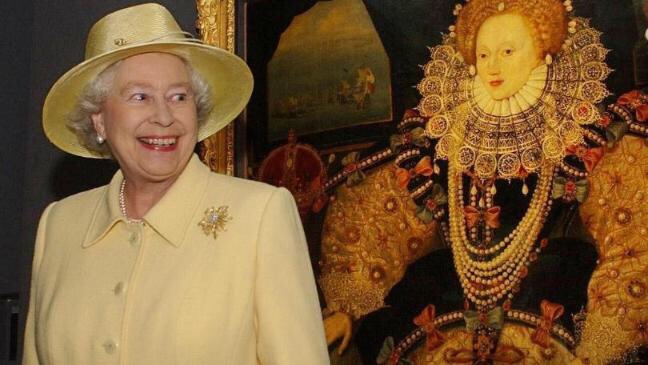
Maybe my interest, bordering on fascination, with the royals stems from my Bardinator status, that compelling need to embrace the world of Shakespeare. Part of Shakespeare’s world is Queen Elizabeth I. Without Good Queen Bess’s nod of approval to Shakespeare’s acting troupe, the world might not have been influenced by his wordsmithing.
Becoming smitten with QEI wasn’t difficult-wow, whatta monarch. Patron of the arts, survivor of parental malpractice, as well as sibling rivalry to a dangerous maximum, she led troops against the Spanish Armada, turned down marriage for the good of her country, and ruled the most powerful country at a time when women were considered property. And yes, I have watched the adaptations of her life. My pick is Helen Mirren.
I also pick Helen for her portrayal of the current Elizabeth. It’s always been risky to present suppositions of living persons, especially ones as iconic as Britain’s current monarch: Elizabeth II. Yet, Mirren’s portrayal provided sensitivity and respect which is credit to her abilities as an actress.
This is why it was with difficulty I finally succumbed to watching The Crown. First of all, Buckingham palace isn’t known for leaking royal tidbits, so I sensed there would be much embellishment about presenting the private moments of Elizabeth as she began her long and unexpected reign.
My verdict? Stunning production. Five stars for the lavish attention to details to create impressive time period background. Four stars for acting in totality. Matt Smith stepping from Doctor Who into Prince Philip barely toned down his man-child persona and comes across as a sulking bad boy. Claire Foy, an unknown to me, interprets her role as the young queen being perpetually surprised, or that’s what her subdued reaction to the antics of husband, sister, and world events registers as: a demure deer caught in the headlights. Then again, she doesn’t have much to go on. It must be awkward to represent someone so well-known but so unknowable.
In rating the storyline, the first season drops down to a two out of five stars. So much drama. Too much in the way of soap opera hysterics. Clandestine love affairs, political intrigue, marriage trauma–it became mundane watching the script try to spice up gathered intel on the Windsors. I felt like I was watching a lavish gossip magazine story: all glitter, without substance.
As much as there is not like about season one, I am queuing for my turn for the library’s copy of season two. I am still wondering why. Then again, there is something about those royals.
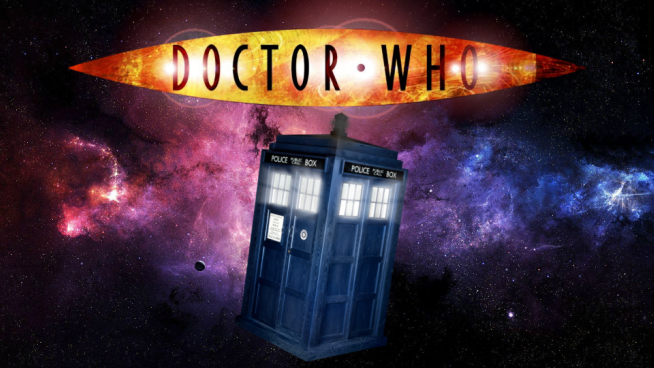
Having discovered Dr Who rather just lately, I’m finding myself binge watching to get caught up. It’s difficult to catch up to a television series that has been around since the sixties. It’s cutting into my book reading, that’s for sure.
What I’m not going to do is a great big discussion on “Whoism,” there is much dedication to Doctor Who, and I am not qualified (actually I’m a bit terrified of offending the fan base).
What I am concerned with is my unmitigated preference for the former doctors. I’m not in the least interested in the new doctor–at all.
Why?
He has transgenerated into a woman doctor. The doctor now ponging about the universe is a she instead of a he, and that really bothers me. The issue is not with the new doctor, Jodie Whitaker–don’t know of her at all. I’m more bothered that I’m bothered.
Let’s make something very clear. I applaud capable heroes. Big fan of Captain America. Mostly I like James Bond. Angie’s Lara Croft set a standard. JLaw’s Katniss is so empowering and endearing. And I absolutely cheer the new Wonder Woman.
Notice there really isn’t a pattern. Men and women heroes dashing about saving people, because that’s what they do.
And that’s what I like about The Doctor. It’s been set up since the show started that this peculiar (some Doctors being more peculiar than others) alien preferring human form, is running away from his home planet responsibilities getting in predicaments, getting out of them, saving the universe, saving people. Because that’s what he does. It worked in the prior series. It works very well in the reboot. David Tennant and Peter Capaldi bring a new dimension to Doctoring–smart scripts and dazzling production are mentioned here.
The Doctor is a pattern: idiosyncratic intelligent alien with human characteristics–a guy ranging in age anywhere from 30ish to 60ish. A guy. Oh yeah, he has a sidekick known as a “companion.” These have been mostly women, a couple of times a guy has helped drive the Tardis.
It’s not a gender thing. Really it’s not. I think it’s a pattern thing. I’m used to a Doctor pattern and they changed it up. However, I relished how the Master became a Mistress. Missy brought some dazzle to the frenemy role. Just leave the Doctor as is, thank you.
Think about it. Would it be okay, acceptable, if suddenly James became Jane? “Bond. Jane Bond.” I wouldn’t care for that at all. I am okay with the all female Oceans 11. Nice switch out. Not okay with the change up that’s happened with The Doctor. So I am running through some self-diagnosis about my Doctor preference..
Am I gender-biased? A traditionalist? Close-minded? Maybe I just know what I like. Okay, I can handle being picky. It’s quirky that I abhor cucumbers yet adore pickles–baby dills, thank you. So, I rally towards male Doctor Whos and instead utter “really?” towards the female Doctor Whos. I didn’t care for Jenna Coleman’s stint as Clara being a Doctor for the nano second she had the part and I think Clara quite capable. I imagine she could parallel park the Tardis when needed. Nope. The Doctor Who I need to save my planet from Daleks and company is an idiosyncratic guy, particularly with a Scottish accent.
Am I alone in my Doctor dilemma? Anyone else in a quandary?












 Pam Webb