Pam Webb

a writer's journey as a reader

Archive for the category “Shakespeare”

Bard Bits: ‘Tis Time of Thanks


Of course there are no Thanksgiving scenes in any of Shakespeare’s works since that holiday was not on his creative road map. However, he did have several worthwhile lines about giving thanks. Feel free to share as you gather round your table on Thursday.

  • “O Lord that lends me life, lend me a heart replete with thankfulness!” — 2 Henry VI
  • “Small cheer and great welcome makes a merry feast.” — The Winter’s Tale
  • “Thanks, sir, all the rest is mute.” — All’s Well That Ends Well
  • “For this relief much thanks.” — Measure for Measure
  • “You great benefactors, sprinkle our society with thankfulness.” — Timon of Athens
  • “Thanks to men. Of noble minds, is honorable meed.” — Troilus and Cressida
  • “For your own gifts, make yourselves praised.” — Timon of Athens
  • “Only I have left to say, More is thy due than more than all can pay.” — Cymbeline 

As for my favorite thanks quote I offer up:

“I can no other answer make but thanks, and thanks, and ever thanks.” — Twelfth Night

Bard Bits: Bard in the Park


I’ve experienced Shakespeare plays (one experiences his works, versus watches them—a bit pompous sounding,sorry) in a variety of forms: live on stage (several as an audience member and once as Horatio—very brief); large screen theater; small screen TV; reading, and teaching.

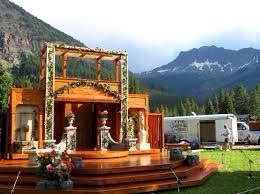
One favorite form is watching a performance in the park, as it is open air, much like a Globe performance. Plus there is the anticipation of lively audience response, the atmosphere being one of shared spaces and camaraderie. And the plays are usually free, at least the one that comes to our fair city is.

Every year in August the Montana company arrives and performs one of Shakespeare’s popular plays in a local park. This year they presented a As You Like It, which is one of Shakespeares more popular comedies.

Bard in the Park

Arriving at the park 40 minutes early I discovered the space already teeming with people, but no matter since I prefer the back for that quick exit to avoid the parking lot tangle.

As the sun drifted behind the trees the temps cooled down and the stage action heated up with runaway sons and daughters, tangled romance, and character arcs. As You Like It is a fun romp and the audience showed its appreciation with plenty of applause and laughter.

Bard in the Park signifies the transition from summer fun to back to school readiness. And Jacques mentions going to school in his famous “All the world’s a stage” soliloquy.

Anyone catch a Shakespeare in the Park performance this summer?

Bard Bits: Be(lated) Birthday


Did you say cake?

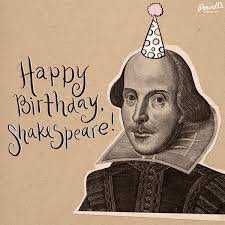
Although it may seem I’m late in wishing William a happy birthday, I might actually be on time.

While traditionally Shakespeare’s birthday is celebrated April 23, it’s not certain what day he was born. Something about birth registry and waiting a few days blurs the true date.

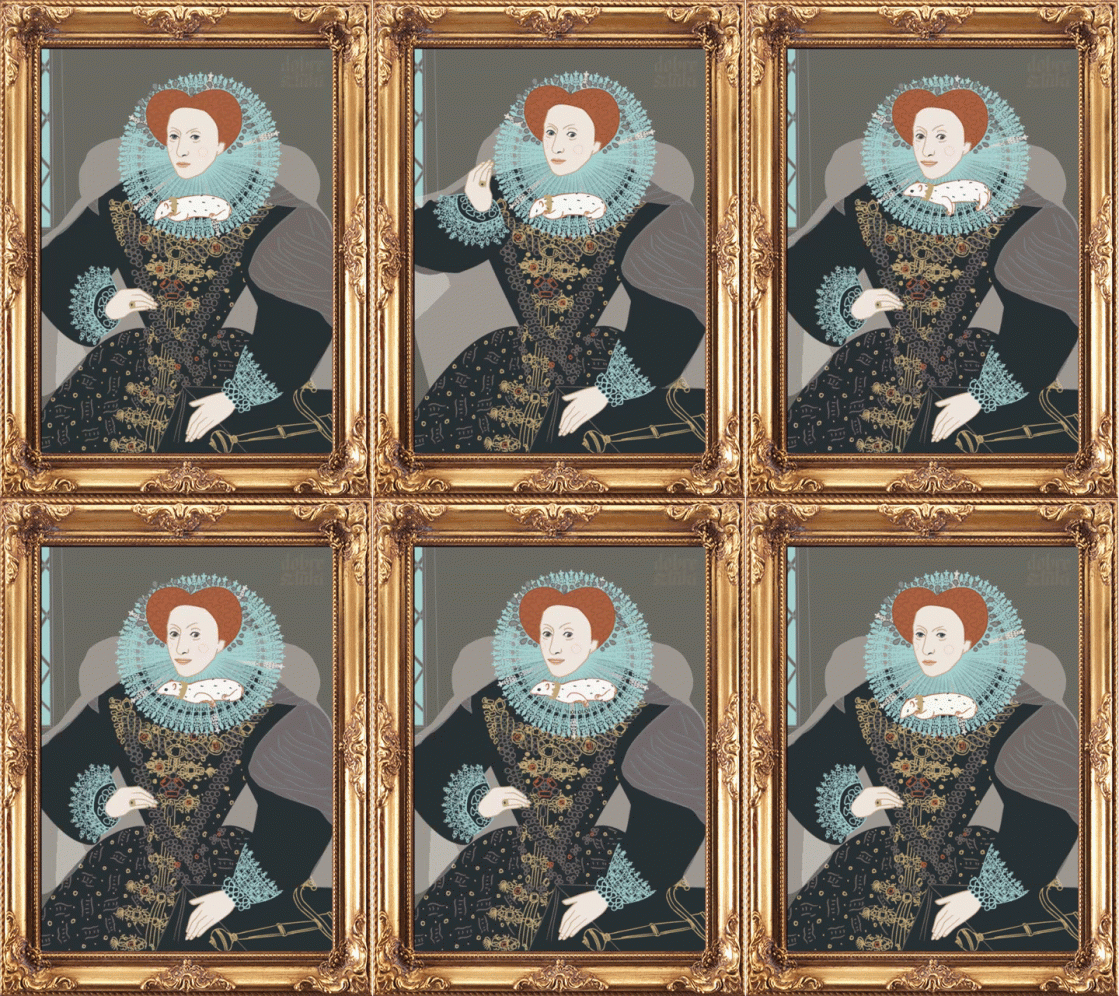
Besides, birthdays weren’t that big of a deal in Shakespeare’s time, unless you were of nobility. I imagine Queen Liz I had quite the bash.

Bring on the birthday fun!

The more common folk instead celebrated their saint’s day. Shakespeare’s saint’s day was St. George, the purported dragon slayer guy.

Cakes and candles came upon the scene much, much later.

In fact, Shakespeare didn’t get a party until after his death. He even got a parade.

Not late but perhaps elated

So Shakespeare might not have blown out candles and made a wish over an iced confection on his birthday, he did get a parade. It only took a century or so to get one.

Anyway, happy birthday, William. May your words continue to live on.

Bard Bits: Here Be Monsters


When Shakespeare’s works are mentioned the association with him runs towards love stories, as in Romeo and Juliet or tragedies like Hamlet or even sweeping historicals found in the Henry plays.

Not necessarily Shakespearean

Monsters may not be the forerunner feature in his stories but Shakespeare did populate his plots with creatures, witches, and ghosts—oh my, he certainly did. In fact, most of his well known plays contain monsters or scary aspects.

Romeo and Juliet: Juliet about to take the friar’s prescription for a faked death believes she sees her dead cousin’s apparition. Then there is the part of waking up in the family crypt surrounded by her cousin’s recent corpse and long dead relatives. *cue creepy music*

Hamlet: Our titular hero receives a guilt trip from his dead father’s ghost—not once but twice.

Julius Caesar: Brutus must contend with great Caesar’s ghost.

Macbeth: Not only is there the ghost of Banquo there is a trio of weird sisters.

Cymbeline: another batch of ghosts.

The Tempest: A sassy sprite named Ariel and whatever Caliban is supposed to be.

A Midsummer Night’s Dream: speaking of sprites, Puck reeks of mischief galore.

Shakespeare inserted monsters into his plots because he pandered to the paying crowd and those folk of the Renaissance were a thrill seeking, superstitious bunch, queens and kings especially.

While Shakespeare created several memorable monsters his penchant for monstrous acts should be noted.

Offhand there is fratricide, homicide, verbal abuse, racism, sexual abuse, dysfunctional family relationships, and a mention about being wary when it comes to pie at dinner.

So—

Forget loading up on Frankenstein and Freddy for fright night watching. Instead save your anticipation for scare by streaming some Shakespeare.

Bard Bits: Hamletized


Summer events that create a more memorable season start with graduation ceremonies. Toss in at least one wedding or a wedding reception along with a church picnic, add in the county fair, include a bit of company to round it all out.

While those events add some pizazz to the summer months, I do count on Shakespeare in the Park. The one day performance arrives in the middle of August and I stop, drop whatever I’ve planned, and position my camp chair on the lawn at the designated park venue and for two hours I revel in Shakespeare.

This year The Montana Shakespeare in the Parks presented their two hour adaptation of Hamlet. Their version focused on what seemed to be Edwardian costume style adding a reserved aspect which offset the emphasis on pulling in the comedic components of the play. I never considered Hamlet a comedy; then again some of lines are quite witty when said with panache.

All the world’s a stage or at least a park is for a summer evening

I didn’t become aware of Hamlet until I began teaching high school English. In fact, I wasn’t aware of Shakespeare until I began teaching his plays. That’s right. Somehow twelve years of public schooling and six years of college and no Shakespeare classes. Shocking, I know.

Once I discovered the tragic Dane there was no turning back. Not only did I teach Hamlet, I set out to watch every version available (still trying to find Jude Law’s Broadway version). One year I flew back to Washington DC to join 29 other teachers for a week of Hamlet Academy at the Folger Library. I then went on to write a choose-your-own path Hamlet, and created the play as a contemporary murder mystery.

Yes, I have become Hamletized and I am okay with that.

Which Shakespeare play has grabbed your attention to the point of almost unreasonable fascination?

Bard Bits: Talk Like Shakespeare Day


It’s here. The day you have been waiting for. Yes! It’s Talk Like Shakespeare Day, which happens to coincide with the day historians figure to be both William’s day of birth and day of death: April 23.

As an English teacher I had zero background in Shakespeare as somehow his works were never taught, presented, or discussed in my school days. And this took place in a modern school district!

This meant I came to the classroom on the same playing field as my students: zero knowledge and lacking comprehension. I dove right in and learned as much as I could in order to sound like I knew what I was talking about.

Something clicked because I am a professed Bardinator today and even attended Folger Library’s Hamlet Academy back in 2015. I am also adapting Shakespeare plays into reader’s theatre scripts and they are regular sellers on my Teachers Pays Teachers website.

All in all I’m quite pleased to have traveled the journey, transforming from Shakespeare zilch to Shakespeare rich over the years.

However, to talk like Shakespeare is a talent I am not quite conversant in yet. I did find this nifty website which takes randomly generated sentences and turns them into Shakespearean speech. I am having fun playing with it. Here are some examples:

Crouch before you jump or miss the mark. Our plans right now are hazy.

Becomes—

Crouch bef’re thee jumpeth ‘r misseth the marketh. Our plans even but now art hazy.

Or—

It was done before the boy could see it. Hop over the fence and plunge in.

Becomes—

T wast done bef’re the knave couldst seeth t. Hopeth ov’r the fenceth and plunge in.

image:Tenor

Bard Bits: Shakespeare Speaks of Spring


Spring supposedly began March 19th. Words fail me when it comes to describing the fickleness of the weather. Shakespeare knows just what to say.

As sun and showers

There had made a lasting Spring.

– Henry VIII Act III, Scene i

The spring is near when green geese are a-breeding.

– Love’s Labour’s Lost Act I, Scene i

Unruly blasts wait on the tender spring;

– Lucrece (Poem)

Yes, last week crocus flowers heralded the arrival of sunny days and I basked in spring’s warmth while reading. Today it’s stoking the fire and watching the grey skies dribble out its watery lament.

Sigh.

More of this
Less of this

Bard Bits: How Insulting


Shakespeare is an unrefuted wordsmith. He knew how to pen a phrase with a lexiconical fragrance we still admire centuries later such as Romeo’s eloquent description of Juliet: “O, she doth teach the torches to burn bright.”

Shakespeare could also have his characters sling some stinging verbal mud as in The Comedy of Errors: “The tartness of his face sours ripe grapes.”

While insults aren’t something we should be dwelling on in our present societal focus on mindfulness, Shakespearean insults are more of a study of impactful imagery. There is also a plus of them being quite funny.

Creating a Shakespearean insult involves knowing the terms. Here are a few, some known and others relevant to only Elizabethans.

Ape(n) – 1. Imitator 2. Fool 3. Term of endearment

Beetle-headed(adj) – Thick-headed, doltish

Bootless(adv) – Fruitlessly, uselessly, unsuccessfully, in vain; (adj) fruitless, useless, worthless

Churlish(adj) – 1. Rude, blunt, ungracious 2. Violent, rough, harsh 3. Stiff, hard, unyielding

Candle-Waster(n) – Student, who sits late over his books

Dankish(adj) – Dank, damp, humid

Errant(adj) – Wandering, straying, erring

Fat-kidneyed(adj) – Gross and lubberly

Fustilarian(n) – Smelly old woman

Gorbellied(adj) – Pot-bellied, fat-paunched

Harpy(n) – Half woman/ half vulture

InfectiousTo infect (v) affect, influence, stir

Jolthead(n) – Blockhead, dolt, numbskull

Logger-head (adj) – Thick-headed, stupid, doltish

Month’s Mind(n) – Inclination, liking

Motley -minded(adj) – foolish

Nut-hook(n) – Constable, officer (a hook for pulling down nuts, hence a thief

Onion-eyed(adj) – Eyes filled with tears

Pribble(vb) – Vain chatter and silly quarreling

Rump-fed(adj) – Pampered

Scut – (n) Short tail (as of a deer)

Tottering(adj) – 1. Wavering, vacillating, fluctuating 2. Tattered, ragged, frayed

Varlet(n) – Knave, rogue, rascal

Wag(n) – Mischievous boy

Some of these surely grabbed your attention.

To assemble your insult find a noun and then a couple of adjectives that do it justice, and then begin with “You,” which depending on if it’s the 15th, 16th, or 17th century, is either a formal or informal address:

How about:

You rump-fed, gor-bellied wag!

This might be directed to a youth caught hogging the buffet at family gathering. Or, at a young man showing rude manners. Either way it’s a definite call out by an older person to a younger one.

If you are in need of inspiration I suggest referring to an automatic Shakespearean Insult Generator.

May this post prompt your tongue to choose words other than the usual curses, especially when driving. These also might be handy since it is an election year.

For more droll insults go to: www.classicfm.com

Bard Bits: Life Advice Influencer


People who say they don’t relate to or care for Shakespeare are unaware how he influences their lives. From everyday words from “assassination” to “zany” to common phrases such as “All that glitters is not gold,” Shakespeare is without a doubt one of the most enduring amongst influencers.

Even if Bard Bashers still won’t acknowledge Shakespearean influence, it’s difficult to ignore his sound life advice through some of his well-known quotes.

“We know what we are, but know not what we may be”

This Hamlet quote seems cryptic at first, yet deeper consideration initiates the idea that we may not truly understand our potential or that we see ourselves differently than how others see us.

“Love all, trust a few, do wrong to none”

This quote from “All’s Well That Ends Well” is a something one might hear in valedictorian speech or might see on a coffee mug. While it sounds trite, it’s actually a succinct guide to life.

“The course of true love never did run smooth”

A quote from A Midsummer Nights Dream reminds us all how love’s journey is one that is traveled by experiencing a few potholes, speed bumps, and delays due to construction.

“All’s well that ends well”

This eponymous quote is an encouragement to trust in hope, to believe it will all work out for the best.

So, whether you be in the Bard Bravo bunch or find yourself more of a Bard Basher, you have to admit Shakespeare handed out advice that is useful in life.

Only true influencers get statues, right?

Bard Bits: Oh, For Reading Out Loud


Today’s audiences talk about seeing a movie. And we are very much a visually oriented culture. Yet, in Shakespeare’s day audiences would say they were going to hear a play because language was such an integral aspect of their culture.

Shakespeare knew this, of course, which is why he wrote his plays with rhyme, rhythm, homonyms, laced with ambiguity. He wanted his audience to hear the auditory beauty of language.

Pen in hand the Bard does ponder

Modern audiences are more accustomed (or have grown more accustomed to) sound bites—quick bits of communication. No wonder eye rolls and twitches are commonalities when someone mentions Shakespeare—we are no longer used to the longer, more developed portents of language. We want quick and easy auditory digestion instead of the languid delight of a language banquet. ‘Tis a shame, yet supping upon a Shakespeare play is possible with a bit of effort.

Shakespearean plays are written to be heard and the Stratford-Upon-Avon wordsmith created the means to better enjoy his words by employing the following:

1. Read the lines with deliberation and emphasis. For example, Macbeth’s “Tomorrow and tomorrow and tomorrow” does better with a slow pronounced repetition to emulate the tedious monotony of life.

2. Use punctuation as a guide by reading to the end stop rather to the end of the line it gives more meaning to the lines. This is known as enjambment, where the line overflows into the next line, much like a waterfall cascades flow smoothly creating movement. For example, in Romeo and Juliet, Juliet pours out her emotions for Romeo in one rolling, passionate wave:

When he shall die,
Take him and cut him out in little stars,
And he will make the face of heaven so fine
That all the world will be in love with night
And pay no worship to the garish sun.

Reading this passage out loud, carrying one line over into the next enhances Juliet’s feelings for her Romeo.

3. Be aware of accented words, pronouncing them with an extra syllable. For example “perfume’d would be three syllables, not two. Shakespeare would have done this to enhance the meter or rhythm of the line. Plus, it has the bonus of sounding fancier.

4. Know that Shakespeare presented his words with intention to paint pictures (no access to CGI) with verbal cues to ignite his audience’s imagination. He needed his words to create imagery since scenery and props were minimal on the Elizabethan stage. For example, when Juliet says, “It was the nightingale, and not the lark,/ That pierced the fearful hollow of thine ear,” she is in her wedding bed with Romeo—she is no doubt as close to him as her heartbeat.

Reading Shakespeare can be an enriching, delightful experience when his words are read out loud with considerate digestion.

Post Navigation