Pam Webb

a writer's journey as a reader

Archive for the category “education”

Paper or Plastic?


“I would rather have a hard copy, if that’s okay.” This is from a new AP recruit wanting the summer reading text How to read Literature Like a Professor in book format rather than the PDF version I found on-line. Curious, I asked why. Her response? She had difficulty connecting with the on-screen type. Not what I expected from eyes way younger than mine. I, of course spout off about how much I prefer hard copies to e-copies as well because of my need to connect sensory-wise and as I’m talking, I’m flipping pages and smelling them and listening to them and when I finally notice my student nodding and edging toward the door, like she’d really like to leave because I’m a looney lady (more than one student has commented on me being a bit crazy), I hand over the book and wish her a great summer.

I am a looney lady when it comes to books–hence the Book Booster thing I do. Books aren’t just a pasttime or a channel of information, they are an introduction. Ahem, a new quote from moi:

A book in hand is a friendship in the making.

Beyond making a new friend, there is joy, a celebration of the senses holding a book in hand. I’m talking honest to goodness REAL paper-in-hand book. I do so enjoy paper, maybe that’s why I always answer “paper” instead of “plastic” at the store. Perhaps it’s because paper comes from trees and trees come from the earth and holding a book bound in paper produces more connection to the world around me.  I have little or no sensory connection to my plastic e-reader even though it’s a book in hand.  Oh oh–I feel the looney lady coming on and before I go on about trees, books and their connection to the world and mankind, here is my list of reasons for preferring a book of paper when reading:

1. Smell: that inky pungency stimulates my imagination to anticipation

2. Hearing: the flip-swish of pages signifies my involvement and commitment and helps me to further escape

3. Taste: no, I don’t lick the book, but reading a paper book whets my appetite for setting aside time to open up the pages to fall into another time, another place, another person’s story

4. Touch: there has got to be a study out there concerning the connection between the tactile aspect of reading and brain synapse when communing with a book–I am so much more involved when I am holding the book instead of just listening to it by audio or thumbing up a new screen. Think about this: glass does not conduct electricity, which means no synapse boost. Plus, when I see my book lying on the bed, table, chair it beckons me to pick it up, so there must be a some kind of magnetism involved.

5. Visual: perhaps the most notable because of the cover has all those colors and interesting bits to feed my eyes and mind, and then, of course, there all those illustrations and photographs and drawings sometimes waiting inside.

I’ve shown this video before, yet it definitely illustrates the visual appeal of books.

Reading is definitely a sensory experience for me.  What about you?  Paper or plastic?

POETRY WORKSHOP


Both my sophomores and seniors are in the midst of studying poetry. I like poetry. Lots.

Image result for i like poetry tshirt

image: zazzle

However, I understand the deeper truth in the popular saying:

Truth is like poetry..most people hate poetry.

I suppose this statement is saying truth is found in poetry, yet while most people desire the truth, they really don’t want to hear it. Connect this epiphany to poetry. If poetry represents truth, then people don’t want to hear or read poetry.

Welcome to my world.

(Most of) my students don’t want to hear, read, and most of all, study poetry. I make them anyway. Yes, I’m that kind of teacher.

I do try to make it a bit more fun, (after all I did dress up like Mary Poppins for homecoming week) by adding clips and such that discuss the importance of poetry or I present poetry in an paradigm shifting way.

Do you know that if you write poetry you could become a famous award winning writer?

Beyond analyzing and writing responses to poetry, I have students create their own poetry. Here is a mini-poetry workshop from my Creative Writing I files:

REPETITION POETRY
1.Pick a word or short phrase for the first line
2.Add a word or phrase to it for the second line
3.Take the ending line to create the consecutive lines, adding a new word or phrase each time until poem reaches a satisfactory conclusion.

In the garden there is a tree.
And in that tree is thinking spot.
And in that thinking spot are my daydreams.
And in my daydreams are pathways.
And on those pathways are choices to make.
And from those choices to make I will decide.
And from those decisions will become my destiny.

And from that destiny I will live my life.

And I will live my life always dreaming, always thinking.
I am thankful for trees.
                                                                     pdw

I have
I have a
I have a nap
I have a nap hiding
I have a nap hiding in
I have a nap hiding in my
I have a nap hiding in my backpocket
I have a nap hiding in my backpocket and
It found me.
                                                   pdw

DEFINITION POETRY
Take any word or concept or topic and define through a mix or poetical flow and concrete definition to better understand what it is all about, especially on a personal level.

Grammar is the spine
Of prose and all we know
That is called language,
Which can be spoken
Or written down.
And all those nouns
And verbs
And prepositions
And modifiers that often dangle
And nominative clauses that
Sometimes tangle
Up
Our understanding
Are the vertebrae.

And without our vertebrae
There would be not enough spine
To stand us up.

So it is with language.

                                            pdw

SECRETS REVEALED POEM
All of us carry secrets.  Some should stay hidden and some can be released. Secrets Revealed poems help ease the burden of confession in a light-hearted manner.  Secrets can be real (“I ate the last piece of cake and blamed it on my cousin Bobbie”) to creative (“I am Captain America’s favorite niece”)

Chocolate Cake Ache
It’s said secrets nestle in our stomach like tasty morsels,
yet, I don’t think that can be said for stolen chocolate cake.

For there it sat like a lump,
like a great big chocolate bump
of guilt.

Oh, it was tasty: fork-licking, hit-the-spot, lick-my-lips, glad-I-ate-it tasty,
until the realization settled down on top of that confectionary indiscretion.

“The last piece?”
“I don’t know.”
“Maybe Bobbie.”
“Yeah, I think she did.”

For undisclosed penance I passed on dessert that night.
And I do like tapioca pudding.

“Sure, Bobbie—you can have mine.”

Unexpressed confession, even though it is rerouted through unexplained acts
of sudden generosity,
does not relieve the ache of stolen chocolate cake.

This I know.
                                                    pdw

INSIDE, UNDERNEATH, AND BEYOND
This is a poem of exploring matters contained within, or underneath, or beyond something everyday, or even unexplained.  Choose something to explore and decide which direction of discovery to investigate: will it be to dive inside to see what makes it tick, or will it be a burrowing sense of exploration where layers are removed and examined, or does the exploration go beyond known boundaries?

Inside all poems
Is a question
And inside this question
Is a quest

The poet rides out

on a journey to find
the meaning
or an answer–
or maybe to hear
an echo of reply
from one who seeks
an answer to the
same question quest.
                                                  pdw

Underneath
is not a place I like to be
places especially not chosen
would be:

underneath our house–
dank earth of spider habitat
bug haven and perhaps where
the neighbor’s cat did hide and done died.

No, not under the house.

Not under the sea either–
All fishiness, and no way to breathe.
Sharks and stingrays and eels—oh, my…

And thanks, but no for caves.

In fact, anywhere it’s dark.
Dark is underneath and where the light
Cannot be–

You’ll not find me.
pdw


SNAPSHOT POEMS
The idea is to write with imagery and detail in a way that it places the reader in that particular moment of time.  Actual photographs can be chosen for inspiration as can a reflective moment.  Employing the senses, playing with figurative language such as alliteration, onomatopoeia, internal rhyme can help create a moment rich with remembrance.

AIRPORT
The crowd swelled, receded, and swirled
Around you

Yet you did not pay heed

To the push and jostle
Of the nameless faces.

Anticipation’s scent lingered in the air.

Shuffle and adjustment of frustration, excitement
Mingled and settled
As the one face in a million became spotlighted
As he traversed the passenger-smoothed steps

Into your arms.
                                              pdw

Review Round Up


This last month has definitely been hodgish-podgish in reading. I’m transitioning from summer reading to preparing for school while trying to wrap up a major writing project. This involves reading for fun, reading for class, and reading for facts. I’m a bit dizzified at the stretch of diversity. Here are the top reads from this last month:

Brat Farrar by Josephine Tey

image: GoodReads

I picked this up along with Tey’s Daughter of Time, which was about Richard III. In the back of my mind nudged the basic plot of Brat Farrar. I hadn’t read it, or had I? I seemed to know how it was going to turn out. Than the “aha” tinkle bell sounded. I had watched it as a BBC series, ages ago. Books are always different from the film adaptation, and as I became more involved in the story I realized I didn’t remember the ending after all. I do so enjoy books, especially mysteries that I can’t guess the ending. Tey does an excellent job of twisting and turning the plot. One of the most satisfying reads of the summer. Intrigue, betrayal, double identities, red herrings, hinted romance, and horses–I’m trying to find the BBC series now.


My Memoirs

 by Alexandre Dumas

image: GoodReads

The man who brought The Three Musketeers and The Man in the Iron Mask didn’t just write about adventures, he lived them. As part of of my author/cat project, I needed to read up on Dumas and found a slim adapted volume of his memoirs (the original ran to about thirty). He accounts for his life just up to the point of receiving acclaim for his novels. Like all really great biographies featuring rags to riches stories, Dumas begins his story sadly. His father, a Creole general in Napoleon’s army is tossed into prison, and upon release his health fails and dies when Dumas is four. Thrown into poverty, he, along with his mother and sister moves in with his grandparents. From their Dumas recounts how he preferred hunting to school and eventually makes his way to Paris with hopes of becoming a playwright. He brashly secures a clerk position in order to pay bills, while still trying to get his plays published. With success comes recognition and a life filled with all sorts of escapades including involvement in a revolution and a duel. I better understand why the action in his books is so mesmerizing–he knew adventure first hand.

Everything’s An Argument by Andrea Lunsford

26872224

image: GoodReads

Okay, so reading a textbook may not be on your TBR list. If I wasn’t slated to teach AP Language for the first time I probably wouldn’t have read this book either. Teaching AP Lang is going to be very, very different for me. I’m not a huge nonfiction reader, only doing so for research, not so for pleasure. Yet, as I waded into this book I became more fascinated by the fact that everything truly is an argument. We live in a world where everyone is trying to convince someone of their point of view and there are strategies for doing so. If interested in learning more how you are influenced, I’d suggest this as a means of getting more insight in how argument is something we need to reckon with.

Reader Round Up


As I prime for lots of unfettered summer reading I’ve been able to start my freed-from-grading daze with a few truly amazing books, an eclectic mix of non-fiction and novels.


First up is an Audrey book. I’m not much for reading full-blown biographies because they often reveal aspects of the person which might change my comfortable opinion. So when I spied this petite photo biography about Audrey Hepburn and her style relationship with Givenchy, how could I refuse when it practically hopped into my library book bag? If you are an Audrey fan, this is a must read.


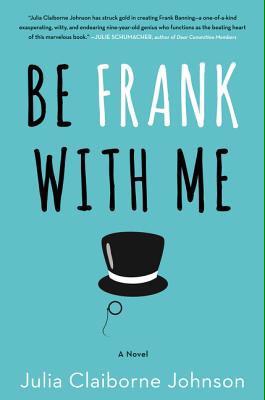
This title was circled as a “want to read” selection in my Book Page circular. Be Frank with Me almost falls into “seen this before” trope of precocious kid, odd famous parent, and the Mary Poppins who is hired to bring order to chaos. Surprisingly, I ended up really enjoying this fast read. One reason is it has that forties comedy film feel to it with its madcap, impossible hijinks, situations, and characters. I simply accepted the break in versimilitude and let the show roll.


Yet another DE Stevenson. My list of her forty or so published titles is rapidly approaching completed unless her granddaughter finds more manuscripts in the attic. This one is post-war Britain and has Young Mrs Savage dealing with widowhood and four children all under the age of eight, and she’s not even thirty yet. There’s mystery, a variety of suitors, and delightful Scottish pluck and scenery. There is even a snarky set of villianesses to boo at.  I also adore the old school cover art.


Another non-fiction involved a flashback to my past, all the way to 1962 and the Seattle World’s Fair. Being a young thing then, the memories are a bit sketchy, so I definitely added this coffee-table photo historical to my checkouts.I reveled in forgotten exhibits, vendors, and magic moments of the fair. There is also that behind-the-scenes info the feeds my  craving for trivia snacking. Seattle remains a top fave for favorite cities, in case anyone is doing a poll. It’s such a unique, iconic landmark and I have some of the best family memories involving that futuristic trademark of the Emerald City. 

As of Monday afternoon I shall be released from the classroom and will gladly kick into summer vacation mode. Woo hoo!

Any other teachers out there ready to get their summer on?

Oh, for a muse of fire


As a senior English teacher I have the distinction of being the last of a long acquaintance with school literature for my students. Many, if not most students, come in with a surly attitude about English. My goal is to get that frown turned upside down. While I don’t resort to extremes, I have been known for some surprising antics to liven up class. I inject movie clips, silly voices, and theatre activities into the lesson plan.

I enjoy teaching English because I’m actually a librarian at heart (budget cuts). To infuse the love of books is a mission, not a vocation.

At the end of the month my students will have studied a handful of sonnets, examined three Shakespeare plays, watched one live performance of Hamlet, analyzed two of the Bard’s speeches, and have performed one of the speeches from a play. They will be so full of Shakespeare at the end of this unit they will leak iambic pentameter onto their desks. This might cause consternation with the custodians, yet it is all part of my mission to turn these Bardihators into Bardinators. I would be Bardilating even if it wasn’t Shakesyear.

My extra effort Barding might be paying off; I think I might be making headway. We began with Taming of the Shrew, a farce that they could relate to because of Ten Things I Hate About You, and then we went onto a tragedy. I surprised them with Othello, a complicated study of villains and heroes and racial issues that resonates with my students even after 400 years it was first performed.

We moved onto my personal favorite: Hamlet. We explored the first eleven lines together and they realized Shakespeare’s language does not present the barrier they thought they would encounter. We prepared for the climatic duel of act five by going outside and learning  stagecraft fighting with duct-taped yardsticks.

I teach the same lesson six times, slightly modified, due to being the only senior English teacher this year, so my Shakespearience becomes even more enriched over the years because the math computes to a lot of repetition of knowledge. I’ve always said the best education I’ve received is from teaching.

As for students and their absorption of English? I wonder how much impact I will have. Will students fondly or disdainfully remember my efforts to interject the muse of Shakespeare’s fire into their lives? Will there be Renaissance Man moment, when they will recite a few lines or carry the meaning of a studied play with them into their future life? I hope so.

For now, my librarian-teacher  heart will continue to thrill when students make comments like: “I really like this. I really like digging into this Shakespeare stuff.”

My fire is amused.

image: pintrest

Another Review Round Up


Yes, I do read grammar books for fun. You mean you don’t?

This lovely practically jumped into my basket as I was checking out of the library. I will search out the prequel at some point. Grammar is beneficial for many reasons. Beyond getting better marks on English assignments, it helps save lives without having to recert for CPR. Then again, CPR wouldn’t help Grandma as much as a well-placed comma.

There is also learning insignificantly important stuff that helps one sound more edumacated. Once you do check out the book, because you are so very enticed after this review, turn to the following highlights:

p. 29: good and well hint–good describes a noun or pronoun, while well is an adverb describing a verb and tells how. Verbs of senses use good, as in “that dairy farm smells good”. Use good and bad with feelings: “I felt bad that I disagree with you about that farm smell statement.”

p.32: apostrophes–don’t get me started. Making possessives out of plurals and vice versa is becoming an epidemic amongst businesses. “Find the best deals on cow’s in town.”

For fun (cheers, V!).
p.43: Briticisms:
apartment=flat, cookie=biscuit, elevator=lift, sweater=jumper

Every grammarian’s joke is found on p.65 concerning dangling participial phrases.

p. 91: hopefully is an adverb, not a filler. “Hopefully the cows know their way home”should be:”It is hoped the cows know their way home.” This is because they can’t drive, due not being able to steer.

Of whiches and whoms is on p.154: relative pronouns that or which (essential vs nonessential) who or whom (subject vs object:”Who will milk the cows?” “The farmer hired whom as the cow whisperer?”

p. 185: real words–all right not alright; regardless not irregardless; anyway not anyways

Plus, the red “More” in the title moves. At least it did one night. Dancing up and down and around on the cover like a first grader let out for recess. Tonight it didn’t. One shot grammarized? The hubs is my witness. My observations were not a result of over strenuous grammar absorption.

There are also scads of brilliant grammar-themed cartoons planted nicely throughout the book. I wonder if I could convince the admin of this being a textbook adoption?

Shakesyear


This is a biggie for Shakespeare fans. This is the year we Bardinators celebrate the 400 years of the Bard’s influence since he left us in 1616. Usually I spotlight an author around this part of the month, but I plan I spotlighting Billy Bard every month this year as my personal salute to the guy who brought us plays like Hamlet, words like crocodile, and phrases such as “in a pickle.” So if you are not into Shakespeare plan on skipping my posties at the end of the month OR maybe I can convince you that Shakespeare is a big deal. You might want to skip down to the Shakespism video to see if you suffer from this malady.

I was fortunate enough to participate in the first Folger Summer Academy  in which thirty teachers from all over the USA came together and studied Hamlet for a week at the Folger Shakespeare Library in Washington DC. It was a WOW time–Wonderful, Oh Wonderful.

Being surrounded by Shakespeare scholars and being immersed in Shakespeare culture for an entire week fortified my appreciated for the legacy of the playwright/poet of Stratford.

An embarrassing confession: it’s only been a mere fifteen years since I discovered Shakespeare. There was no Shakespeare in my home, in my schools, nor did I encounter him during my college years. Sad and shocking, I know. It wasn’t until I became an English teacher and had to teach Romeo and Juliet, Julius Caesar, and Hamlet that I realized I had much to learn and I determined I had best make up for lost time.

As a celebration of  the Bard’s 400 years of influence the Folger Library is providing a first ever tour of Shakespeare’s First Folio. This is the book Shakespeare’s friends and colleagues put together after the Bard’s death and contains the thirty plus plays we associate with Shakespeare. I saw AND touched the Folio. Big ooooh factor. I also handled his lease for his Stratford house. Somehow that had more meaning because I know he actually touched that document. The folio is a more or less a tribute of his greatness, but he knew nothing about it.

However, I realize not everyone is wowed by William. Here are some videos that might help you overcome your Shakesfear or ennui of Bard Hoopla.


Word Nerd and Proud of It


I am a professed Word Nerd. I collect words (lexophile) study them (etymologist), mispronounce them (cacoepy), and read about them (Book Booster). Maybe my mom propped up my crib with an old dictionary, because no one else in my family shows this proclivity.

My love for words overflows into all facets of my life. As a kid, other kids would roll their eyes at my vocabulary, and teachers would be either amused or irritated at me knowing what the vocabulary word meant without any prompting. “Show off” was sometimes bantered about when I was around. Not really. Misunderstood for my zeal of learning vocabulary, yes, that would be better.

Zoom up to my young mothering years (an empty nester now–still mothering, but from a defined distance). I guess I nearly ruined my children’s lives by trying to instill the love of words into their little bodies. “No one talks like us, Mom!” And that was a bad thing? The payoff came much later, when recently the youngest progeny phoned to say the boss folk liked how well he could express himself in company meetings. Ah–delayed gratification.

As a teacher, I legitimately get to introduce vocabulary to students and interject my enthusiasm for increasing word strength and even test them on what the words they need to know for life and  for state required assessments and get paid for it (I just committed a polysyndeton with all those conjunctions–great word).

Lately, as a blogger, I get more attuned to posts about words dropping my way. For instance, I found this gem in my box not too long ago, even though it’s a 2012 post, it’s still relevant to me.  It’s all about Word Hacking, that delicious art of creating new words. There is all sorts of action and exercise in Word Hacking. There’s combining, mash ups, and verbalizing, and nouning. One could seriously lose calories by inventing new words. Shakespeare must have been in stellar shape with all his inventiveness. Doesn’t this look ever so fun? Check out the full blog post

I’m Whoopin’ cuz I’m Shmoopin’


Shmoop - We Speak Student

Well, Andy Warhol might not count this as my fifteen minutes of fame, but it’ll do. Last year I filled out a survey about how I use Shmoop in the classroom and sent it off. Little did I expect my blitherings to be noticed, yet they did. I have been informed I am among the ranks of other Shmooping Teachers. While there is no prize, it’s kind of a kick to be hanging out at Shmoop. You can check it out here.

Happy New Year!


For most people, January marks the start of a new year. However, as a teacher, September is the beginning of the year for me. September is when the odometer of the year’s passing begins once again. August is the last of my holiday months and each day draws me closer to the start of my calendar year: September. I actually consider January as my mid-point.

As I write this post I am lounging in bed at 8:25 am. This is the last Monday of the school year where I won’t have either essays to grade or think about assigning. I’m usually up by 5 or 6 am, so staying in bed past 8 0’clock is borderline sloth for me.

As I proofread this post it’s 6:09 am and I have four minutes before I must scamper into my morning routine. It’s Friday of my first week back to school. How can four days make one weak?

A new year typically calls for new year’s resolutions. I don’t much prescribe to resolutions,  instead I form goals. Here are a couple so far:

1. Go deeper instead of wider. I teach seniors which means they are maxed out on absorbing much more information. This year I’m going for them really understanding at least one aspect of each unit. They don’t need to know the entire litany of Anglo-Saxon history,  but knowing that Beowulf was one of the first epic hero archetypes is something that will distinguish a faithful film adaptation from a ridiculous one (Angelina Jolie’s version).

2. Mix more fun in with firm. I have the reputation as a toughie–my son would bear the brunt of this distinction when he was in school. “Dude, your mom yelled at me.” He would then say something like, “You probably deserved it.” They had nowhere to go on that one. But, I also have a sense of humor, and I’m sure I can combine a jib with a jab when the occasion calls for it.

3. Be a more of duck than a sponge. Both deal with water, which I translate to stress.  A duck lets water roll off its back and swims merrily around in the pond, whereas a sponge absorbs the water until saturated and can’t properly function anymore. 

4. Work smarter, not harder. Testing for comprehension is big news these days. We are all tired of being over-tested. Students especially. Grading tests is not so great either. Measuring academic success can take the  form of discussion, a presentation, or a project. I’m hoping for less paper proof of knowledge and more creative measures of learning achievements.

5. Respond more than react. Reacting is typical: “Are you kidding? You are 20 minutes late to class and now you want to go to your locker?!?” Or “Admin is switching to early release schedule for a pep assembly!!! Finals are coming up–what are they thinking?!?” If you have a proper response to these scenarios let me know. I realize it involves something to do with removing exclamatory tone and waving of arms.

Anyone else consider September their new year beginnings? Parents? Students? Other teachers?

As with my resolutions, these will no doubt epic fail before October is ready to roll. That’s why I disguise  them as goals–if I fail, I have an excuse to keep trying.

Post Navigation