Pam Webb

a writer's journey as a reader

Archive for the category “authors”

A Good Year for Reading


January is a month of reflection. This is probably due to January being the default month since it is between Christmas past and Valentine’s Day to be. While working off Christmas treats in order to succumb to anticipated chocolate hearts I have decided to give my 2015 year of reading a closer examination. Actually, I probably wouldn’t have done much more than said “Cool. I met and surpassed my Goodreads Reading Challenge.” Since they took the time and trouble to send me such an attractive report, I shall share the highlights with you all. If the pontification of accomplishments is not within your scheduled viewing, I am absolutely not offended if you drift off to the next blog in your reader. However, I am hoping you will stick around.

First Off:
Books Read: 91
I set my Reading Challenge at 50 books, thinking “Hmm, that’s about one per week–that’s doable.” With so many great recommendations from so many dedicated Book Boosters like Heather and The Paperback Princess, I kept adding to my “To-Read” list and kept reading. I still have about 73 books on my TBR list. *Sigh* I have need to read issues.

Secondly:
The Short and Long of It
Shortest book: 96 pages

The Rabbit Who Wants to Fall Asleep

by Carl-Johan Forssén Ehrlin

Reading books to kids at bedtime is a lovely routine, a cozy bonding time, and a way to pass on the joy of words to children. I anticipated this sort of connection when I requested Ehrlin’s The Rabbit Who Wants To Fall Asleep and was sorely disappointed when I discovered the text to be a form a hypnosis-inducing sleep tool. The purposely scripted story is almost a little scary in its intent. Instead of waving a golden watch and chanting, “You are growing sleepy” a fuzzy bunny becomes the stuff dreams are made of.

While some may like a lab technique to put kids asleep, I’ll go for the classic lullaby of cuddle and lulling words.

                                                             LONGEST BOOK
                                                                  624 pages
                                                                   Jane Eyre
                                                         by Charlotte Brontë

Average Page Length: 305 pages

Most Popular Book:

4,019,963

people also read

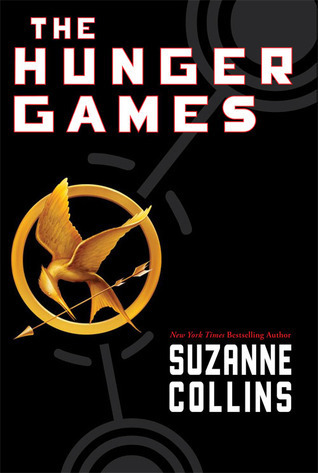
The Hunger Games
by Suzanne Collins
I decided to reread the entire series in one dedicated weekend as a preparation for the last installment of the film adaptation. I do think JLaw IS Katniss.

Least Read Book:

2

people also read

Sky Blue Pink
by Pam Lippi 
This is a self-published fictional memoir and it is a fun little read about two seventeen year old girls who travel around Europe after graduating from high school. This was back in the days of the seventies when bell-bottoms and adventures were part of the culture.

Benediction:

Completed square

You read 86 out of 50 books. [I actually snuck in 5 more after this]
172%
Congratulations! You’re really good at reading, and probably a lot of other things, too!
Not a bad year for my Goodreads [a litotes, if there ever was]
Okay–your turn…
How was your 2015 year of reading?
Favorite book?
Definitely won’t be recommending?

Oh de plume


Being a gregarious hermit means I have moments of friendly banter mixed with overpowering needs to keep myself to myself. This is why I hide behind my plumey of Cricket Muse. I chirp when in the mood, and spend the rest of the time ensconced thoughtfully in my little world of teaching, reading, and writing.

I have played around with what my pen name should actually be. So far I’ve been published under three. The Chicken Soup people wouldn’t let me publish my essay on “Piece of Quiet” as Cricket Muse–too, umm, cute. They did relinquish under my compromise of C. Muse. Friends and family responded with “why”? As in why not use my real name. I guess I could have used my own name, but where’s the mystery in that?  I am in good company. Look at these wonderful authors and their real names. See–it worked for them.

          Name               Nom de plume                           
  1.  Anne Bronte–Acton Bell
  2. Benjamin Franklin–Alice Addertongue
  3. Anton Chekov–Antosha Chekhonte
  4. Charles Dickens–Boz
  5. C.S. Forester–Cecil Smith
  6. C.S. Lewis–Clive Hamilton
  7. Charlotte Bronte–Currier Bell
  8. Washington Irving–Diedrich Knickerbocker
  9. Ray Bradbury–Douglas Spalding
  10. L. Frank Baum–Edith Van Dyne
  11. Emily Bronte–Ellis Bell
  12. Eric Arthur Blair–George Orwell
  13. Georges Remi–Herge
  14. James Alfred Wight —James Herriot
  15. Michael Crichton-John Lange
  16. Daniel Handler–Lemony Snicket
  17. Agatha Christie–Mary Westmacott
  18. Edna St. Vincent Millay–Nancy Boyd
  19. Isaac Asimov–Paul French
  20. Hector Hugh Munro–Saki
  21. Stanley Martin Lieberman–Stan Lee
  22. Victoria Lucas–Sylvia Plath
  23. Francois-Marie Arouet–Voltaire
  24. William S. Burroughs–William Lee
  25. Vladimir Sirin–Vladimir Nabokov

While I figure out under what name my masterpiece shall be published, I will keep playing with possibilities. I found the nifty pseudonym generator. So far I like:

Dewey Raferty

Grange Moser

Dalli Easton

Here: give it spin and see what you come up with…and do share it you get a doozer.

Name Generator

Atticus: Racist or Realist?


The hub-bub about Go Set a Watchman seems to have dissipated, much like a thunderstorm that rumbled ever so much and offered only a spate of rain. Basically, Harper Lee’s “second” novel wasn’t as refreshing as anticipated.

Did Watchman change your opinion of Atticus? image: USNews.com

First of all–lots of skepticism precluded its arrival as in how did Lee not remember it even being around? Why did it suddenly get found after Alice (sister/lawyer/protector) passed away? Why was there an elder abuse investigation following Lee’s decision to publish the manuscript? There was also trepidation at her request of having it published “as is.”

Watchman arrived early July and now as we roll into September there are few comments left to make. Actually, I don’t recall too much buzz in July. The overall feeling I have gathered is a “meh.”

There seems to be a consensus that this novel is basically a draft and that the “good” parts were plucked away to create Mockingbird. Given time and an editor’s guiding hand, Watchman could have been the novel we all anticipated.

That’s not my main concern–that is, the quality of the writing. Lee’s talent for characterization and dialogue, along with her penchant for subtle wit still shines.

My intention is to un-besmirch Atticus’ reputation. Since so many are in agreement that Watchman is unpolished, I’m surprised that so many are quick to judge Atticus as a racist. My belief is that he is a realist, not a racist.

For one, Scout, as a girl, never heard racist remarks from her father while growing up in the Finch household. She even says so as she has her showdown with him towards the end of the book. Jean Louise, the grown woman, even clobbers Atticus with the hurled comment how he raised her to be color-blind, to look at a person’s heart more intently than their skin color. Even Uncle Jack couldn’t argue with that argument.

Another point made is how Atticus refuses to get riled at Jean Louise’s verbal scathing of him being a hypocrite. He knows he isn’t one, so he doesn’t get offended. His reason is logical, one of his strong suits. He attends the meetings Jean Louise deems as KKK because he wants to know who is behind the sheets. Just because he attends a meeting doesn’t make him a believer. Just like going to the gym doesn’t make a person fit and healthy. Atticus is a savvy lawyer which means he looks into all angles of the case in order to be prepared to sway the jury. In this version his young Negro client is acquitted–would a racist truly want that to happen? That verdict was very unusual for the times and only someone who believed in justice could have been able to have justice served out. Obviously, this outcome changed in Mockingbird, making it even more heart-rendering that Atticus’ strength as a lawyer, with all the obvious right on his side, couldn’t sway the jury.

Another consideration is that Atticus, a man of influence, lives in a small town. He is wise playing his hand close to his chest. He can’t offer a voice of reason if he is seen as having “gone to the other side.” Atticus, having served in the legislature, knows the value of being a politician, that saying one thing and believing another, and making others believe in what he wants them to believe, is imperative to getting votes for projects and issues of concern.

There is one other point that people misinterpret. When he says the Negroes (the coinage of the times) aren’t ready to go toe-to-toe with the whites and doesn’t want them getting all stirred up by outsiders, he isn’t patronizing–he is functioning as a padre, a fatherly-minded protector.  He knows they aren’t ready due to inexcusable education deficits, that equality doesn’t happen overnight. Atticus is all about justice, and justice is not served if the playing field is heavily encumbered by advantages not given to the other players.

Wait, one more something. Harper knows how to put punch into her titles, just ask any ninth grader who has been given the task to analyze To Kill a Mockingbird. Mockingbird carries many meanings. Go Set a Watchman is along the same path. The title refers to Isaiah 21:6 For thus hath the Lord said unto me, Go, set a watchman, let him declare what he seeth.” To better understand the verse and what the watchman is seeing read the passage entirety. The passage speaks of the grievous pain caused by treacherous dealers. War is soon coming and the setting of a watchman will inform what is happening. Atticus is that watchman. He is set to report all that is approaching. The watchman is a trusted position. Atticus is that watchman for the South, and its upcoming changes. Lee knew Atticus could be trusted to report the truth.

Realizing there is a bit more to the racist or realist idea than just forming an opinion, I dug up some interesting research. Give these links a try and determine for yourself about Atticus and his stance:

Are you a racist quiz (take it as if Atticus might–even in Watchman mode (how well did you read the book, between the lines, y’all?)

Psychology Today article on racism.

In Mockingbird we were dazzled by the paragon of virtue who wore a three-piece suit of justice; in Watchman we realized he puts that suit on one leg at a time.

So, what do you think–is Atticus really a racist after all?

Post Navigation