Pam Webb

a writer's journey as a reader

Archive for the month “December, 2016”

Challenge Met


Done did it with 8 days to spare and 5 extra books.

That’s right–I achieved my goal of reading 101 books 📚! And then some…

Goodreads sent me my stats a wee bit early when I had two more books to go. Their stat gnomes indicated a confidence in my ability that spurred me on to finish strong and well.

Your 2016 Year in Books

TOTALS: 101 books
27,046 pages
AVERAGE LENGTH: 282 pages

SHORTEST BOOK: 20 pages
God Bless Our Country by Hannah C. Hall

LONGEST BOOK: 573 pages
Villette by Charlotte Brontë

Villette by Charlotte Brontë

MOST POPULAR: The Alchemist by Paulo Coelho (1,868,794 readers)

God Bless Our Country by Hannah C. HallThe Alchemist by Paulo Coelho

LEAST POPULAR: Artists of the Renaissance by James Barter (2 other readers)

MY AVERAGE RATING : 3.9

HIGHEST RATED ON GOODREADS: Lots of Knock-Knock Jokes for Kids by Whee Winn (4.58 average)


NOTE: Goodreads creates a gorgeous color montage of all the titles a person has read during the Reader Challenge. And they send along a nifty bit of applause:

Congratulations! You’re really good at reading, and probably a lot of other things, too.

Hope your 2016 was full of reading delights and you also challenged yourself to explore the joy of reading.

I’m deciding upon my 2017 goal…hmm, up the ante? keep the same? make each month a special focus? So many choices!

I’m interested in any challenges met, planned, or otherwise. What’s going on for you in 2017 book wise?


Throw, THORoh,ThRow–that is the question


image: pintrest (this expression is no doubt related to the tolerance and forebearance he withstands of mispronouncing his name)

It’s more than embarrassing to realize the mangling of pronouncing a word, let alone it’s the name of a significant author. Authoritative responsibility is lacking. Students expect me to know how to say it if I’m teaching it. It’s one thing is mispronounce a word from time to time (can’t quite get synecdoche to come out right–it always sounds like a city of the Jersey state) and try as I might I still mangle words from time to time, but I do need to be better prepared when it comes to introducing writers to my students. For starters, this author list is definitely helping me to reestablish my reputation for literary name dropping. 

NOTE: my first list inconveniently vanished–this is from  www.pegasusbookexchange.com

Chinua Achebe (CHIN-wah uh-CHEH-beh)

Isabel Allende (ah-YEN-day)

Maya Angelou (MY-uh AN-juh-loo)

Avi (AH-vee)

Albert Camus (ahl-BEHR kah-MOO)

Paulo Coelho (POW-loo KWEH-lyoo)

Michael Crichton (KRY-tun)

Junot Diaz (JOO-no DEE-as)

Cory Doctorow (DOC-tuh-roh)

John Donne (dun)

Ken Follett (rhymes with “wallet”)

Neil Gaiman (GAY-mun, rhymes with “Cayman” as in the islands)

Johann Wolfgang Goethe (YO-hahn VULF-gahng GUH-tuh)

Seamus Heaney (SHAY-muss HEE-nee)

Brian Jacques (like “jake”)

Jack Kerouac (like “care uh wack”)

John Le Carré (luh kah-RAY)

Vladimir Nabokov (vlah-DEE-mir nuh-BOH-koff)

Samuel Pepys (peeps)

Ayn Rand (first name rhymes with “mine”)

Rainer Maria Rilke (RY-nur mah-REE-uh RILL-kuh)

J. K. Rowling (like “rolling”)

Louis Sachar (rhymes with “cracker”)

Jon Scieszka (SHES-kuh)

Shel Silverstein (SIL-ver-steen)

Donald J. Sobol (SO-bull)

Henry David Thoreau (like “thorough”)

Paul Theroux (thuh-ROO)

J. R. R. Tolkein (TOLL-keen)

Evelyn Waugh (EVE-lin wah)

Elie Wiesel (elly vee-ZELL)

P. G. Wodehouse (like “woodhouse”): Merriam-Webster

Herman Wouk (like “woke”) 
If there are any other writerly pronunciations that are tricky, oh please send them my way. 

Literary Book Boosters


I am a professed Book Booster, and most, if not all of you, reading my musings enjoy reading as well. Glad you’re here, and thanks for dropping by.

As I close out the  year, I wanted to give more than a  nod to Book Boosters found in literature. These are characters whose love of reading defines them and is central to the plot.

1. Scout Finch of To Kill a Mockingbird

Image result for scout of to kill a mockingbird

image: Houston Chronicle

Her love of reading gets her in trouble with the teacher on the first day of school because a first grader isn’t supposed to read yet–according to Miss Caroline. That’s the teacher’s job, as Scout finds out. Scout and Jem are always referring to books, often they become the object of bets made. The novel ends with Atticus and Scout reading The Grey Ghost (a definite correlation to Boo) as they wait for Jem to recover.

2. Jo March of Little Women

Image result for Jo March reading

image: Pintrest

Jo’s love of stories, both reading and writing them, propel her towards her goal if becoming an author.

3. Guy Montag of Fahrenheit 451

Image result for Guy Montag reading

image: lecinemadreams.blogspot.com

Guy Montag goes from book burner to book booster as he discovers the powerful message of allowing one’s imagination to roam unfettered. Reading books has him questioning the government’s oppressive rule over people’s freedom. He is willing to die for his love of books.

3. Catherine Morland of Northanger Abbey

Image result for catherine morland northanger abbey reading

image: Pintresst

Catherine’s fascination with Gothic romances fuels her imagination to the point of her concocting a horrible family secret that brings shame and ridicule upon her and jeopardizes her future. Jane Austen obviously had some fun poking fun at the Gothic romance trend of her day.

4.  Liesel Meminger of The Book Thief

Image result for Liesel Meminger of The Book Thief

image: Wiki

Liesel’s hunger for books leads her to steal them from a private library. The need to read becomes life-threatening when Hitler locks down on Germany’s freedom of expression during WWII. Liesel’s love of reading becomes her solace during the horrendous experiences of the war.

5. Anne Shirley of Anne of Green Gables


Image result for Anne Shirley of Anne of Green Gables reading

image: anneofgreengables.com

Fiery-haired and a fiery disposition fuels Anne towards her goal of taking her imagination and putting her ideas to paper. This beloved series captures the natural relationship between reading and writing.

BOOK BOOSTER CALL OUT…
I know there are more literature loving characters out there. This is where you chime in: who do you nominate needing a nod as a Literary Book Booster?

The Woeful Tale of Beowulf 


Great story–

Everything going pretty well for a king and his village and then out of nowhere this monster reeks destruction (a smelly monster because it lives in a swamp) killing all the strongest and best warriors.  For fourteen years!

The hero arrives. 

Not just any hero. Not only is he an amazing hero–he is epic.

Briefly put, he not only fights the monster but does so naked of weapon (a bit of literary humor). AND he takes on and defeats the monster’s mama who is twice as monsterish.

The king and village are saved. Our hero is more epic than ever. He returns to his homeland and eventually becomes king. He rules for fifty years over a peaceful kingdom. Goes out fighting a dragon. His people love him so much they create a barrow (think–round grassy pyramid).

Our hero’s tale becomes one of the most popular hero tales out there. He’s right up there with ancient epic heroes like Odysseus and Achilles.

Yup–we’re talking Beowulf.

You’d think someone could make a decent film adaptation.

This is the woe of Beowulf. His story has yet to be told.

Adaptation: 2005

Image: pintrest


This has promise. Gerard Butler. Nordic ponies. A troll. Epic setting. Frightening kelta. Everyone looks sufficiently cold and miserable. Then it gets R-rated. Not classroom watchable.

Adaptation: 2007


image: Wikipedia 

English teachers were so excited about this version that a field trip was arranged to the Imax. Bus loads of seniors traveled an hour riding in their preferred mode of cheeswagon to watch a cartoon that so strangely twisted the tale of Beowulf that it is not worth discussing. Most people went to see Angie dressed up as a golden dragon who wears high heels. Truth.

Adaptation : 2015

Image:tvspoiler.com

This is Beowulf in an alternate universe. That’s the only explanation I have. Not much is even close to the original story except they have named the main guy Beowulf and there are some monsters running around. A short-lived TV series. There’s a reason for that.

Beowulf is a really amazing story and no one can get it right. Maybe Marvel can get a greenlight and make it a go.

Oh–I do have one version worth showing. Kind of. It’s also animated but no famous actors were present unless you count the narrrator, Derek Jacobi, and other assorted worthwhile Brit actors lending their voice talents such as Joseph Fiennes.

Adaptation: 1998


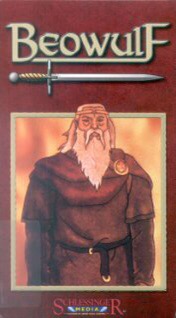
This faithfully follows the story. The only strange part is the monster, Grendel, is rendered as a furry green Jello creature instead of a troll. There is also a trippy interlude of Beowulf fighting the dragon.

Film folk–open challenge: 

Bring Beowulf to the screen so there is no more woe when watching Beowulf.

November Reading Round Up


I’m closing in on my Good Reads goal of 101 books!

Here are my November highlights:

Empty Places by Kathy Cannon Wiechman

Adabel Cutler is wanting to remember her mother, yet there are empty places in her memory and she can’t quiet the need to find the answer to why her mama left the family seven years ago.

Set in the Kentucky mining area of Harlan County during the lean times of The Depression, author Kathy Cannon Wiechman provides a rich portrait of a young teenage girl and her family struggling against hard times and poverty. 

Adabel’s voice and her persistence to find the truth is strong and aptly presented in the dialect of the area. The author’s research adds to the realism of the story and provides insights about the coal mining community that is beneficial to students studying The Great Depression.

The Versions of Us by Laura Barnett

Boy meets girl. Once. Twice. Three times. The typical romance story takes a turn of shoulda, woulda, and coulda. A girl and a boy meet in their young twenties, and readers follow three possibilities of their romance into their seventies.

It’s a bit like a choose-your-own adventure book, yet reading this type of format is not for one looking for a leisurely read. Just as one gets involved in version one, it changes to version two, and then goes to version three. And so goes the tempo. 

Personally, I gave up and followed version three and decided one read was enough, and did not go back and read the other two versions. 

It’s a clever idea, and I have tried other books that try this multiple plot device. They don’t work for me. I want it to work, but I don’t want to work that hard when I settle down for my leisure reading sessions.

The Alchemist by Paul Coelho


I experienced The Alchemist as an audio read the first time on a long drive a few years ago. I think having Jeremy Irons read the book to me enhanced the magical of the read. I highly recommend the audio version.

The second time I read it in one sitting, appreciative of the full color illustrations which complemented the story. Overall? I preferred the audio version. Jeremy Irons knows how to tell a story.

For those who disliked the book, and some of the reader reactions were intense, I suggest listening to the book, for it truly is like a long endearing bedtime story. Set aside apathetic notions and listen to a story of a boy seeking his heart’s desire. There’s still a bit of the child in all of us ( I hope).

And I continue reading…

With only a couple of more weeks until my December deadline I am trying to squeeze reading time in when I can: at the gym while I pedal in my mile or walk off my đź’Ż calorie warm up; decompressing after a long day trying to interest sophomores in how to analyze a short story; a few minutes before going to bed (and getting smacked in the face as I succumb to sleep).

A stack of books taunts me on my side table. I shall find time to finish strong. I shall. I shall.

Anyone else have a reading goal for the year?

Why We Say #26: ‘Tis the Season or here’s to muddying meanings


Between putting our votes in and putting up the mistletoe there are words we banter around that no longer mean what they once meant.

For instance:

Season: from the Middle English “seson”, which originally referred to spring, the time for sowing. “Season” is now extended to four times of year: spring, summer, fall, and winter. I actually live in an area that recognizes a fifth season, one that is situated between the last snows of winter and the downpours of spring. We call it “Mud.”
Transitioning from seasons to secrets:
Secretary: a good secretary can keep a secret, and there were a good many secrets floating this last election season. Maybe the mud season applies to election years as well. Never mind…. However, the word “secretary” is derived  from “secrets” because appropriately enough, a secretary dealt with his or her employer’s private papers, which no doubt contained some clandestine concerns.

Moving from secrets to secret agendas:

Senate: in Roman times the senate was comprised of one hundred men who tended to be on the elder side of life having accrued a wealth of experience and wisdom. It makes sense then that senate is derived from “senis,” not to be confused with “senile,” of course not. 

And that brings us to another politically oriented term:

Shake hands: skaking hands signals agreement, courtesy, acknowledgement, and friendship. Originally it was a precaution, making sure that the other person wasn’t reaching for his sword with his other hand. Wait, wasn’t Caesar in the process of shaking hands with members of his Senate when he was stabbed? So much for trust and knowing what the right hand and the left hand are doing.

This moves us to consider–

Showing one’s true colors: to avoid suspicion pirates would raise up the colors of a friendly nation and once they pulled up alongside a ship they decided to plunder, they would raise their true colors of their pirate ways. Hmm, the political connection seems to be still afloat.

Speaking of evil:

Sinister: it’s only been in recent years that being a lefty is considered somewhat of a notable distinction. Back in the Roman days (difficult leaving our ancient roots), the left side was considered unlucky and even “sinister.” Anything menacing or wrong would be designated as sinister. In fact, the idea of left being wrong (and not right) is found in other languages such as the French’s “gauche” attached to the idea of committing a gaffe or error.

That leads us to:

Snooper: from the Dutch verb “snoopen” referring to the practice of eating sweets without getting caught, so it makes sense to noun this verb into a snooper or snoop. 

This makes me wonder if a sinister senate secretary is willing to show his or her true colors when caught out as a snoop. Watch out if the offer to shake hands is mentioned as as an acknowledgment of the season of goodwill and glad tidings. See–mud still applies. 

Morguefile image

Post Navigation