
How Cliché: Well Worn Literary Phrases
It is difficult to avoid clichés. I am hyper-sensitive to them, yet I still insert them verbally into my sentences (when writing I tend to be a bit more editorial and catch them before they make it to the final version). Do you catch yourself saying any of these ubiquitous clichés? Which ones are difficult to excise from your stable of sturdy go to phrases?
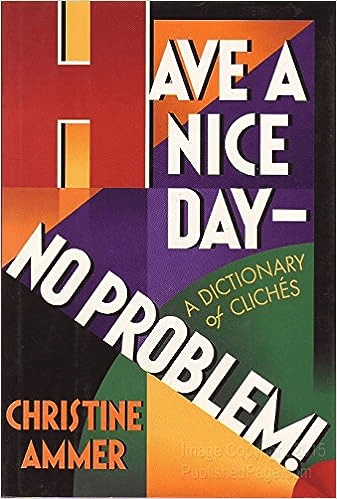
a surprisingly fun read
Adding insult to injury: this one is covered more thoroughly in a previous post, but how else to best express that feeling of being doubly hurt? Keeper
Albatross Around Your Neck: credit Coleridge and his “Rime of the Ancient Mariner” poem in which a sailor has to wear the albatross he killed. Chicken-killing dogs were made to wear the dead bird around their neck to deter them from killing any further chickens–this must have been the strategy for Coleridge’s poor sailor. Talk about a fowl, unpleasant punishment! Associating dead, rotting birds around my neck with unpleasant tasks makes this a cliché unsavory. Avoid
Forever and a Day: Shakespeare is thought to have penned this phrase from Taming of the Shrew, yet it was found in earlier texts before the 1600s. Taking a long, long time isn’t as poetic as taking an eternity and then some, as in reference to those irritating traffic lights that seem endlessly red. I do use this one when the right occasion pops up. Keeper

Happily Ever After: a standard fairy tale ending that is credited to the fourteenth century Italian writer Giovanni Boccaccio. His stories usually ended with the phrase, “so they lived very lovingly, and happily, ever after.” This became shortened and when used today the speaker and listener is well aware of how cliché the phrase sounds. Avoid, though no harm, no foul
Little Did They Know: a phrase with tracings back into the nineteenth century and made popular by suspense writers in the thirties, forties, and fifties. Again, this one is easily identified as a cliché. No harm no foul
Not to Put Too Fine a Point on It: Charles Dickens is given credit for this one, which is derived from his novel Bleak House. Mr. Snagby liked to utter this phrase as a means of speaking plainly. Frankly I don’t use this one and don’t hear it much either. Moot

Pot Calling the Kettle Black: In Don Quixote there is a line where the frying pan insults the kettle, and since they are both made out of the standard black cast iron it is rather hypocritical for the frying pan to call out the pot being being relatively the same. I admit to using this one; however, do people know what a kettle is these days, let alone the obscure reference to black when there are so many choices in cooking ware available? Avoid, reluctantly (finding it tough to replace this one–calling out someone as a hypocrite is fairly blunt)
Well–how did you rate your own use of these clichés? Find some keepers, despite them being overused and eye roll worthy when mentioned? If they do slip out, no worries (which is becoming a cliché in its own right).



 Pam Webb