Pam Webb

a writer's journey as a reader

Archive for the tag “Family”

BBQ Feng Shui


‘Tis backyard embrace time. Sunlight, flowers, birding, and BBQ. Summer is a favorable outdoorsy season.

Alas-lack of planning (and building funds) circumvented creating a deck or a patio and instead a large swath of pea gravel represents our lounging about area. Not ideal, but sufficient.

Over the years additions such as a fire pit, accompanying Adirondack chairs, flower pots, and hammocks (one for shade, one for the sun) have created a welcoming fair weather space (I stubbornly to acknowledge the coming of the long winter by not putting up the summer furniture until frost arrives and warm coat is necessary to sit outside with the fire pit becoming an essential instead of being decorative).

However, granted though all added comfortable touches created a welcome respite, what was lacking was a BBQ area.

Oh, we tried various methods. The ubiquitous red kettle tripod, even the standard propane range, but it came down to this tried and true:

my little dependable

Please no judging here with this observed statement: I thought men are born with a BBQ gene. I grew up with my Dad grilling steaks as often as he could get away with it, and my friends’ fathers also were grill kings, and in my college days the guys I knew worked the briquettes with aplomb even if they were lost in the kitchen otherwise. So I learned how to BBQ by osmosis simply because BBQ skills fell to me if my family wanted BBQ.

I will leave it at that.

So if I was to be the designated BBQer in my marriage it would be on my terms. Hence, I chose to BBQ with my trusty camping kettle. And it works well. Well, it works better now. In its previous life I would haul it to the beach and set it up on a picnic table and after a day of the kiddos playing all day we would wait for their dad to join us after work and we would enjoy a picnic. Fond memories are attached to that little BBQer. My reluctance to part with it even when tempted with other means of grilling should be understandable.

Just recently my little camping kettle got upgraded to having its own stand instead of being plonked on the ground. Empty nester funds do have a purpose. And now that there is a designated BBQ area there should be an actual dining area. Right?

That took a little more effort, yet it happened with panache. A cafe table with chairs and umbrella. No more schlepping over to the fire pit Adirondack chairs eating with plates on our laps.

Perfect.

And then trouble in BBQ bliss when the neighbors moved in.

Stay tuned for PART TWO.

Okinawa! Part Three


Now that I’ve been home for a week and have processed my trip (let alone get my sleep cycle back on track), I’ve been reflecting on how to best answer the usual question of “What was Okinawa like?” Since I did not luxuriate as a tourist in a hotel and stayed with my son and daughter-in-law in their apartment–which is more like a condo compared to American standards–I experienced Okinawa with deeper regard, especially since my son embraces his new life in Okinawa and hopes to stay on for awhile.

Notable Differences

  • Driving on left side of road--this I could not get used to at all. For one, I kept trying to get in on the right side of the car which is not the passenger side, but the driver’s side. This continually amused my son. My son is quite adept at navigating turns, traffic, and the tiny streets of Okinawa. I tried not to be the agitated passenger. I do believe I failed that aspiration.
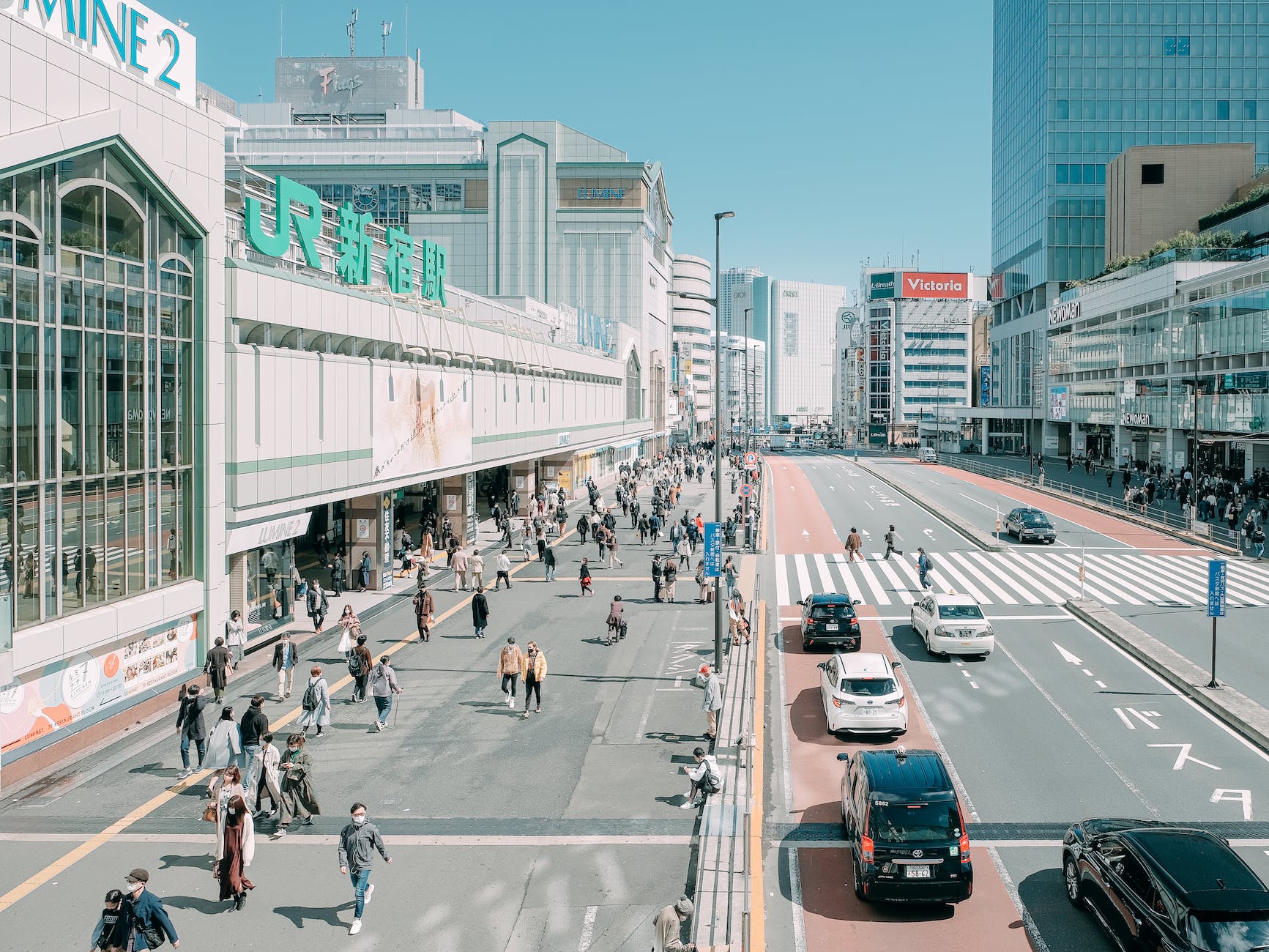
Photo by WENCHENG JIANG on Pexels.com
  • Dawn–being a Westerner and having grown up around the ocean, watching the sun set on the horizon is never tiring, so watching the sun rise out of the ocean at dawn absolutely caught me by surprise–well, duh–it’s the far east, so of course the sun rises out of the ocean. It was magical, like a giant Georgia peach half levitating itself into the luminescent clouds. Or like watching a sunset in reverse.
  • Trash–Okinawa streets and public areas are practically trash free. There are no stray bits of paper skittering along the sidewalk, no plastic bags tangled in the grass, no overflowing garbage bins. The reason is there are no public waste cans. If you have garbage you take it home or deposit it in one of the numerous public restroom receptacles or at one of the many convenience stores. It seems to work well. Okinawa is refreshingly clean and tidy.
  • Heated Toilet Seats–it’s true. Even the public restrooms are equipped with this option. Some toilets offer numerous options including music, lights, or a bidet. Returning home to my winter homescape I do miss a warmed seat, especially at 3 a.m.
  • Recycling–it’s not an altruistic choice, it’s mandatory. Garbage is sorted into plastics (mainly beverage containers), burnables, aluminum, and glass. Trashbags must be clear and households are fined if sorting is not done correctly. It’s complicated and admirable, too. Oh, the garbage trucks are tiny, about the size of standard Suburban, and rely on workers jumping on and off the truck. These trucks play melodies. At first I thought there was an ice cream truck in the neighborhood.
  • PSA–everyday at 5 pm a happy little tune is played and a woman’s pleasant Japanese voice comes on for a few minutes. The message basically reminds all children of the 6 pm curfew, to get off the streets and go home. Amazing, right? How would that work in America?*

*while the curfew message is important, the system is also in place to ensure the public broadcasting system works in case of a PSA is needed (like a certain hostile country launching a “satellite” over Okinawa while I was there. Didn’t see that one in the news, did you?)

  • No Tipping–no kidding. Japan is a service-based culture and the idea of receiving extra money for providing what should be their best effort is frowned upon, although I did see a tip jar at the register of one restaurant situated in American City. This is probably to appease the Pavlovian response of American tourists when eating out.
  • No Junkers--again, so refreshing. Cars on the road are clean and in excellent condition. No dented, rusted, decrepit vehicles are evident. The cars are also tiny. My little Honda Civic would be considered mid-size, if not large, compared to the autos scurrying about on the roads. The only pickup trucks seen (only one) was owned by a Marine driving on base. My son said some guys ship their trucks over during their tour. It’s pricey, but hey, some guys just need their truck. The narrow roads aren’t very accommodating for large rigs, so good luck with that one, buddy.
  • Silver Citizens--it is not unusual to see Okinawa’s elderly still working. I saw them at the airport attaching baggage tags, at the commissary bagging groceries, and walking around on the sidewalks with their cloth shopping bags. No wonder the Japanese are noted for their longevity–the secret is remaining physically active with a purpose.
image: Japan Times

I can see why my son enjoys living in Okinawa. It’s clean, efficient, with a culture built on respect. I also love the expanse of ocean surrounding the island. A bonus is that I had no asthma issues or tinnitus during my two week stay. I also have an adorable granddaughter living in Okinawa. These are all inducements to move there, yes, I know. I briefly considered the invitation, but I would miss the trees (Okinawa is jungle, green, yet there is nothing like backyard forest with deer, squirrels, birds, and an occasional moose) and driving on the right side (the correct side?) is a must, and understanding the language is essential. Okinawa is definitely a nice place to visit and I am glad my son enjoys living there. I will return someday…

POM: April 4


Nikki Giovanni is a poet who knows how to capture a moment, a feeling, an event. She is a poet of note. This poem, never no matter it’s about Tennessee, gets me itching for summer. Summer and its treats is summer regardless of the state. Summer is a state all its own.

Knoxville, Tennessee

Nikki Giovanni, 1943

I always like summer
best
you can eat fresh corn
from daddy’s garden
and okra
and greens
and cabbage
and lots of
barbecue
and buttermilk
and homemade ice-cream
at the church picnic
and listen to
gospel music
outside
at the church
homecoming
and go to the mountains with
your grandmother
and go barefooted
and be warm
all the time
not only when you go to bed
and sleep

The Wonderful World of Seven


The grandkiddo turned seven this year, part of the reason of the yearly sojourn.  You see, my birthday is one day before hers. Someday this will take on greater significance, and I envision an annual midnight call between us to celebrate our birthday at the same moment.

While A.A. Milne celebrated being six

image: Wikipedia. Six has its tricks, yet seven is heaven-ly

I delight in finding so much changed after one year:

  • she can read to me!–“Please read me a book” is now a give and take opportunity for sharing the delights of reading
  • she is more reasonable–melt downs are infrequent now that logic is not such a foreign concept
  • she can ride a bike–tips and spills and “I’m tired!” aren’t even part of the lexcicon (perhaps one spill)
  • she can tolerate outings much better–“Are we there yet?” doesn’t much occur due to being occupied with a book
  • she is much more content to answers to questions involving “How come?” and “Why does?” because her understanding of the world is more complete
  • she likes jokes and riddles–a shared sense of humor is definitely a bonding bonus
  • she can carry on a conversation–there is actual dialogue instead of answering a stream of questions
  • she enjoys classic cartoons as much as I–Tom and Jerry, Bugs Bunny rock
  • she can go to bed a bit later–9 pm vacation bedtime doesn’t involve cranky kid syndrome the next day

However…

Seven is not quite a perfect number, although it is perfection in the making I notice these glitches:

  • loud and not-so-loud are not volume options: it’s pretty much tuned to loud
  • cause and effect aren’t quite connected synapses yet: such as jumping on the bed with possible breakables in the vicinity, like my headphones
  • full and empty are only relative terms when it comes to hunger
  • bored and engaged entail thinking and non-thinking strategies: iPads are handy but guilt-inducing babysitters
  • tone is important and attitude is quickly mimicked: in other words speak to them as I want to be spoken to
  • sarcasm is a learned nuance as is teasing: “Do you mean that for reals?”
  • sleeping in past 6:30 am is a foreign concept: okay, to be honest she at least waits for me to make a movement of waking up before pouncing on me with conversation (“DO you KNoW TIGERS haVe StRIPeS?”)

I project eight will be much different. Eight seems to be the new thirteen these days as I watch kids with iPads and iPhones in hand wander about. There is a savvy that is a bit disconcerting. I remain hopeful since the grandkiddo lives in a TV free household (amazing, I know) and has been mostly homeschooled so far.

For now I relish the nearly perfect age of seven. She still finds blowing bubbles a delight. I shall not worry yet when my love of parks and playgrounds and bubbles and cartoons become passe in her eyes.

Dandelion Summer


It’s always a pleasure to discover a new author, especially one who is prolific. Such is the case with my discovery of Lisa Wingate and her novel, Dandelion Summer.

Set in contemporary Texas, this is a character-rich story  with two polar opposites.  Imagine Henry Fonda from his role in On Golden Pond and a teenage Queen Latifah, you then would have Norman Alvord and Epiphany Jones, better known as J. Norm and Epie. Thrown together against their will, they reluctantly form a truce of temperaments as they launch out on a journey of discovery together.

One of the more delightful aspects of the novel is how Wingate swings the viewpoint from J.Norm’s to Epie’s, allowing the reader to fully realize the entire picture. Norman is a recent widower, ailing not only in health, but in regrets.  He is at odds with his only child, Deborah, a resentful professional woman who believes her efforts to run her father’s life is merely a way to honor her promise to her deceased, beloved mother. Epiphany is a troubled biracial sixteen year old who has it tough at home and at school. Both Epie and J. Norm want to break free of their circumstances and solve the mystery of who they really are.  The varying viewpoints provides the balance of age and youth, and it isn’t long before it’s clear that no matter a person’s age, status, or experience the basic need of family is foremost.  Epie and J. Norm form a family bond of sorts and what could have become oversweet in outcome turns into a realistic story of two hurting individuals who learn to rely on someone they least suspect of being a means of help to their situation.

My biggest takeaway from the novel is Norman’s letter to his daughter, Deborah.  He knows he wasn’t there for her when she was growing up and his letter is an apology, yet it is also an instructive that all fathers can learn from.  I plan on slipping this to my sons someday (never mind there aren’t married, or even have serious girlfriends yet), and maybe I can convince my pastor to read it for next Father’s Day. Here is an excerpt:

Dear Deborah,
Words do not come easily for so many men. We are taught to be strong, to provide, to put away our emotions. A father can work his way through his days and never see that his years are going by. If I could go back in time, I would say some things to that young father as he holds, somewhat uncertainly, his daughter for the very first time. These are the things I would say:
When you hear the first whimper in the nights, go to the nursery and leave your wife sleeping. Rock in a chair, walk the floor, sing a lullaby so that she will know a man can be gentle.
When Mother is away for the evening, come home from work, do the babysitting. Learn to cook a hotdog or a pot of spaghetti, so that your daughter will know a man can serve another’s needs.

The letter continues with sound advice and lyrical admonition to be all a man can be by being the best father a daughter can have and remember.  I read this to my writing compadres and the “oohs” and “aahs” circled around the table.

Dandelion Summer is definitely a book for perfect for the summer read list, yet  its warmth resonates long after the last word is read.

Badminton, Barbecue, and Baby Birds


The other day we were enjoying the fine summer evening with a mix of badminton, barbeque, and the usual family hi-jinx. We have tried to be courteous and considerate of our new neighbor, especially since it appears she is a single mother with four babies.  The babies make absolutely no sound.  Unheard of.  They patiently wait at home while mom is out getting them food.  We keep an eye on them for her when we can.  Recently, we noticed the babies were about to take that first significant step of independence and leave home.  I know–what? Babies leaving home?  Sorry, I couldn’t help but build up a gotcha.  The mom is a robin who’s built her nest right in the corner of our patio and garage. Silly, silly birdie.  Didn’t she know what a noisy lot we were?  We have been watching with anticipation as the birds went from hatchlings to fluffy bits.

This particular evening I had a feeling the birds were about to head out.  All day long they had been stretching up and airing out their wings and periodically during the day I would check on them.  A countdown began.  Four babies. Three babies. Two babies.  Finally, the one lone baby robin left in the nest.  We encouraged it and cajoled it to head out into the unknown.  It resisted and began pitifully uttering dismal little chirps–they were much too soft to qualify as cheeps.  Some of my family had grown restless waiting for the big moment and wanted to return to the game.  I decided I wanted to actually witness the big moment of baby bird first flight and sat down with my book.

“Forget badminton, will ya,” I stubbornly replied to tauntings to rejoin the game.

“Oh, it will be awhile for it goes.”

“Nope, any minute now.”

More stretchings and wavering pips from the corner nest.

“Hey, maybe it is goin–”

“Look! There it goes!”

“That was really cool!”

With a birdie sigh of “Now or nothing” the last baby flapped its wings and zipwinged it to the pine tree at the edge of the yard.  With shouts of “Hooray!” we congratulated one another on witnessing the positively, absolutely neat event we had just watched.

Witnessing the resolution and trepidation of a baby robin before it determines, “Yup, this is it” is a moment to always remember.  There’s definitely an extended metaphor in here somewhere.  Robert Frost–any commentary, sir?

Update: Mom’s back with a second brood.  I guess we weren’t such bad neighbors after all.  Looks like this batch will be taking off within the next week.  The Flight of the Baby Bird II?

Post Navigation