Though the end of the cliche alphabet draws near, there are still plenty of tired but true phrases to explore. Today’s focus is on “V”
Vanish into thin air: to disappear suddenly
Variety is the spice of life: experiencing the new and different can add meaning to one’s experience
Vent your spleen: keeping anger held inside can have physical consequences NOTE: way long ago, the spleen was once considered the center of emotions. Valentine’s Day would be quite different if that thought had remained.
Nothing ventured, nothing gained: giving something a try is a consideration
Vertically challenged: a polite term for short
Vested interest: personal stakes are involved
Vicious circle: going right back to where it all started, and not always in a good way
A hollow victory: sometimes there is an unexpected cost to winning that can seem to be a loss
Getting closer to the end of the cliché alphabet. Here are a few popular “T” sayings:
Tables are turned: the situation has changed. This well-known idiom comes from 17th century game board playing such as backgammon, a game where players could switch or “turn” the board (or table) with the ability to gain the upper hand.
Take a back seat: to find oneself subordinate. In the 19th century stagecoach travel was common and travelers who were in less standing or importance would inevitably end up in the less desirable back seat which prompted the saying to come to mean being reduced to less prominent position.
Take a hike: to take long walk; to go away. Mid-19th century people were used to walking, sometimes involving long hikes which meant going away from people or a place, developing into a phrase that meant telling some to go take some air, to leave, sometimes in a rude manner.
Take a leaf out of someone’s book: setting an example. The saying refers to 1800s practice of actually taking a page or “leaf” from someone’s book to copy their example or style. It originally alluded to the copying or plagiarism, later developing into today’s usage of following someone’s example because of admiration or success.
Take a nosedive: to fall unexpectedly. The 20th century ushered in airplanes, and early airplanes could lose altitude unexpectedly. The meaning now refers to a sudden drop in a situation, condition, or state of being.
Take a raincheck: to politely decline. If it rained during 19th-century baseball spectators could receive a voucher or “rain check” for free admission to another game.
Take a shine to: to form an attraction. “Shine” in 19th century vernacular meant taking a sudden liking to someone, seeing the attraction or “shine” in their eyes. Today people use the expression to indicate immediate fondness for someone or something.
Take a straw poll: an informal survey. In the early 19th century newspapers who wanted to get a feeling for how the public felt about a matter, such as a presidential election, they would take an impromptu survey among people. The informal method was likened to tossing straw into the wind due to its lack of scientific method. Today when people are looking for a quick opinion among a group they will take a straw poll.
Take by storm: a forceful overcoming. Going back to the 1600s military campaigns could be waged with such force it was compared to a storm overcoming an area, which has developed into the phrase meaning to win over a situation with impressive results.
Take for granted: believing something will always be true. The 1600s say “granted” to indicate something to be true without requiring proof. In contemporary days the saying has come to mean taking advantage of someone, expecting someone or something to always be available, believing its true.
Take forty winks: a quick nap. Combing British phraseology and Biblical reference “wink” refers to a 19th century English book extolling the virtues of taking short rest and “40” is found in the Bible a term referring to indefinite amount of time. If someone takes forty winks they aren’t blinking forty times they are resting for an undefined amount of time.
Take guts: to have courage or bravery. Long ago in the 14th century people believed a person’s personality or soul lay in the region of their stomach or “guts,” and to rally up needed emotions for a tough situation requiring fortitude, they would be advised to “have the guts” to face the matter. Today the phrase still alludes to digging deep within for the needed bravery.
And that’s just a sample of “T” clichés. What are a few sayings to add?
Today’s batch of cliches focus on the “s” range. It’s “yes” to cliches with “s”.
Scarce as hen’s teeth: When something is very rare. Don’t use this one much. It makes me wonder how it came into use. Some farmer having fun counting his chickens before they hatch?
Scared of his own shadow: Someone who is often afraid.
Scraping the bottom of the barrel: Taking whatever is left behind.
Reddit image
Second banana: Second in command. I prefer being second banana. Less pay, true, but less responsibility than the top banana.
Shape up or ship out: Do what is right or correct.
Shoot the breeze: Casually talk about things.
Signed, sealed, delivered: The task is complete.
Skeleton in the closet: scandalous events in someone’s past.
Slow and steady wins the race: Going too fast could cause you to fail.
Squeaky wheel gets the grease: speaking up can get something accomplished. This one is a personal favorite as I tend to get things done that haven’t been done. Some call that being proactive. Others consider it being squeaky.
Nose out of joint: to be irritated by something or someone. A somewhat confusing phrase traced to 1881. It implies the nose can be dislocated when it can’t see it has cartilage instead of a joint. So–this term projects a sense that a person is getting upset enough to feel like they are broken when they aren’t, just seems that way.
image: Flickr
No skin off my nose: it doesn’t bother me. An early twentieth century expression with a reference to boxing with the idea that unless someone who fully committed to the fight they will get some skin off their nose meaning involvement is going to possibly hurt a little.
No sweat: no extra effort required. A phrase related to “no problem,” meaning that the exertion needed to perform the task won’t be enough to cause someone to perspire. Slightly older than “no problem.”
Nothing new under the sun: it’s happened before. A Biblical term from Ecclesiastes 1:9–“What has been what will be, and what has been done is what will be done; there is nothing new under the sun.” A phrase still appropriate today and used by the likes of Shakespeare in his Sonnet 95.
image: Crossroads Chapel
Nothing ventured, nothing gained: a person has to take a chance sometimes in order to succeed. An expression found as early (or even earlier) as Chaucer “naught venture, naught have,” and has shown up through the ages in similar forms with the most recent being “no pain, no gain,” uttered by business and sports pundits alike.
No way: not happening. American in origin, linked to the 1960s. It is a proclamation that means “under no circumstances,” which reflected an era of short, stated feelings such as “far out,” “dig it,” “bummer,” and “out-of-sight.”
Now on to “o” as in “oh my, what clichés shall we next ponder?”
Naked truth: the plain facts. Derived from a fable in which Truth and Falsehood were bathing, perhaps outside in a lake. Falsehood got out first and for some reason decided to put on Truth’s clothing. Well, when Truth got out wearing Falsehood’s clothing did not appeal. So Truth went…well, let’s just hope it was a warm day to wear al fresco.
Naked as a jaybird: An American expression with the British counterpart being naked as a robin. Both being plain birds the expression makes sense.
image: Flickr
Name is mud: being discredited. In the nineteenth century the British Parliament used this expression in reference to someone who had made a fool of himself–mud was a euphemism for fool. Eventually the term referred to someone admitting they had made a hash of something or a bad mistake.
Neck and neck: a close finish. Related to horse racing. As the horses ran towards the finish line they could run so close together they appeared to be running side by side or neck and neck. Today the expression means to be in close competition with someone.
image:X.com
Neither fish, flesh, nor fowl: not one or another. From the sixteenth century, found in Heywood’s 1546 Proverbs: “She is neither fyshe, nor fleshe, nor good red herring,” which refers monks who ate fish, general folk who ate meat, and the poor who ate herring. Shakespeare’s Falstaff describes Mistress Quickly as a woman no man desires because, “She’s neither fish nor flesh.”
Never say die: not giving up. A term frequently used today which dates from mid-nineteenth century when Dickens wrote in Pickwick Papers “Never say die–down on your luck.” James Bond should have paid attention to Dickens.
image:Redbubble
No news is good news: hearing nothing means everything is fine. King James I is credited with saying, “No news is better than evil news.” Over time others have expressed similar words such as James Howell, Charles. Dickens, and others.
And the ubiquitous–
No problem: everything is fine; glad to help. Around the mid-twentieth in America the term “no sweat” was often used to express the feeling of there being no problem. In other countries the expression transfers into something similar such as in Australia people say, “No worries.”
handle with kid gloves: to treat very gently. Dating back to the nineteenth century this term refers to gloves made from young goats, known as kidskin. These gloves were considered fine wear and the wearer needed to treat them with care.
image: Etsy
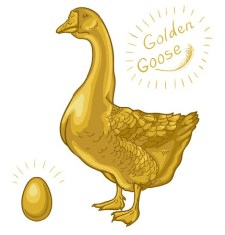
Kill the goose that lays the golden eggs: destroy a source of wealth through neglect. In one of Aesop’s fables a greedy farmer owns a fabulous goose that lays golden eggs. Wanting as many eggs as possible he believed that all the eggs were inside the goose. Killing the goose did not provide the eggs–he only gained a dinner entrée.
image: JD Supra
Kill two birds with one stone: to achieve two goals with a single effort. The saying goes back to Roman times when a person would be commended for killing two birds with a single rock. The saying was also traced to the 1600s when a writer by the name of Hobbes wrote, “”T.H. thinks to kill two birds with one stone, and satisfy two arguments with one answer.”
image: Forbes
Kill with kindness: to overwhelm someone with goodness. The original saying is thought to be, “to kill with kindness as fond apes do their young” is alluding to how an ape might squeeze its young in a smothering embrace of love. The saying moved forward in the sixteenth century and was used by Byron who said, “Don’t let them kill you with claret and kindness.”
image: IMDB
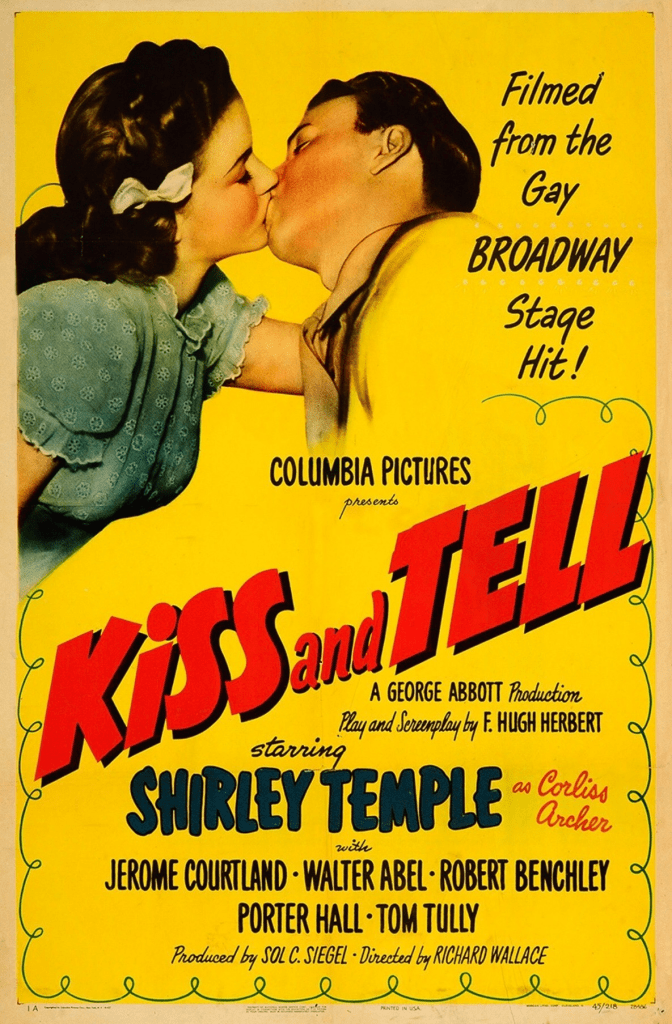
Kiss and tell: to betray a secret. Restoration England’s Charles Cotton is credited with saying, “And if he needs must kiss and tell, I’ll kick him headlong into Hell.” The expression has been used often in both literature and films, and even in everyday life.
The whole kit and caboodle: all of it. The word “caboodle” is thought to be related to the Dutch word “boedel” which means “household goods and possessions.” And “kit” means personal belongings. However, the Oxford English Dictionary says caboodle is an incorrect version of “kit and boodle.” Whatever it means, if someone says “grab your kit and caboodle” just grab your stuff and get going.
image: Facebook
Knight in shining armor: someone who is a rescuer. Dashing knights. Chivalry. Rescuing damsels. That’s what the expression brings to mind, right? That is the literal sense, probably dating from the sixteenth century. The figurative sense is about finding “Mr. Right,” that standout guy that fits a girl’s dream of her hero. Is the saying still being used?
image: Medieval Bride
Knock someone down with a feather: to overcome a person with surprise. This goes back to the nineteenth century and appeared in print in Wiliam Cobbett’s Rural Rides “You might have knocked me down with a feather.”
image: Language Humanities
Knock on wood: a means of avoiding bad luck. In Great Britain touching wood is based on a superstition based on the saying “touch wood, it’s sure to come good.”
BONUS:
image: idioms 4you
To knuckle under: relenting under pressure. There are different thoughts on this one. It might stem from knocking under the table when someone has lost an argument. “Knuckles” also refers to the end of any bone at the end of a joint. “To knuckle” originally meant “to bend down” or “stoop” and was related to the phrase “to comply with” or “submit to.” So–either a person literally raps their bones in defeat or figuratively bends down in defeat.
It is difficult to avoid clichés. I am hyper-sensitive to them, yet I still insert them verbally into my sentences (when writing I tend to be a bit more editorial and catch them before they make it to the final version). Do you catch yourself saying any of these ubiquitous clichés? Which ones are difficult to excise from your stable of sturdy go to phrases?
image: Amazon a surprisingly fun read
Adding insult to injury: this one is covered more thoroughly in a previous post, but how else to best express that feeling of being doubly hurt? Keeper
Albatross Around Your Neck: credit Coleridge and his “Rime of the Ancient Mariner” poem in which a sailor has to wear the albatross he killed. Chicken-killing dogs were made to wear the dead bird around their neck to deter them from killing any further chickens–this must have been the strategy for Coleridge’s poor sailor. Talk about a fowl, unpleasant punishment! Associating dead, rotting birds around my neck with unpleasant tasks makes this a cliché unsavory. Avoid
Forever and a Day: Shakespeare is thought to have penned this phrase from Taming of the Shrew, yet it was found in earlier texts before the 1600s. Taking a long, long time isn’t as poetic as taking an eternity and then some, as in reference to those irritating traffic lights that seem endlessly red. I do use this one when the right occasion pops up. Keeper
Happily Ever After: a standard fairy tale ending that is credited to the fourteenth century Italian writer Giovanni Boccaccio. His stories usually ended with the phrase, “so they lived very lovingly, and happily, ever after.” This became shortened and when used today the speaker and listener is well aware of how cliché the phrase sounds. Avoid, though no harm, no foul
Little Did They Know: a phrase with tracings back into the nineteenth century and made popular by suspense writers in the thirties, forties, and fifties. Again, this one is easily identified as a cliché. No harm no foul
Not to Put Too Fine a Point on It: Charles Dickens is given credit for this one, which is derived from his novel Bleak House. Mr. Snagby liked to utter this phrase as a means of speaking plainly. Frankly I don’t use this one and don’t hear it much either. Moot
Pot Calling the Kettle Black: In Don Quixote there is a line where the frying pan insults the kettle, and since they are both made out of the standard black cast iron it is rather hypocritical for the frying pan to call out the pot being being relatively the same. I admit to using this one; however, do people know what a kettle is these days, let alone the obscure reference to black when there are so many choices in cooking ware available? Avoid, reluctantly (finding it tough to replace this one–calling out someone as a hypocrite is fairly blunt)
Well–how did you rate your own use of these clichés? Find some keepers, despite them being overused and eye roll worthy when mentioned? If they do slip out, no worries (which is becoming a cliché in its own right).
There are not too many notable cliché “J” phrases, so let’s look them over.
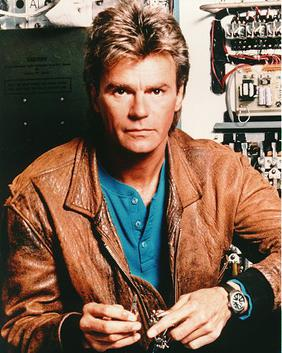
Jack of all trades: someone who is able to do everything. This phrase dates to around the 1600s, Shakespeare’s time, yet there was a prevailing thought that if someone is good at everything they will not be outstanding in anything. Ouch. That’s harsh. I have moved away from saying Jack of all trades and just go with my personal reference of calling someone a MacGyver if they can fix anything and everything. MacGyver, I’m talking about the 80’s version, not the reboot. Great show. Angus MacGyver could take chewing gum and a paper clip and save the world from bad guys. He rocked an awesome mullet, which alone made him memorable.
image: Wikipedia
Jet set: the socially fashionable group. This term was introduced in the 1950s when airplanes became jets and moved people around quickly from one hot spot to the next. Flying was still out of easy reach for most people and mainly the affluent could afford jet travels. Not sure if jet set still applies today since platforms like Hopper make it more affordable to bounce from one place to the next more easily.
Jockey for position: to get into an advantageous place or position. A horse race term that literally meant that the jockeys were vying for the best position on the track. It later transferred to other situations such as the 1955 London Times that included the sentence, “Lawyers jockeying for position to appear before the right judge.” These suit and tie folk are smiling now, but it may not be so pretty once the gate bell rings, “And they’re off!”
image: Idioms4you
John Hancock: a person’s signature. A personal favorite. John Hancock signed the Declaration of Independence in a large and bold manner so that King George could read it. Today, anyone’s signature on anything is considered a John Hancock. Kings not included.
image: Online Library of Liberty
Johnny-come-lately: a newcomer or someone arriving late. A nineteenth-century British seaman would be referred as Johnny Newcomer. This term became Johnny-come-lately in the United States.
image: Amazon
Johnny-on-the-spot: someone who is available at the right time. An early nineteenth American term that is not as popular as it once was when it appeared in the 1896 Artie by George Ade: “I could see that a Johnny-on-the-spot…was trying to keep cases on her.” Although it’s pretty clear that the phrase still has found its way to being useful.
image: johnny rentalsimage: johnnysvegas
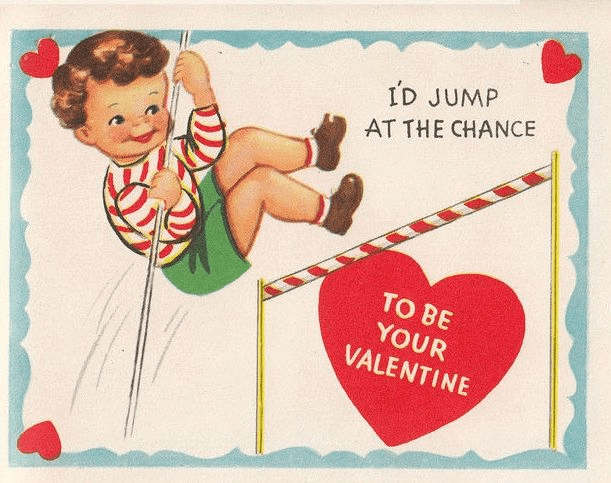
Jump at the chance: to grab an opportunity. Strangely enough this expression was likened to a rooster jumping at a berry. Apparently Sir Walter Scott liked the expression and would refer to someone jumping at the “ready penny.” It certainly shows a degree of eagerness.
image: Free Dictionary
Jump down someone’s throat: to rebuke someone sharply. A metaphor still in use from its start in the late nineteenth century.
Jump the gun: to start too soon. An easy one to figure out when thinking about how sport participants are not supposed to set off before the starter’s gun goes off. To do so, to jump out into the race before the starter indicates to go, could scratch the participant from the race, let alone get the other participants a tad upset at the false start. Originally the expression was “beat the pistol,” which changed to its present form by 1942. The expression is a metaphor that goes far beyond athletic competitions.
Just deserts: a deserved reward or a deserved punishment. I would consider getting dessert a reward, except notice the spelling—“desert” refers to “deserve” not in cheesecake or pudding after the main meal. A mid-eighteenth century proverb: “Desert and rewarde be oft tuned things far of,” which means what one deserves and the reward they receive is not always the expected. Just deser is indeed different than just dessert.
Any surprises! I always thought it was “dessert” and wondered why someone would fling out, “they got their just dessert.” They weren’t talking about a slice of pie. Now I know.
Hair of the dog: a bit of what made a person ill to be used as a remedy. Traced to John Heywood’s 1546 Proverbs: “I pray thee let me and my fellow have a haire of the dog that bit us last night.” Heywood might have been referring to the old folk remedy of placing the burnt hair of a dog into a dog bite to cure the wound. The phrase is now mostly referring to having a drink of alcohol to countermand the affect of having too much alcohol to drink. Does this mean I should have another chocolate bar when I celebrated too enthusiastically on National Dark Chocolate Day?
Handsome is as handsome does: actions, not necessarily appearances, are what matter. Before Anthony Munday in his 1580 Sunday Examples, used the phrase it was already in use, although the phrase was more commonly known as “goodly is he that goodly dooth.”
Throwing one’s hat in the ring: entering a contest or an election. This phrase stems from nineteenth century boxing days when someone would throw their hat into the ring to indicate their challenge. The term eventually moved into politics with Theodore Roosevelt announcing “My hat’s in the ring,” in 1912.
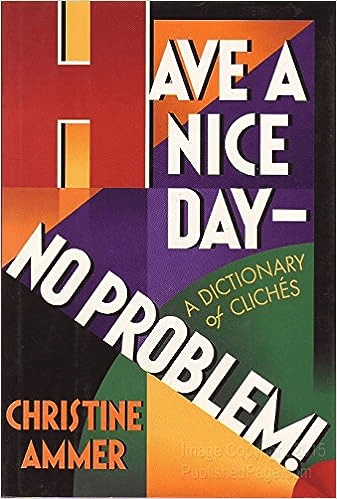
Have a nice day: a pleasant farewell. This ubiquitous, if not irritating, phrase has been around since the 1920s. It became more common in the 1950s when truckers used it as a sign-off on their radios. The phrase took off in the 1960s and by the 1980s it became irritating enough that the expression began being dropped by agencies, such as police departments when “Have a nice day” after delivering a traffic ticket didn’t necessarily sit well with people. Other versions are “Have a nice one,” or “Have a good day.”
I had this t-shirt in the 1970s. A collector’s item, you think?
To have one’s heart in one’s mouth: to be excessively frightened. Homer used “My heart leaps to my mouth,” in the Iliad in 850 B.C. Move up to 1874 and Mark Twain states in Life on the Mississippi: “My heart flew into my mouth so suddenly that if I hadn’t clapped my teeth together I should have lost it.”
Heart phrases are popular, there are at least eight more: To have one’s heart in the right place; A heart of gold; A heart of stone; To one’s heart’s content; A heart-to-heart talk; A heavy heart.
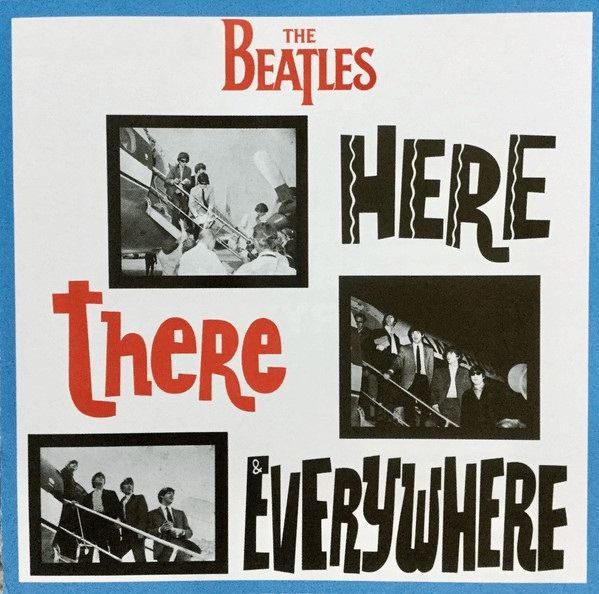
Here, there, and everywhere: all over the place. In the thirteenth century the expression was more commonly known as “Here and there.” Christopher Marlowe included this line in his 1588 Doctor Faustus: “If you turne me into any thing, let it be in the likeness of a little pretie frisking flea, that I may be her and there and euery where.” Not to be confused with the Beatles:
Hitch one’s wagon to a star: to set a high goal. Ralph Waldo Emerson is credited with creating the phrase in 1862 with the line, “Hitch your wagon to a star” in an essay entitled “American Civilization.” Ogden Nash wrote about the line in his 1940 poem “Kindly Unhitch That Star.” While Emerson was encouraging people to set a lofty goal and work towards achieving said goal, more modern interpretations lean towards people achieving their goal by attaching themselves to someone famous or successful and allowing them to pull the goal setter along to reach their goal.
image: Etsy
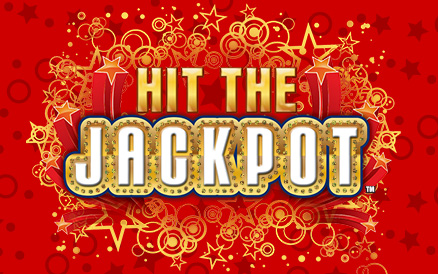
To hit the jackpot: a substantial win. A form of draw poker involves opening with a pair of jacks or higher pair. It takes several rounds before a person has a hand good enough to open and players are required to put money in the pot, or jackpot. As the pot grows, round after round, the winner walks away with a healthy amount of money.
Hoist with one’s own petard: caught or destroyed by one’s own device. A “petard” an older word, is essentially a bomb. “Hoist” means to “blow up” not to pull up, like using a rope. Shakespeare uses the idea in Hamlet when Hamlet refers to Rosencrantz and Guildenstern’s treachery: “Let it work; for ’tis sport to have the engineer hoist with his own petar.” In other words, he is suggesting that his former buddies can blow themselves up with their own plan (bomb).
Hope against hope: desiring something although it seems impossible. In the Bible, Paul writes in Roman 4:18: “Who against, hope believed in hope, that he [Abraham] might become the father of many nations.” Another version of the phrase is “hope springs eternal.” Aragorn in The Two Towers by J. R. R. Tolkien uses the expression referring to the conflict with Orcs: “Well, now, if they still live, our friends are weaponless. I will take these things, hoping against hope, to give them back.”
image: Erik Engheim wonders if humans would have any hope of winning a fight with Orcs
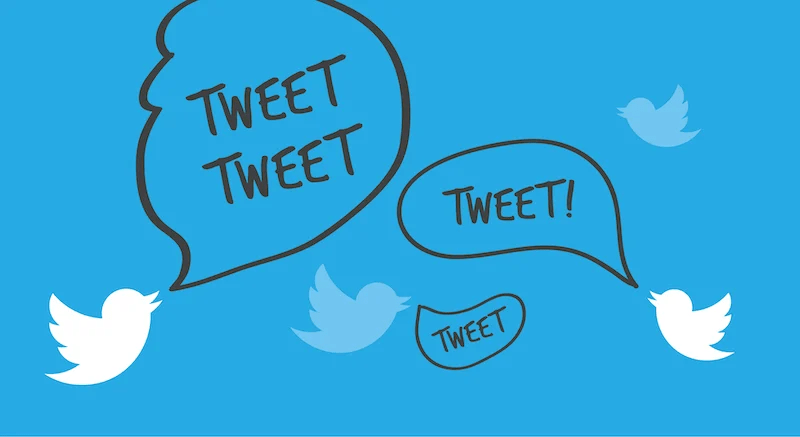
Hue and cry: an loud outcry or protest. In old England neighbors, bystanders, and others would raise a “hue” or a shout if they saw a suspect being pursued to help authorities apprehend him or her. The term moved on to include referring to the public’s vocal concerns about an issue. A shout and cry can also include tweets and other social media ballyhoo.
Old time hue and cry
Today’s hue and cry
Okay–which of these “H” phrases most surprised you? Did I miss one or two that you are curious about?
On to some clichés that may have you saying “Oh, Gee!”
To get a handle on something: to succeed in dealing with a difficult problem or situation. Handle can also mean the name or title of something or someone. The current use is figure out a solution.
To get a kick out of something: getting pleasure from. A twentieth century expression made popular in Cole Porter’s 1934 song “I Get a Kick Out of You.”
To get into hot water: to get into trouble. The reference is to be in water hot enough to burn or cause harm. In 1840 Richard Dana wrote in his Two Years Before the Mast “He was always getting in hot water.”
To get under one’s skin: to annoy someone. This probably refers to insects that bite and cause irritation. However, Cole Porter’s 1936 song “I’ve Got You Under My Skin” which describes a romantic inclination that could become irritating.
Gift of the gab: ability to speak well. the Gaelic word for mouth is gob. The word changed to gab by 1794.
Glutton for punishment: someone who takes on more than needed, as in unpleasant tasks. Rudyard Kipling used the expression in his 1895 story, “A Day’s Work” when he wrote “He’s honest, and a glutton for work.”
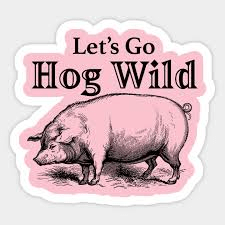
To go hog wild: to go crazy. An American expression thought to refer to how animals go crazy when thought to be in danger or is construed for excessive enthusiasm. As for the attachment to hogs? Hogs tend to make a lot of noise whether in pain or being happy.
The gory details: unpleasant aspects. Old English and German words have “gore” meaning related to “blood.” Gory details can refer to “bloody details.” Although blood is violent enough it can also extend to other unpleasant aspects such as extra emotional details.
To got scot-free: let go without penalty. The phrase has nothing to do with Scotland but with the meaning of “scot” as pertaining to tax assessment. To go scott-free to to go without having to pay tax, with a later meaning having to avoid any type of payment.
Got up on the wrong side of the bed: being grumpy. In ancient times using the left hand or foot was considered unlucky, so if someone got out of their bed using their left foot they were starting out the day badly. Caesar was known for this superstition.
To grasp at straws: making a hopeless effort to save oneself. A drowning person is said to grab at anything available to avoid going down, such as reeds. Reeds are also referred to as straws, but neither do much in giving support in keeping a person from going under.
Green around the gills: looking sick. Since the 1300s a green complexion signifies being ill while being rosy cheeked meant good health. “White” and “yellow” were also used to indicate illness, but green won out as the the designated sick color.
To grit one’s teeth: bearing up under pain. This comes from the ancient Greeks and Romans where setting one’s teeth to endure came from 300 B.C. Later, Thomas Jefferson wrote about Adams as “gritting his teeth.”
Which phrase surprised you the most? Any “Oh, G” phrases to contribute?




























 Pam Webb