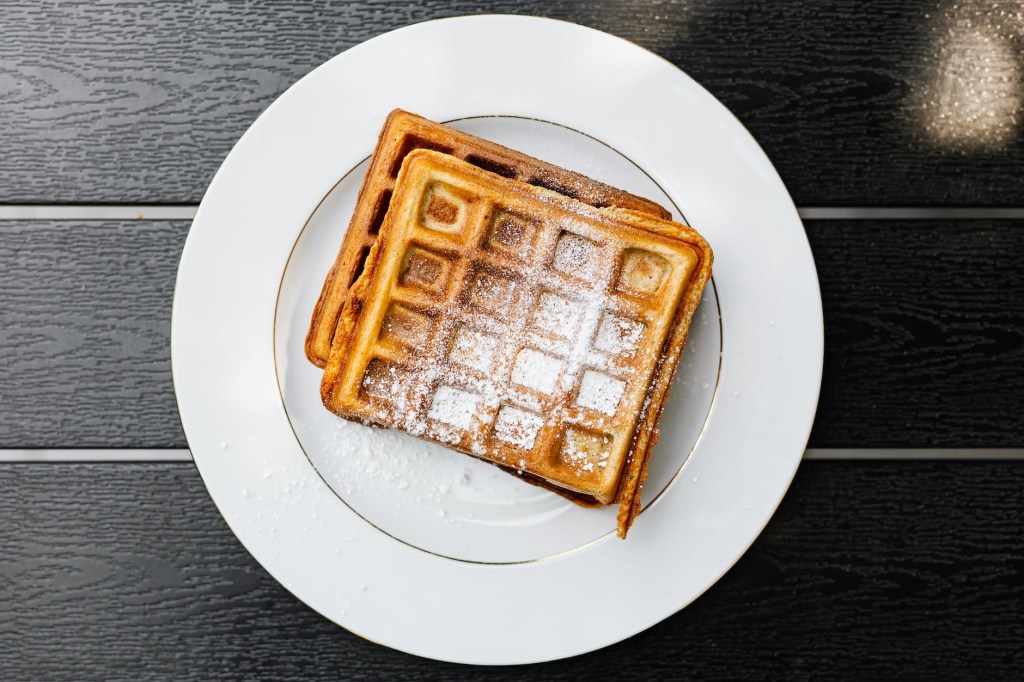
I follow the National Day Calendar and while I don’t relate to all the celebrated days (National Leathercraft Day did not do a thing for me, not even a summer camp memory of failed wristbands and key fobs), there are some like August 24th being National Waffle Day.
There are two breakfast camps: pancakes vs waffles. I could extol the wonders of waffles, how their warm and crunchy square golden perfection makes any dull morning sparkle, but then I might offend those who are satisfied with the blobs of dough identified as pancakes resting on their plates getting soggier by the nanosecond.
Clearly, waffles are winners in the breakfast arena of menu offerings.
My earliest memories of becoming a waffle connoisseur start when I am still in the finicky years of childhood, say sixish. My babysitter, a gem of an older woman known as Nettie, had such amazing patience. She had a waffle maker that was oblong, not the usual round variety, and it would produce four square delights of crispy dents that I would slather with butter and maple syrup. They had to be crispy, browned, not dark. Oh, I was demanding then.
Growing up I remember waffles more than pancakes, although there was a crepe phase for awhile. It takes many a crepe to make a decent filled effect. Pretty, yet not terribly satisfying. Waffles provide a square meal. Indeed they do.
Marriage and subsequent family days included a waffle maker. I can make a decent, even an exemplary pancake, but waffles are still the choice. When my sons had sleepovers their friends clamored for “Pamcakes” in the morning.
These days, in our empty nest era, waffles and pancakes are rare treats for we acknowledge the calories attached. By now, after 40 years of marriage, it would be ideal if my husband would acquire a taste for waffles, but he remains a pancake man through and through.
They do say opposites attract.
But we both agree that a waffle cone is the cone of choice for ice cream. Compromise will see us through to another 40 years.
Today’s playwright might fear a bad review if a play doesn’t meet the critic’s choice, but if Shakespeare blew a play he faced a fearsome critic: The Queen, QEI, and then later a king, James I. A monarch for a main critic could involve more than a “We are not amused” commentary (okay, that was Victoria, not Elizabeth). It could have involved being hanged, drawn, and quartered. A bad review takes on new meaning, in that regard.
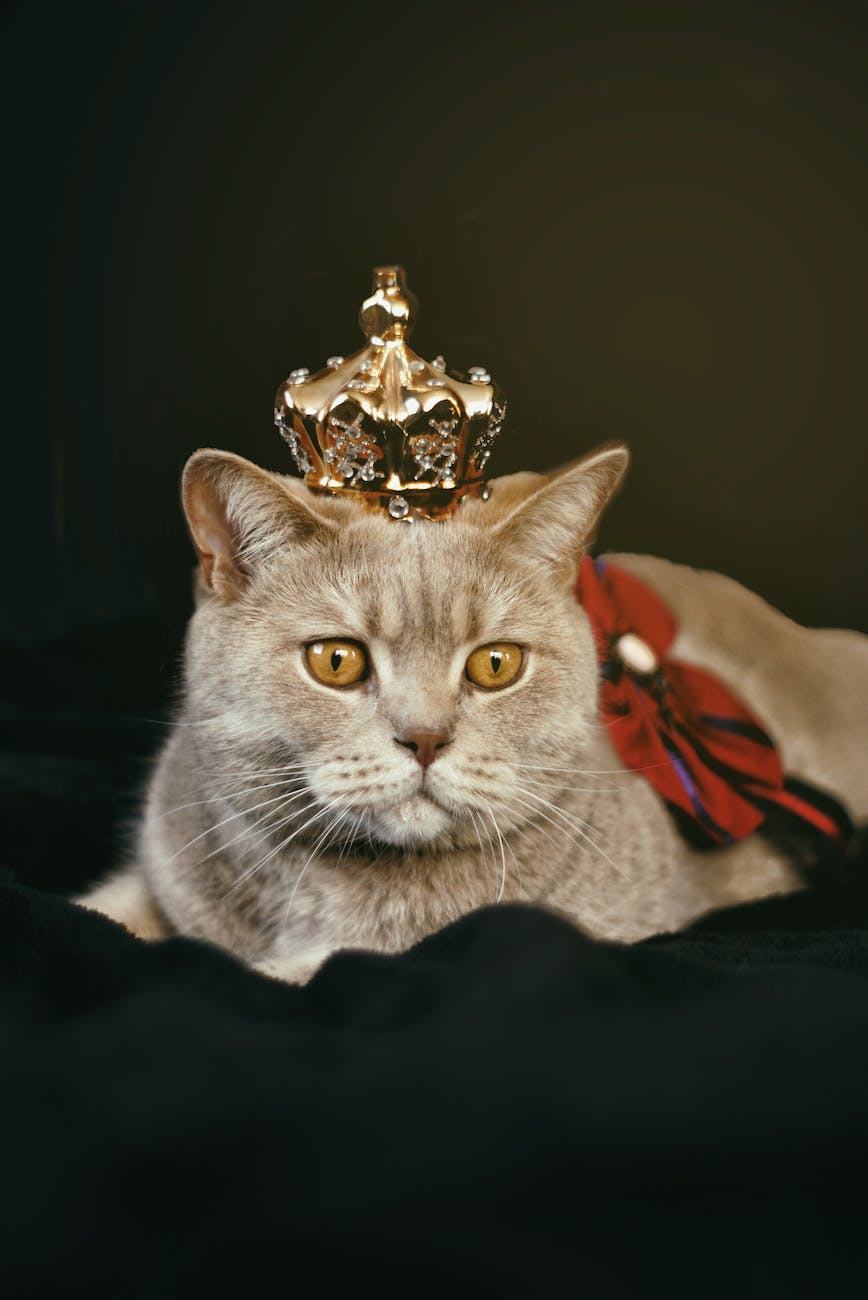
Photo by Katarzyna Modrzejewska on Pexels.com Plays were the cat’s meow in the 1600s
The Master of Revels, as jolly as a title as that sounds, was a fearsome critic. His duties included scrutinizing all plays for possible slander against the royalty. He had the power to remove any possible line that hinted trouble. In fact, the monarchy was to be presented in the best possible manner. That might explain why QEI’s father, King Henry VIII, a rather notorious fellow, is presented more decently than not in the Henry plays by Shakespeare. The man not only knew how his bread was buttered, Shakespeare was consciously aware of the knife in the butter dish.
Photo by Gilles DETOT on Pexels.com No one, not even the Bard, could knock Henry off his horse
Shakespeare took advantage of how the 1600s was moving from Latin being the language of literature to that of English. His puns, sonnets, banter, and general wordplay, which gave double meanings to many of his words, helped establish England’s identity as a country whose people could have a bit of fun with the language and keep a straight face–something seen throughout the ages with the likes of Monty Python and long lasting shows such as Dr. Who.
Shakespeare followed the dictates of his monarchs and his country’s tastes, which is why his plays have disparaging lines about foreign aspects, particularly concerning the French. While snide lines might have been popular in his time, they tend to ruffle and offend as time moves on.
Playing with words amounted to Shakespeare fashioning some propaganda to suit the need. Shakespeare not only moved words around to move the audience, he moved his nation to be one established as possessing wit and a respecter of language, although in his heyday he tended to play with propaganda.
So, a question pops up: is Shakespeare still “…not of an age, but for all time,” as Ben Jonson once said? With more emphasis on cultural, social, and political awareness, are some of Shakespeare’s plays, and even sonnets, facing censure?
Are his plays to be taken with a grain of salt as a reflection of his period or just plain taken off the reading list?
Face the Music: to meet with consequences. An American saying that derived from the theater. An actor on stage would face the orchestra pit, and the audience. If the audience was a rough lot facing the music meant the actor had a tough performance ahead.
One way of facing the music (ufficoriroma.net)
Fair and Square: just with equity. Found in the 17th century the term is redundant since “fair” and “square” are similar in meaning. A “square deal” has similar meaning.
Fair to Middling: mediocre. In mid-nineteenth century America, Artemus Ward wrote in His Travels “The men are fair to middling” meaning things are so-so. Look over “Can’t complain.”
Mmm, average? (thefreedictionary)
Far and Wide: affecting those over great distances. One of the oldest clichés about, dating back to the year of 900. The Old English states it as, “feorr and wide.” Shakespeare added it to Romeo and Juliet with the line from Act Four, Scene Two: “I stretch it out for that word “broad”; which added to the goose, proves thee far and wide a broad goose.”
Feast or Famine: an overabundance or a severe deficit. The original expression stated: “either feast or fast.” During the twentieth century the original changed to the present form of “feast or famine.” Though cliché, it is a term that seems to remain applicable.
(Have a) Field Day: enjoy an outing or occasion. An expression from the 1700s that refers to the military proceeding with maneuver practices. The term then began to appear in the 1800s to civilian matters, such as schools taking students out on excursions. It can also mean to enjoy oneself away from the usual, expected routine or even to immerse in criticizing someone, as in the press having a field day with discovering an unsavory situation about a celebrity or politician.
My kind of field day (Reddit)
(To not care or not worth) A fig: worthless. In the Mediterranean area figs are plentiful, so if something is plentiful it’s not considered as valuable. However, in other parts of the world, such as England, figs have to be imported, so they would have value. This makes it interesting when Shakespeare used the expression in his Henry plays. Why did Shakespeare use the expression. I’m not sure–it’s Greek to me.
Filled to the brim: fulfilled to the absolute possibility. Both Shakespeare and Gilbert applied this cliché in their plays to create the meaning of utmost fulfillment as found Antony and Cleopatra (3:13): “He will fill thy wishes to the brimme” and in The Mikado‘s description of the three maids as “Filled to the brim with girlish glee.”
Or is this better for “My cup overflows”? (blogspot)
There are plenty more expressions for the “F” section. Stay tuned…
In the past I considered July to be my solid summer vacation month. Leftover schoolish stuff in June and preparing for school in August meant July was free and clear for my favorite way to enjoy summer vaycay: hammock reading.
This July was totally different. Really hot, make that extra hot, days prevented hammock lounging unless I was okay with being sizzled while I read. Secondly, after ignoring my yard for too many years I decided it’s time to revamp and recalibrate. Working early in the cool morning and roughing it out until I felt melt status approaching, I weeded, revised, pruned, and created. This did not leave as much time for reading, but I managed to read 11 books as I recuperated in air conditioning in the afternoons and ventured out again the early evening. Here are the highlights of my July reading:
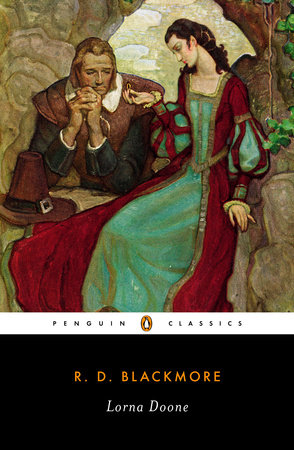
Lorna Doone by R.D. Blackmore
⭐️ ⭐️ ⭐️ ⭐️ ⭐️
(big reading commitment of over 700 pages—didn’t realize what I was getting myself into when I blithely requested it from the library)
Going against the usual maxim of “book first, then movie,” it is suggested to watch the 2000 BBC version with Richard Coyle as John Ridd first and then embrace Blackmore’s story of love, hate, justice, and politics.
Why?
The BBC version plucks out the core story of Blackmore’s sweeping adventure epic which is the romance of the star-crossed lovers Lorna Doone and John Ridd. Seeing the pure and intense romance through the camera lens helps when it comes to reading the book as Blackmore tends to digress with panache adventures beyond John Ridd’s love for Lorna.
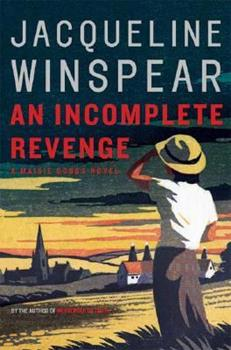
An Incomplete Revenge (Maisie Dobbs #5) by Jacqueline Winspear
⭐️ ⭐️ ⭐️ ⭐️ ⭐️
This fifth entry of the Maisie Dobbs series is more than satisfying—it truly is a really good read. Winspear continues some of her developed plot aspects such as Maisie’s concerns for her aging father and her schism with her mentor, Maurice. There is also long overdue closure with Simon, her wartime love. These important personal points add to the fascinating case Maisie takes on for family friends. As always, Winspear injects aspects of WWI into the story, and in this story she adds in the additional details of the gypsy culture. Be wiling to sit up and finish the last few chapters in one read since the plot twists are riveting.
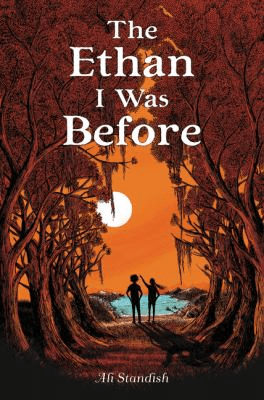
The Ethan I Was Before by Ali Standish
⭐️ ⭐️ ⭐️ ⭐️ ⭐️
An impressive debut which explores loss through different perspectives.
Ethan loses a friend through a careless accident and struggles with survivor guilt. His parents deal with his breakdown by uprooting the family from Boston to live with Ethan’s grandfather Ike as a means of starting over.
The loss of a loved one, be it a friend, spouse, parent, even a way of life is explored with genuine characterization and realistic responses. The plot provides adventure, mystery, and sage wisdom in terms of dealing with situations that are out of one’s control.
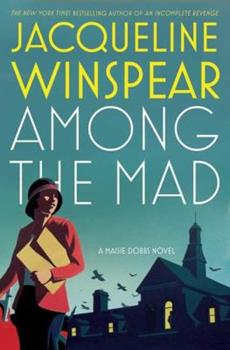
Among the Mad (Maisie Dobbs #6) by Jacqueline Winspear
⭐️ ⭐️ ⭐️ ⭐️ ⭐️
As the Maisie Dobbs series continues, Winspear continues adding layers onto her lead character. In this book the title aptly notes Maisie is Among the Mad. Per her other books, Winspear discusses the aftermath of WWI, in this case how the majority of wounded veterans became “invisible” to society, often being ignored due to their injuries, both physical and mental. PTSD, known as “shell shock,” impacted thousands of people who were involved WWI, Maisie being among them. How people cope with trauma, not just from war, is touched on with Billy’s wife, who grieves the death of her young daughter to the point of physical harm.
A bit darker, and more philosophical than the previous titles, the plot is nevertheless intriguing in how Maisie tracks down her clues to a conclusion. The continuing development of Maisie’s character, as she heals from her own physical, mental, and spiritual war wounds adds fuller dimension to the mystery plot.
Going Postal (Discworld #33) by Terry Pratchett
⭐️ ⭐️ ⭐️ ⭐️ ⭐️
Absolutely marvelous! A standalone within the Discworld collection, and a delight. No prior Discology needed to embrace Pratchett’s genius dig at the Internet, his tribute to the Post Office, and the appreciation for an anti-hero by the name of Moist von Lipwig.
Pratchett’s creativity with character names, plot pacing, strange interjections, odd and unexpected insertions create a read worth multiple perusings.
The film adaptation has its own merits, as does the audiobook. Watching the film first firmly placed the characters in mind, otherwise how else to envision a golem (so different from LOTR spectrum). Do try reading along with the audiobook—the reader’s character voices are to perfection.
The Mapping of Love and Death (Maisie Dobbs #7) by Jacqueline Winspear
⭐️ ⭐️ ⭐️ ⭐️ ⭐️
Once again Winspear deftly combines another perspective of WWI with an unsolved crime. Her seventh entry into the Maisie Dobbs series has Maisie solving a murder in the trenches.
Winspear presents cartography and it’s importance to the war efforts with one Michael Clifton, an American who joins up to honor his father’s homeland of Britain. When his remains are discovered in a field by a French farmer years later after the war’s end, Maisie is hired by the family to find out more about his death.
In her investigation Maisie uncovers love and death, but also faces love and death in her own life. Richly detailed, perfect pacing, unexpected plot twists, and continuing character development provide a read that resonates.
The Night Diary by Veera Hiranandani
⭐️ ⭐️ ⭐️ ⭐️ ⭐️
Young Nisha, half Hindu and half Muslim, writes of her experience during the 1947 partition in India. She addresses her concerns to her deceased mother who died during childbirth of Nisha and her twin brother Amil. Nisha’s father, a doctor, makes the decision to leave all behind due to the erupting violence.
As Nisha and her family travel, her diary entries succinctly describe the trauma of the situation, of dividing India, splitting up families and friendships, and facing death.
The author provides a powerful narrative through Nisha’s eyes, illuminating the search for home and understanding oneself when the world changes overnight.
An important story based on the author’s family experiences, the book spotlights a historical event perhaps as not well known to most USA children, but is timely as current societal issues reflect what happens to a nation when it is divided due to political, cultural, and/or religious issues. Well deserving of its Newberry Honor.
Is July your need to read month? Any picks off the list? Any suggestions to add?










 Pam Webb